The webcomics blog about webcomics

Friday Miscellany And The Eisners

Let’s just jump to the big news, yeah? Big Awards went to Ryan North and Erica Henderson for The Unbeatable Squirrel Girl (Best Publication For Teens), to Chip Zdarsky and Henderson / North and Derek Charm for Jughead (Best Humor Publication, which I am retitling Best Humour Publication in honor of Zdarsky and North), and to Raina Telgemeier for Ghosts (Best Publication For Kids 9-12).

Additionally, Jason Shiga’s Demon took the Best Graphic Album-Reprint award, and the somewhat confusing split between Best Digital Comic and Best Webcomic were decided in favor (respectively) of Paul Tobin and Colleen Coover for Bandette and Anne Szabla for Bird Boy, which are strong choices. I’m pretty sure that everybody except Charm and Szabla has taken the spinny globe trophy before, but it’s still got to be a hell of a thrill to be told whose company you are in. Some relevant photos here.

  • But that was all at the end of a long day; it started with the cash drawer in the Dumbrella register sitting just a little to high and preventing the drawer from opening, for a period of about 20 minutes at the start of the show. While the number of transactions requiring cash is way down compared to prior years, it’s still something you’ve got to be able to do. It was eventually resolved with the aid of two people, one multitool, a screwdriver, a pair of scissors, and gravity. The offender was found to be — oh, betrayal so foul! — a Sharpie. Worse, one of those fake-ass retractable finetip Sharpies. It was removed (and, I believe, ritually destroyed) and then all was well again.
  • The floor didn’t have much hold on me yesterday; I was out to the San Diego Central Library to catch the Read Like A Girl: Middle-Grade Fiction For Girls (And Boys), about which much more later when I have time¹; it’s probably going to be as long as the editing panel writeup, and that was damn near 2700 words.

    From the panel, I made my way straight into the Gaslamp, where Marian Call picked me up in her cross-country tourmobile so that we could make our way out to Santee, where I was providing light assistance (mostly merch-monkeying) for her show with Seth Boyer. The venue was a long, low, sprawling Unitarian-Universalist fellowship, where I’m told that Call’s Something Fierce has been played on Sunday mornings to give the members an idea of what the show would be like.

    I am being completely truthful here: if the Methodists had played Marian Call on Sunday mornings when I was a kid, I might still believe in the Abrahamic god.

    The audience were mostly from the fellowship, and were uniformly polite, earnest, courteous, humble, and filled with gentility. They’re Unitarians, so there were defiant prints in the foyer, the We The People series by Shepard Fairey and We The Resilient by Ernesto Yerena; like many churches, the members skewed older. They were enthusiastic, and have had Call and Boyer play for them before, and will again. Since the show last night was like number four out of seventy², there’s an excellent chance you will be able to catch her between now and November, when she finally returns home to a well-deserved rest.

  • We returned back to the Con precincts and met up with a crowd that had taken over a fire pit at the Marriott — Pat Race and Aaron Suring, others from Juneau who were down to see the nerds, Scott C hung out for a while. But the highlight of the night — maybe of the show — came as I was getting a drink at a bar inside. I happened to glance to my left and see a graying³, ponytailed dude drawing.

    I recognized the style and without thinking said Adam Warren? He startled slightly and said Yes? Then I told him I’d been reading his stuff since 1988 and always liked it, and that my only problem with his work on Empowered is that it doesn’t come out often enough. He thanked me, I told him I wouldn’t take up any more of his time, and then I bought his next drink because godsdammit, he’s earned it.

  • Oh, and my wife texted me from the East Coast to say that Raina and Mark Siegel were featured in a story on this morning’s Weekend Edition; audio will be posted later today, but for now just check out the fourth grade teacher that simply states The queen of my classroom is Raina Telgemeier.

Things To See On Saturday:
The BOOM panel with John Allison is at 12:30 in Room 24ABC, and Cartoon Art Musuem curator Andrew Farago talks to the likes of Gemma Correll and Melanie Gillman at 1:30 in Room 8. Box Brown’s undoubtedly wrestling-heavy spotlight is at 3:00 in Room 4.

Stuff To Get:
Man, I dunno. I could kind of go for a sandwich.

Cosplay:
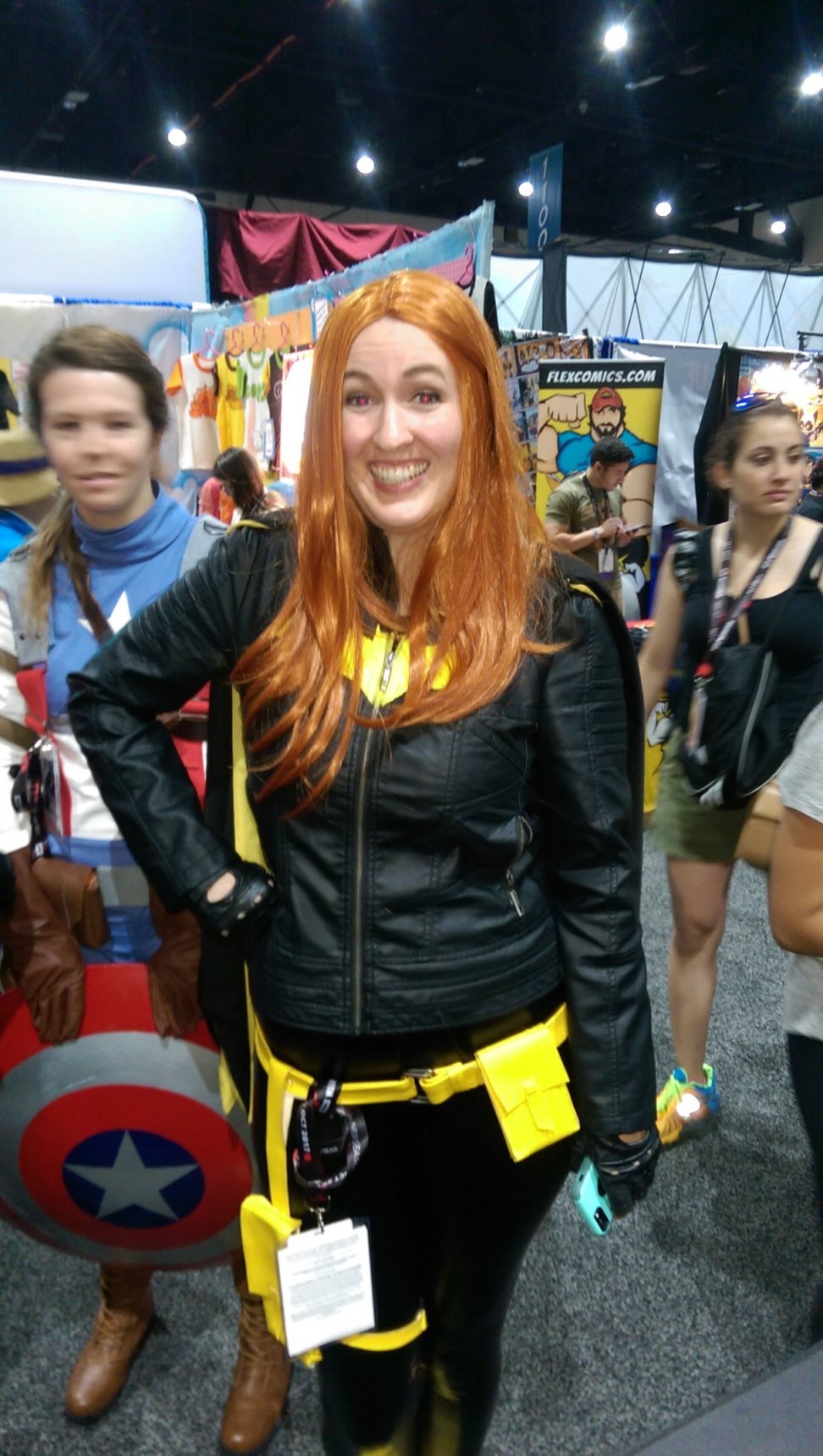
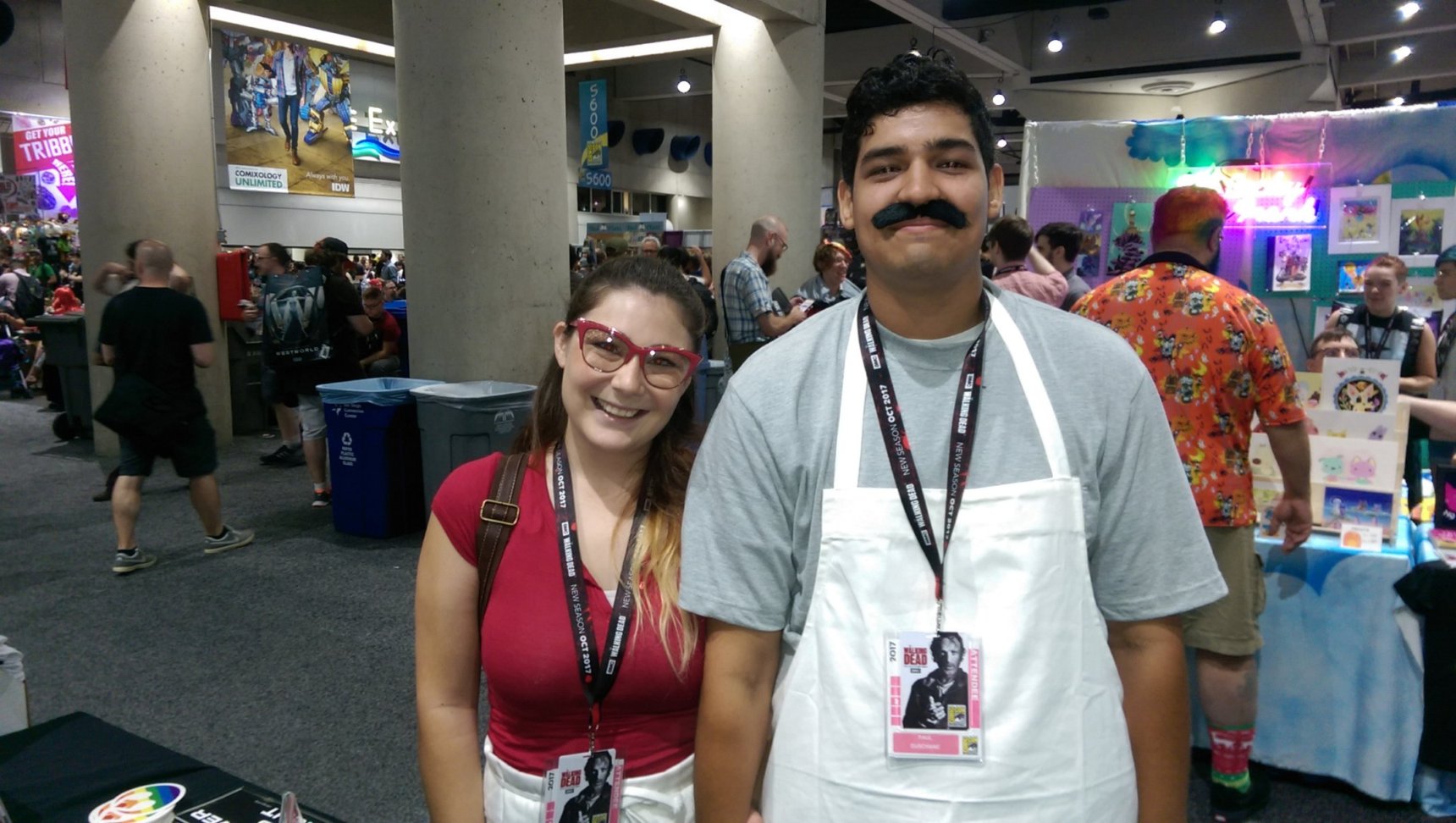
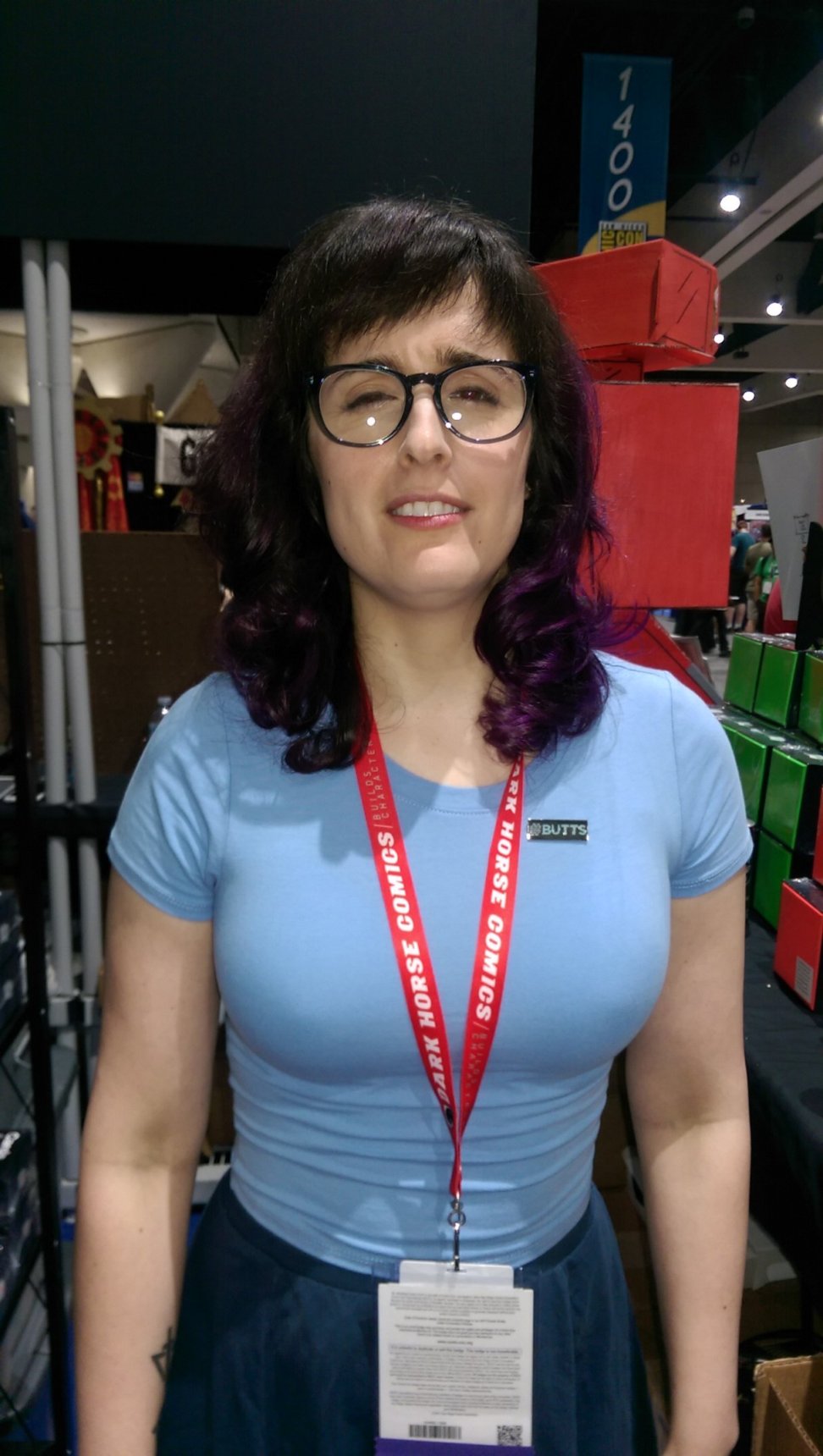
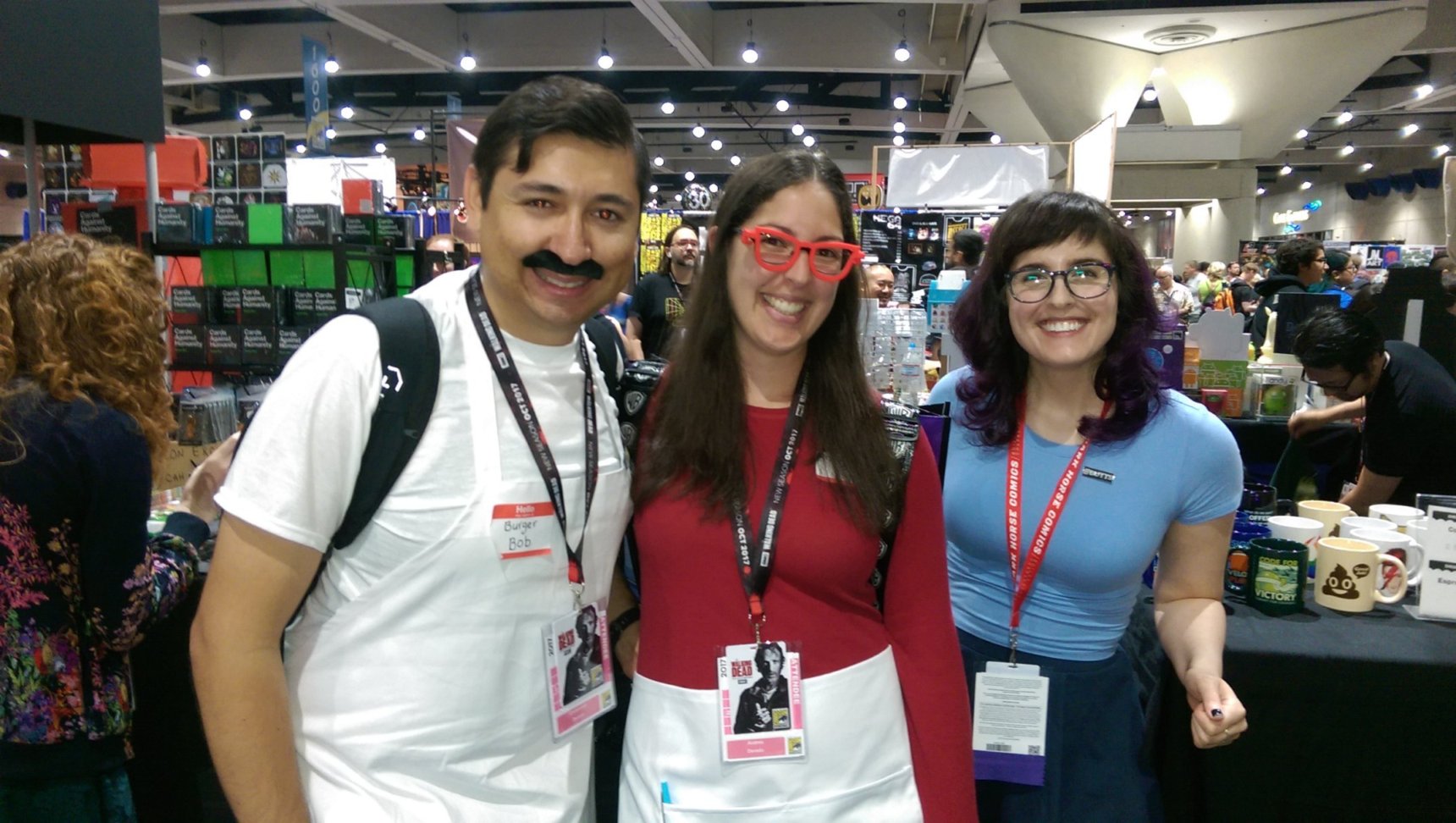
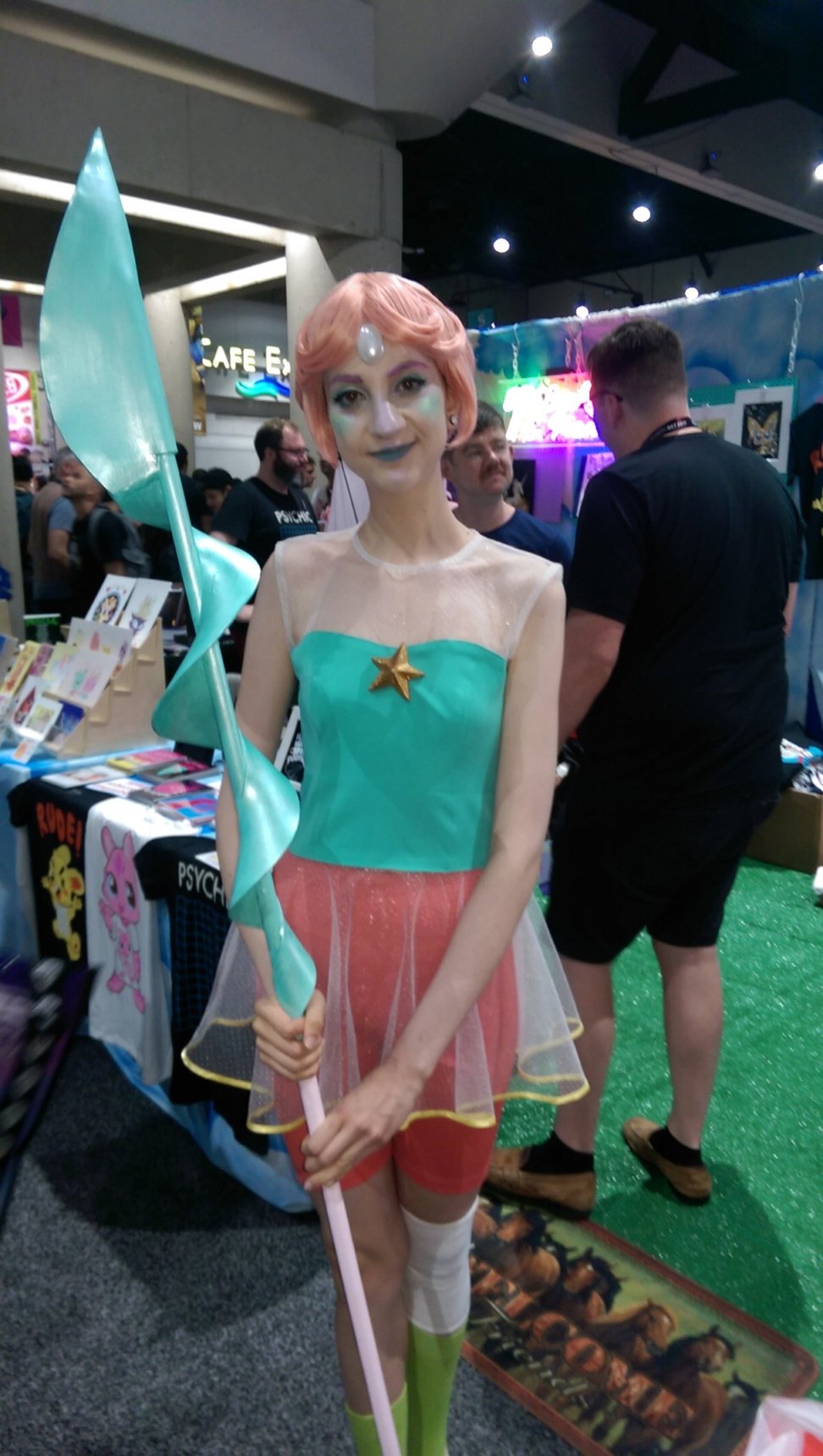
I saw this Batgirl and told her I was going to send it to Hope Larson and she squealed. Larson texted, and I quote, Yesss! She looks great. There were a lot of Bob-and-Linda combos on the floor, these being the best two I saw; Cards Against Humanity consigliere Trin was, coincidentally, dressed as Tina and was at the booth at the right time for one group photo (she also mentioned that her own parents were coming to the show dressed as Bob and Linda and I cannot wait to see those photos). And on the Crystal Gem front, there was a really good first-look Pearl, although she and I agreed we need to see more leather jacket wearing badass Pearl cosplay.


Spam of the day:

Unique True Wireless Earbuds With Amazing Sound

Man, I can’t keep buds in when they’ve got cords on them. This is a blatant attempt to get me to have an earbud subscription.

_______________
¹ My rough transcript of the panel discussion runs 117 lines and I’ve got an early start today after a very late night.

² Maybe more? Email Call and tell her you can get a dozen people together and she’ll pretty much add a show within an hour or two of wherever you live if it’s at all practical.

³ We are actually about the same age and I have no illusions about what is happening upstairs.

And In Other News Thursday

The thing about the floor at Comic Con is that you will run into people; people you know, people you’re meeting for the first time, and sometimes those meetings just happen. Case in point: after the editing panel, I was making my way back to the floor with Chris Butcher when I remarked that — unusually — I had reached midday on Thursday without yet running into a single McCloud. At that very moment I looked up from the escalator we were on to the escalator we had just been on and locked eyes with Scott McCloud. When we all reached the lower there were greetings and up-catchings and McCloud shared some of the process he’s working through.

If you hadn’t known, his next book (from the sounds of its scope, it may have to be more than one) will be on Everything To Do With Visual Communications — type design to signage to nonverbal to everything Edward Tufte has spent four books on. It’ll be one part Tufte, one part McCloud, one part Bringhurst, one part advertising design, one part the visual vocabulary of complex systems (think circuit design or architectural renderings), one part emoji, one part Burke, one part billboard design, and several parts that I can’t even remember at the moment.

And because McCloud is McCloud he’s digging deep and widely into many different areas of study, figuring that it takes at minimum a 10:1 ratio of what you need to know:what you can present on the page — not just because you need to know how all the stuff you aren’t talking about works, but so that you understand the stuff you are talking about works so thoroughly that you can condense and simplify for a nonspecialist audience. He expressed a general amazement that the likes of Zach Weinersmith and Randall Munroe do this on the regular.

And once he was done with process, he talked about things that he’s really grooving on at the moment and I told him that when I wrote about our conversation it would just read McCloud was smart at me for ten minutes. What the Understanding/Reinventing/Making Comics trilogy did specifically for comics, this is going to do for how we as humans communicate with our eyes. It’s going to be beautiful, just as soon as he can stop finding interesting little asides that suddenly demand 40 pages of indulgence, which is honestly the best kind of problem to have.

  • Hey, everybody that hates paying for overly-expensive hotel wifi: Ask Ryan North for his secret method for getting that charge waived. It’s not my story to tell because it really requires a certain ineffable Ryan Northness to properly express; it also may not work for anybody that’s not as tall, handsome, Canadian, or Ryanesque, but I’m surely going to try it next time I travel.
  • It’s been years that I’ve been coming to this thing, and the best part of any day on the show floor is always pointing people at work they wouldn’t have seen otherwise, or getting to introduce people to other people.

    Cases in point: I spoke to a woman who’d just bought a stack of books from Evan Dahm on the strength of a friend’s recommendation; she explained that she’s just now getting into comics. I told her to check out Augie And The Green Knight and BONE and made her promise to come back if she needed more to read. I was able (with the help of his able assistant Beth) to pitch Los Angeles resident Dave Kellett on the idea of getting Ursula Vernon to do a Tales From The Drive short story, and to introduce Pat Race to Becky & Frank. Connections, people, it’s all about connections.

Things To See On Friday:
The San Diego Central Library is calling me for Handling Challenges: Bans And Challenges To Comics and Read Like a Girl: Middle-Grade Fiction for Girls (and Boys), at noon and 1:00pm respectively. LArDK will be talking Drive at 9:00pm (whaaaat) in Room 9, and Marian Call and Seth Boyer are playing in Santee at 7:00pm.

Stuff To Get:
Oh man, there’s a Steven Universe 7″ vinyl that’s up for sale at the Cartoon Network booth.

Cosplay:
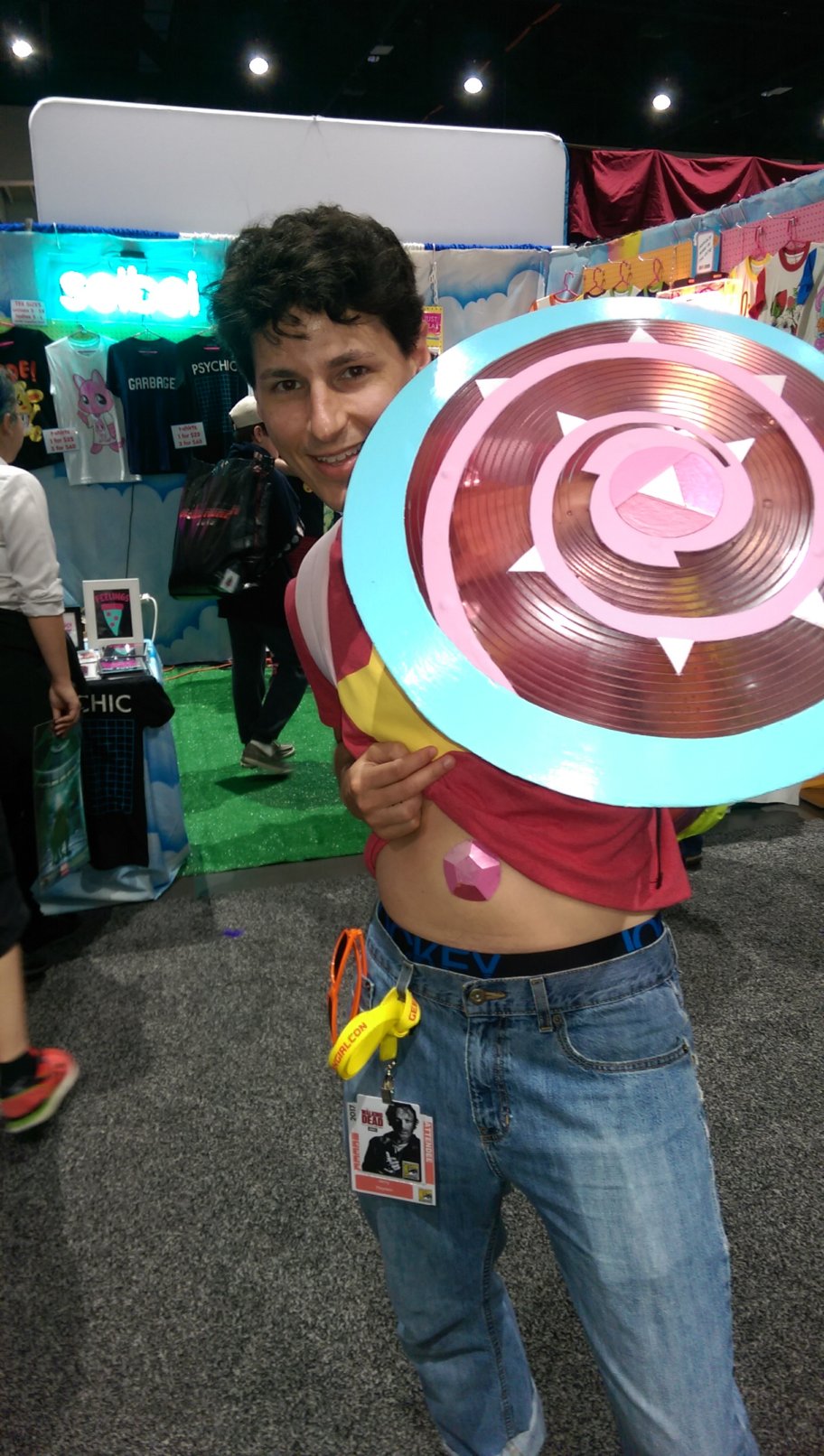
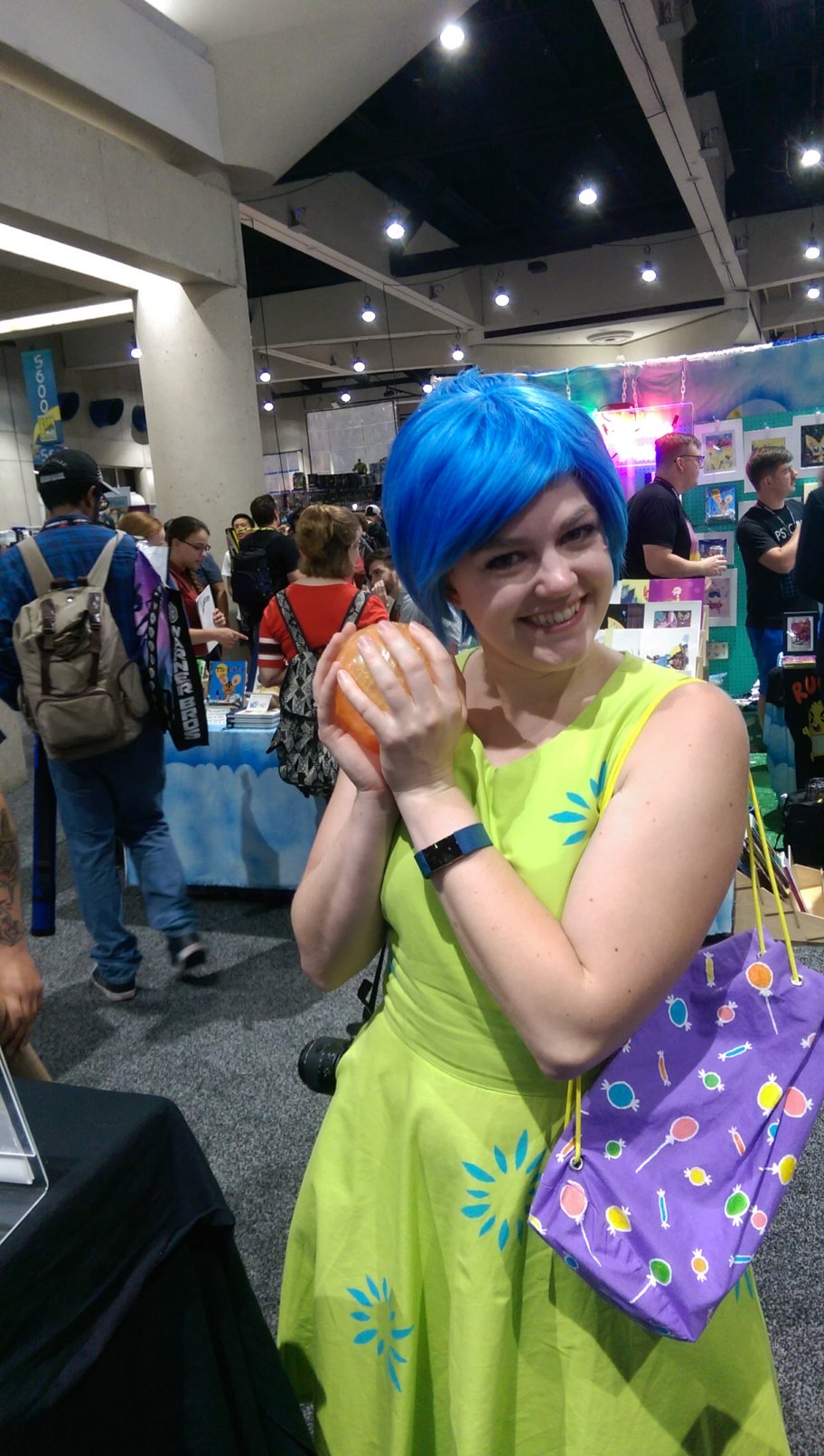
In addition to everybody’s favorite gem pairing¹ up there, you’ve got Steven rocking the shield. And when you can get a cosplayer to really get into character, you run with that; I prompted this young lady portraying Joy with Puppies! and Bing Bong’s gone! and she killed ’em both.


Spam of the day:

Don’t wait – Further Your Education at Liberty University

You mean the place founded by Jerry Falwell and currently run by Jerry Falwell Jr explicitly as a training ground for the lawyerly shocktroops for the movement Conservatives that want the US to be a Christofascist playground? Yeah, no.

______________
¹ Okay, I’m lying; we all know everybody’s favorite pairing is Garnet. I did see two different amazing Sapphires on the floor, but couldn’t get photos without obstructing the aisle from hell to breakfast, so you’ll just have to imagine.

Behind The Scenes

Something about my engineer’s view of the world makes me fascinated by all the things you don’t see on the surface of things; I want to know how things are constructed and how all the construction fits together. Thus, Pat Race and I made our way up to the panel rooms for the Editing Comics panel moderated by Chris Butcher. You may recall that about a month ago (that is, long after the panel was set for inclusion at the show) Butcher left his longtime position running The Beguiling and took a new job with VIZ as an editor, which made for an interesting (if initially unanticipated) dynamic at the front of the the room; he would have the opportunity to ask some of the best editors in the history of comics how they do their work such that (and I’m quoting here), I will take all your best information and then crush you.

[Self-editor’s note: when I italicize a passage of text like that, it’s as direct a quote as I was able to type in realtime; when left plain, I am paraphrasing the gist of what the speaker said.]

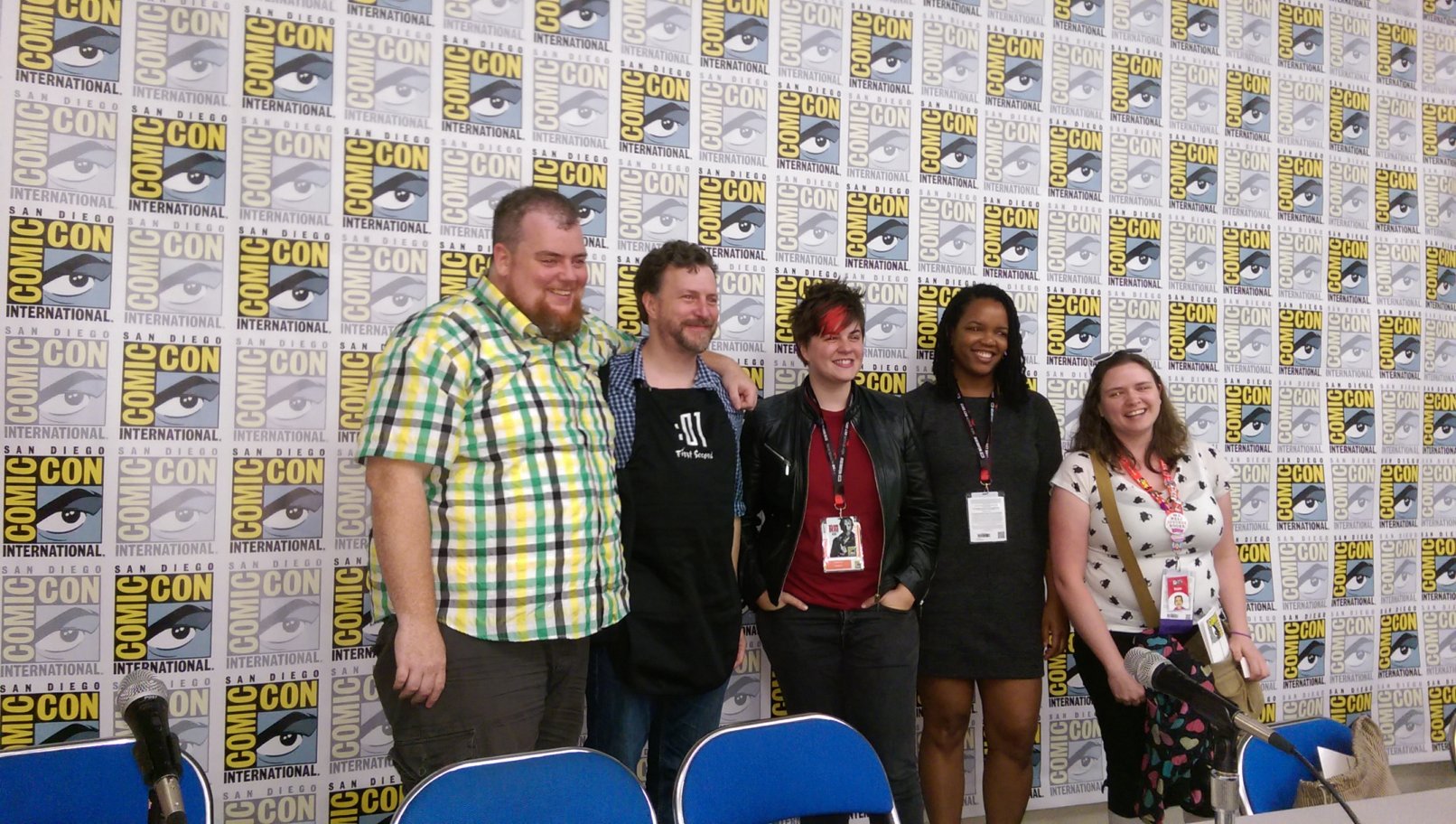
Fleen extends its condolences to the future crushees, people with distinguished careers to this point, who will shortly find themselves bereft of all they once held dear in their careers. In the meantime, though, they were awfully collegial and welcoming towards Butcher; they brought examples of their work and processes, and were generous in sharing how they approach their jobs. From right to left in the photo above, they are:

  • Robin Hererra, Oni Press
  • Cassandra Pelham, Graphix/Scholastic
  • Shannon Watters, BOOM
  • Mark Siegel, :01 Books

… all of whom came to editing via different routes. Hererra interned at Oni for a summer, then was an administrative assistant for a year before joining the editorial ranks; Oni is the only place she’s worked. Pelham worked a summer fellowship with Scholastic for three years that shifted towards graphic work in the third year. Siegel founded :01 in 2005 (within the much larger environment of Roaring Brook Press/Macmillan/Holtzbrink) to be a publishing house for authors rather than franchises¹, with broad themes and age categories. Watters started at BOOM in 2010 as an assistant editor, ran the KABOOM (licensed) line for a time, and now runs the creator-owned BOOM Box imprint.

They spoke for a while on the camaraderie in comics; Butcher noted that he’s friends with lots of folks, but now that he’s going to be in an editing role and competing with the to a degree, was worried that would have to end. It was nice to learn that wasn’t the case, everybody’s been very nice and welcoming in the community so far. He threw out an invitation to talk about the network editors have with each other:

Watters: There’s a special relationship, you understand this very specific thing you do that most people in comics don’t understand.
Pelham: It’s a small community, and we’re competitive but also supportive of each other. We’re cheering for others because a win for one of your books is a win for comics in general, for reading, and for kids. The most competition is at an auction, when you might be bidding against each other to acquire a book that’s been offered to several houses.
Herrera: But it’s a solitary kind of work. The most I’ve been able to talk to other editors is when I go to SCAD on Editor’s Day for portfolio review. At the end of the day you get out exhausted, but we talk. And they hold it at this old mansion with a giant porch, and there’s bourbon …

Butcher had each of them choose several books they’ve worked on and talk about how they edited each; the key takeaway from this discussion is that no two books, no two creators need to be handled the same way. Herrera opened with three books that featured three entirely different processes, and noted at Oni there are just editors, not story editors or copy editors, or other kinds of specialization; any project could require any of the kinds of skill.

She edited Space Battle Lunchtime (and continues to do so) from its pitch, ran all edits from start to finish, and gets to nudge creator Natalie Reiss in needed directions from time to time, relying on a very experienced creator’s abilities. By contrast, Ted Naifeh pitched Night’s Dominion with two issues already done; it’s a very different process when there’s little to no development of concept, story arc, and so forth. Finally, Oyster War by Ben Towle came in fully complete; Hererra made a few specific changes, then thorough copy edit, but a penciled-and-inked book is too late to do major structural changes on. Since SBL was the book that went through the most development with Herrera, she showed a lot of process: cover treatments, thumbnailed scripts and pages, Reiss’s writing style that lacks the cinematic approach many take in comic writing (but it works for her).

Butcher interrupted to ask the panel about an observation he’d had. Creators are reading fewer comics themselves these days, and does this translate to editors? Do they read fewer due to time or to avoid accidental influences? The answer was a pretty solid no, as the panelists are all enthusiastic (and wide-ranging) readers.

Siegel: I read fewer comics and more prose, but things pop up that I’ll get enthused about.
Watters: I read graphic novels more than single issues (there was a lot of head-nodding at this point).
Herrera: Since starting at Oni, I read more manga which we don’t publish; there’s no chance I’ll ever work with that creator, which lets me read and admire the work.
Siegel: Younger creators, I often try to get them to read wider than their favorite zone. I’ll recommend a book on writing, or nonfiction relevant to their project. A lot of times, they’re still moving out of being fans and into being authors, and I don’t think you can be both. I think you have to leave fan behind to be a creator. And of course they can have blind spots, so I’ll say Try some Stephen King to learn about pacing ….

Returning to process, Pelham talked about editing not just different projects differently, but different creators with different approaches. For example, the different approaches she takes with Raina Telgemeier and Kazu Kibuishi have less to do with their subject matter and more to do with how each does their best work. Raina tends to do full thumbnails, Kazu works straight to final art with little drafting or sketching.

Butcher’s next discussion point had to do with the craft of editing: when comics and graphic novels started breaking out of the direct market and into the traditional publishing houses, people didn’t know how to edit comics as comics. He noted some of earliest editors at the major houses were from children’s books, because they had a history of working with had words and art. Pelham noted that she did start editing in prose, but realized comics were my passion, that I wanted to lean into. During her third summer fellowship she moved to the Graphix end of Scholastic; like many, in college she read first graphic novel (Persepolis) and found it life-changing. Part of what was surprising in learning about editing comics was how my title was an editor-track job title, but I found myself also learning to be an art director.

Siegel dug the most into how the graphic novel sausage is made; given the :01 doesn’t do single issues, he focused on whole books as the unit of production and story, and the traditional publishing process starting from the pitch. He had a pretty detailed discussion about how a lot of people try to pitch graphic novels that come from Hollywood or animation, and are used to doing in-person presentational pitches, trying to sell a project on personal charisma, and that’s not how books work. They’ll say, we want to set up a meeting and I say no, I’d rather not meet you at all. It doesn’t matter what happens in that the pitch meeting, all that matters is what’s on the page. In the book world, you need to send a presentation and it either works on the page or it doesn’t.

To that end, Siegel also tries to be very open about the process; People outside the business have a hard time seeing what actually goes on in the publishing world; it’s not what you see in the bookstore. Authors really have no idea what we do. With :01, we try to open the curtain and reveal what happens. [Marketing director] Gina [Gagliano] posts a lot of stuff on our blog, a lot that seems obvious, so creators understand what we do in publishing and marketing. … It helps them to understand so we’re partnered … with us, your agent, the designer, the production people are all your allies in making that book.

Back to pitches: sometimes they’re a few pages typed up, describing story, characters, what the book is going to accomplish, and then editor and writer can find an artist to pair up on the project. Scott McCloud’s The Sculptor came in as a presentation package, almost the Hollywood-style approach that Siegel said to avoid (McCloud is an unusual case, he said in an understated manner). Normally, it’s a few finished pages, character description, some script, enough to have the shape of the project and have a conversation with creator.

The next stage is scripting. He shared a sample of a Gene Yang book (looked like Boxers to me) which featured the traditional typed dialog and page thumbnails. Siegel pointed out that this approach shows the creator is Thinking in both words & pictures at the same time. Sometimes you get something that works or doesn’t in words, then the art comes in and it doesn’t work or it does.. The thumbs let the editor see in a very small size — each page about the size of a postage stamp — how a scene will play out, meaning you can sometimes spot a problem and fix it before the art progresses too far, but mostly it’s at the pencils stage that you fix problems with story or scene setting.

Butcher added that he always thought these stamp sized thumbnails were just about proving to the editor that you were working, but Siegel has the opinion that the thumbnail stage is the the hardest mental work, because it’s where you’re pulling out the story. The execution (pencils, inks, color) is actually simpler (but naturally, more labor intensive and time-consuming). Watters described thumbs as the skeleton you’re throwing the meat on, and Siegel as the first conversation with the creator. You’re not talking about dialog, it’s about the large structure of the story.

He demonstrated that by showing scribbled-up thumbs from Nidhi Chanani’s forthcoming Pashmina and remarked that he’d get on Skype and have a conversation about how the story is structured.
Watters: I like doing dialog passes on Skype.
Siegel: It’s good testing dialog out loud.
Butcher: It’s not like how people imagine comics with the old Marvel bullpen, everybody in one room. You could be working with people across the country or across the world.

Pencils and inks follow, which are a monumental amount of work, so you have to catch problems early before all that work goes in; the worst thing is having to make corrections at the end of the process. Siegel noted that one issue of people working on long graphic novels is that of stamina, mental fatigue, mental breakdowns, there’s a much higher casualty rate than working in prose. For that reason, I’ve evolved a process and become a better editor for it, as soon as we pass the architectural stage, I invite the authors to send in small batches. I don’t keep them waiting [for feedback/direction], it does marvels for morale.

Watters brought a series of different projects with different approaches, noting that at BOOM Box things come to in differently — Backstagers came to as a full idea but Goldie Vance was a completely different process. I hit up Hope [Larson], and said I really want to to a teen detective book, I know you have time in your schedule, it’s already greenlit because I trust you. You own it, let’s work together to develop something. Sometimes the pitch is complete, sometimes I develop the pitch with them. It’s produceresque.

Butcher had one last big question of his own before opening to the floor: when you acquire a project, when you start that process, do you represent the creator’s interest to the publisher or vice versa. Whose side are you on? Siegel asked if he could start the response² and then was pretty emphatic: Both. You’re the punching bag in the middle, and you can get bashed from both sides [all nodding in agreement]
Pelham: Even if it’s not an editorial issue!
Siegel: You’re kind of forced at times into a diplomatic relationship. Sometimes you’re forced to choose and that puts an editor to the test. Sometimes the pressure’s from great big corporations, you have to make a decision and it’s hard. But something I learned from an editor I respect a lot [Self-editor’s note: I didn’t catch the name, sorry], is that if you have to choose between the company and the author, you try to go with the author.

From the floor: I’m freelancing as an editor now. How do I make editing a full time job?
Pelham: Have a website.
Watters: Communicate with others and have relationships.
Hererra: Edit pitches as well as whole projects.
Butcher: Sometimes houses will have a pitch they don’t have editors to manage and will go looking for freelancers.
Watters: Sometimes creators have editors they want to work with, and will bring you in on their project.

From the floor: I took a prose editing class last semester, how do I practice comics editing?
Butcher: Read a lot of comics.
Hererra: Read manga; it’s read in reverse and that actually teaches a lot about story structure.
Watters: I took McCloud’s Understanding Comics and read it with comics I liked and thought worked, and figured out why they worked.
Butcher: I worked with creators with great editors, so I could see the process.

From the floor: I’m a freelance editor, I have a script I want produced. Do I go to company with script, script and a few pages, or the whole thing drawn?
Watters: Put together a pitch document.
Hererra: Have a few pages to look at.
Floor: Not a whole book?
Siegel: Right, unless you’re the greatest creator ever, you can’t bring in a complete book.

From the floor: How do I give notes on the whole story arc, not just details?
Siegel: You can practice that, but there is a craft. It’s still Is a character shallow, is this cliche? There’s nothing wrong with starting from a cliche, but it’s bad to land on one.
Pelham: Break it down: character, plot, theme, story; see if it all works before the art gets added.
Butcher: It’s macro/micro — the whole project works, then break it down. Story works, then thumbnails, then pages, then panels. Don’t start at the smallest scale and work up.

From the floor: We have a pitch, I’m an artist, I have a writer, I’m trying to understand the relationship with the editor because I think I need one. Can I expect a publisher to help me out with others … finding inkers, colorists, can an editor help me with that?
Watters: Yeah, that’s production, if they buy the project at the stage you have it at, they’ll help you finish it. It’s all about expectations with the project at the acquisition stage.

[Self-editor’s note: And what none of them said but which is probably self-evident, you need an editor. Trust me, it’s an almost-impossible chore to edit yourself.]

_______________
¹ See our coverage of the :01 tenth anniversary panel last year for more on that theme; Siegel has succeeded at that goal admirably.

² One of the delights of this panel is that the panelists were considerate of each other — not speaking over, looking to others to prompt their input.

Storm, Calm, Etc

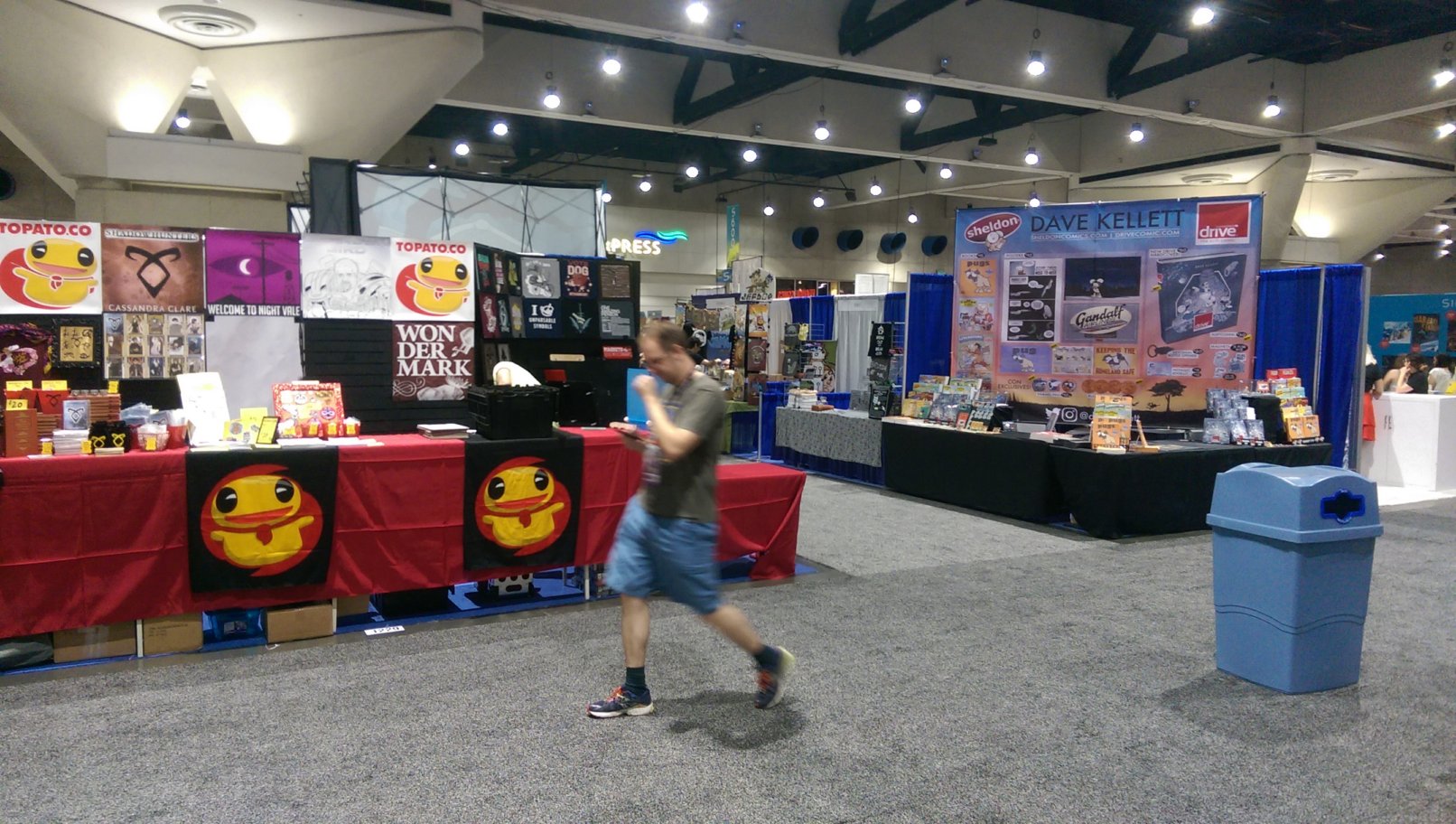
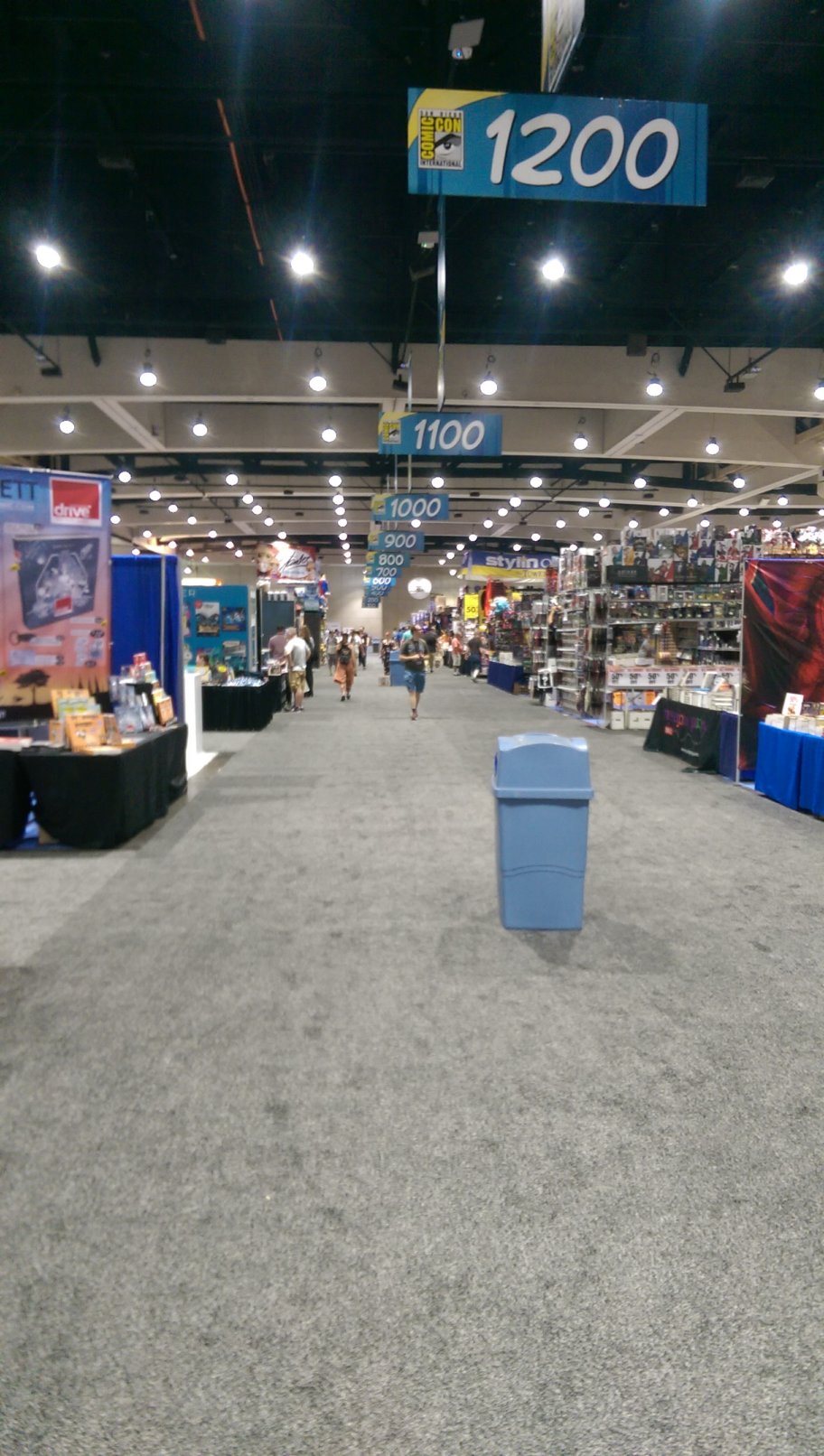
The story of Wednesday at Comic-Con can largely be recycled from year to year. The eerily empty halls, the slight bustle at registration through the first half of the day¹, the mostly orderly work of getting the booths in their desired configuration and seeing how the town itself transforms in the presence of nerds. One particular nerd near my hotel had enough fans in line early in the morning to wake me with their cheering from ten floors down.

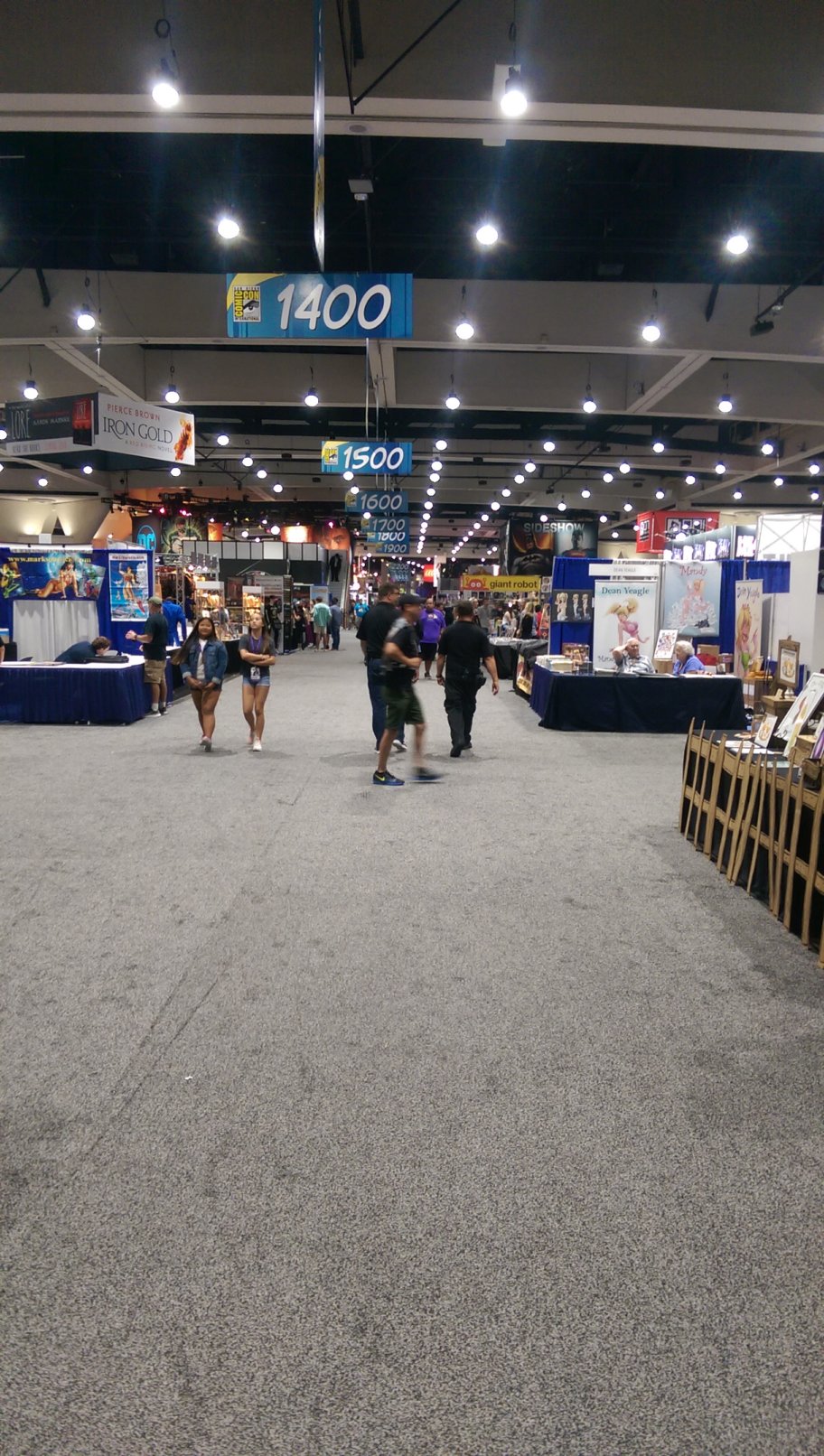
This year’s photos come with an added frisson of danger, though, as there were repeated announcements throughout the day about how photos and videos were not allowed to be posted prior to opening the show floors and exhibitors that did so risked ejection, Comic-Con does not allow the taking photos of the exhibit hall at this time. Which, yeah, was roundly ignored and I daresay prompted a lot more photo and video taking than would have ordinarily occurred. So good one, Mysterious Voice². I’m sure that whoever decided this policy was certain it would result in a massive bolus of social media postings just as soon as the crowds were let in, resulting in a bump of publicity. Had that happened, I’m pretty sure all the cell data and wifi in the hall would have fallen over.

But snippy and unworkable media control policies aside, Wednesday during the day is great on the floor, because it’s your chance to get caught up with people that you won’t have a chance to talk to for the next four days³. You’ve got the big booths that take a practiced crew much of the day to put together, you’ve got the smaller ones people can roll into an hour beforehand and figure out where things will go. Everybody’s got their methods and somehow it all works out okay. In any event, it leads to awesome conversation and if you ever have the chance to chime in on a brainstorming session about what could happen in Squirrel Girl between Ryan North and Erica Henderson and get complimented that you really know your Squirrel Girl continuity, I recommend you do that.

Things To See On Thursday:
There’s a panel on editing comics moderated by the invaluable Chris Butcher at 1:30 in Room 4 that looks interesting. Before that, John Hodgman — raconteur, podcaster, author, actor, TopatoCo client, and arbiter of justice — will have a brief signing at 11:00am, in the Penguin Book Group booth complex. It’s listed as booth 1515, but has so many sub-booths that they are lettered A through at least G.

Stuff To Get:
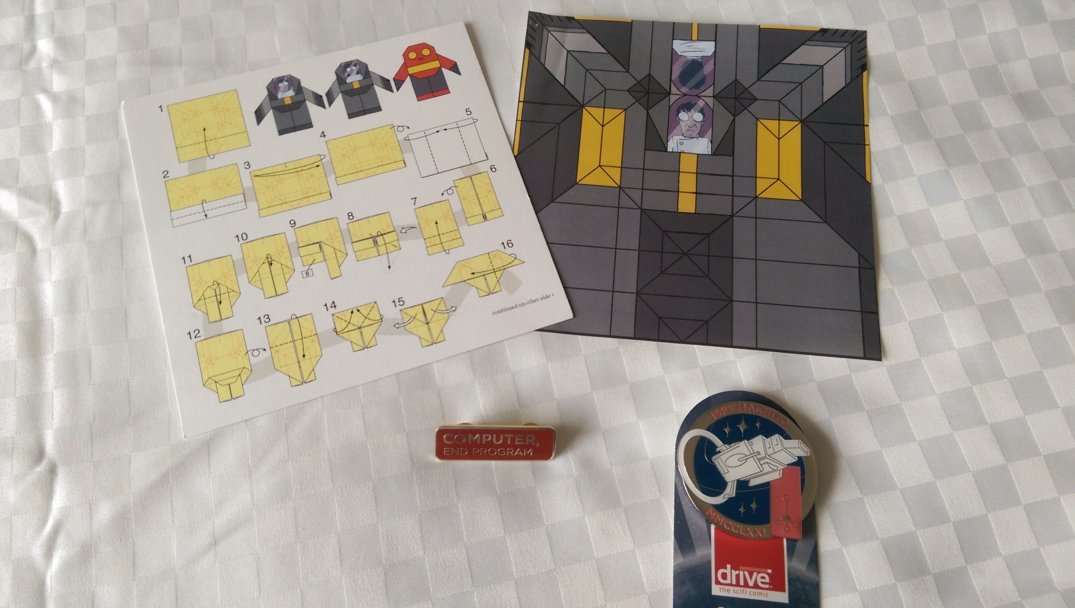
Speaking of the Penguin booth complex, it’s where I picked up a neat promo item for Kelly & Zach Weinersmith’s Soonish, coming this October (and whose Kickstarter-access channel coincidentally wrapped yesterday; okay, that was really for the new book on the history of science (abridged), but you could get a copy of Soonish, which is probably why it raised over US$330K): origami paper and instructions to create a grumpy astronaut! Also in the photo: a ISPS Machito crew pin, gifted to me by Los Angeles resident Dave Kellett, and an absolutely genius design gifted to my by the very sexy Rich Stevens. Everybody that couldn’t get a Pride of the Resistance pin last year because they sold out, he’s got zillions this year.

Cosplay:
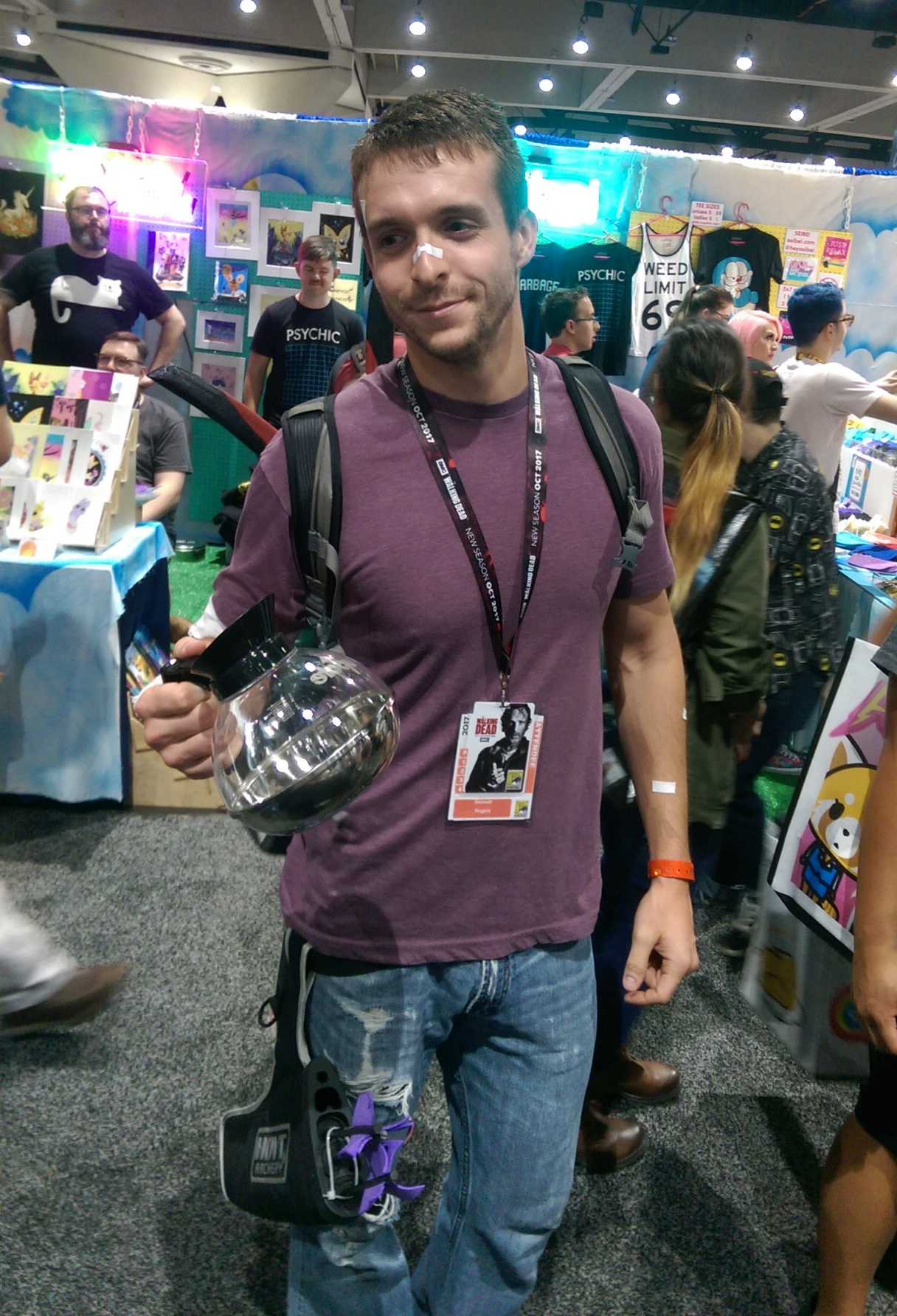
This Hawkguy looked great, and that was before we noticed he was carrying a coffeepot. Rich Stevens was so taken with the look that he sent a picture to Matt Fraction who replied with, and I quote, BROOOOO.


Spam of the day:

Wanna Watch me?!?!?

Much as I appreciate professionally naked people, your abuse of the interrobang offends me.

_______________
¹ With most attendee badges being mailed these days, you don’t have the massive wave of humanity you used to get — it’s for those that had problems or for some reason opted against mail delivery.

² The lady that used to serve at the Voice of Comic-Con has apparently moved on in life; this dude has no sense of humor when he states There is no running on the exhibit floor (evidence to the contrary aside). And the volume is still too loud.

³ Intermixed with the regular over-amplified admonitions Exhibitors, return to your booths. Aisle traffic will delay the opening of the exhibit hall. These announcements start around 10:30am.

Long Flight, Not Enough Sleep, Ready To Do This

We’ll be posting as things occur for the next four-five days. Do join us.

In Retrospect, It Was Silly To Expect News To Drop Today

Everybody’s heading to San Diego. I’m about to head to San Diego. Not much news breaking today. We’ll try again tomorrow, ‘kay?

San Diego Looms

So, yeah, probably a regular post tomorrow (I’ve got a late flight) but for a solid week after that? Irregular as heck. Let’s clear a few backlog items before the madness descends.

  • I’m three days late on this, but I wasn’t going to let it go: buried in at the end of a discussion of Canadian literature being developed for broadcast is a line that could almost be overlooked:

    FGF is also mid-production on a number of other screen adaptations of Canadian books, most notably Kate Beaton’s picture book The Princess And The Pony and Jeff Lemire’s graphica trilogy, Essex County.

    I’m not sure what’s more charming — the thought of Kate Beaton’s wonderful story about believing in yourself (and also farts) arriving on the small screen (I’m figuring 30 minute animated special), or that identification of The Princess And The Pony as a Canadian book. Mark my words, Beaton will be regarded in the Great Northern Pantheon alongside Atwood, Davies, and Mowat. Everybody feel good for Kate!

  • Second, after too long a time¹ away from their many fans, Becky [Dreistadt] and Frank [Gibson] have returned to the webcomics game with Bustletown. Let’s run down the criteria for Becky&Frankness:

    The first sixteen pages of Bustletown are up now, with the next chunk of story dropping after SDCC; no word yet on how often it’ll be released, or if there will be an RSS feed, but if you find you want to keep up with Bustletown, it’s now listed over to the right in the link library. Everybody feel good for Becky and Frank!

  • It’s been more than two years since Girls With Slingshots wrapped, since it started over again as [re-]colored strips with commentary. Creator Danielle Corsetto spent some time getting the final two print volumes produced & distributed, and she’s been teasing us with the eventual color omnibus edition².

    And, quietly (or at least as quiet as you can be when you’re trying to keep things on the downlow amongst 1300+ Patreon supporters), she’s been doing some marvelously revelatory autobio comics under the title 32³. There’s everything there, from the ordinary to the deeply personal (although if you follow Corsetto’s twitterfeed, you know that she’s genetically designed for #TMITuesday, so personal is not really a problem).

    Anyway, Corsetto has just opened up the formerly Patreon-only strips to public view, and they are excellent. The dozen in the archive so far (with updates approximately weekly) range from multi-page college flashbacks to four panels on the logistics of groinal grooming; they’re all pretty damn hilarious, and any day with Danielle Corsetto telling a story from her life is automatically a better day than it would have been otherwise. Bookmark and read, and everybody feel good for Danielle!


Spam of the day:

Do you need to find a DNA lab for immigration?

No … and if I did, I don’t think I’d use a lab that looks (from its advert) like it should be called Akbar & Jeff’s DNA Hut.

_______________
¹ Including a suspiciously incomplete Capture Creatures print comic series; hey, BOOM!, since you’re obviously uninterested in completing the series, hows about releasing rights that you’re apparently squatting on and letting Becky and Frank complete it elsewhere? Or is the money that it would take to negotiate a fair rights reversion earmarked instead for giving away 1000 drinks at SDCC?

² Which, for once, I probably won’t get. I’ve got the 10 original collections, most signed-and-sketched, and I’d hate to give them up. No room for both on the shelf, so I’m keeping the softcovers.

³ No, she’s not 32, she’s 36 as of this writing. Explanation for the title here and here

Cycles Inside Cycles, Messages Inside Messages

We at Fleen have been known to wrestle with what a webcomic actually is, and going on twelve years in the blogging game, hell if we know. It’s basically whatever feels like it fits the definition; if you can imagine related stuff being sold by TopatoCo, it’s probably webcomicky.

Which is why we’re engaging in a first today, and taking a deep dive into something nonvisual.

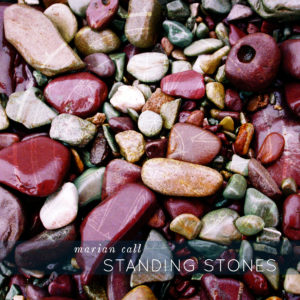
Standing Stones is the tenth album by internet musician Marian Call, now on tour (including a show in a week’s time adjacent to next week’s San Diego Comic Con). It’s been a long time in development, some two years, and it turned out to be rather more than an album. She describes it as a song cycle, which is not a term that you can use casually. It’s appropriate, though: there’s not just a theme to the album, but meaning in how the songs interact with one another; the order is particularly important, and it’s probably the best trace the stages of life collection since XTC’s Skylarking.

Call drops multiple references to The Twelve Ages Of Man and each song evokes an age, starting with a musing on both birth and death (Bones), continuing through the wild creativity of childhood (Paper), the realization that we’re not as fantastic as we thought (Oregon Trail), the desire to leave our mark on the world (Standing Stones), the reality of loss (Hope), the cynicism of modern life (Like This), the compromises that we fight against (Mediocre Algorithmic First Date), the need for community (Independence), the acceptance of pains and struggle (Vespers), our struggles with ourselves (The Devil), and a reflection on endings and the infinite (Grandpa Had It Right).

But here’s the thing — within that linear ordering, there are at other patterns. Through much of the album, there’s an alternating quick/slow tempo to the songs, moving quickly and then relaxing, like a heartbeat¹. Adjacent songs act as reflections of each other (Paper v Orgeon Trail looking at dreams; Standing Stones v Hope on what we build and lose; Like This v MAFD on how we present ourselves and who we really are). And Taking the Twelve Ages as reflecting both the progress of a life and seasons of the year, there’s a little cycle in each cluster of songs — dreams, building, relationships, sunsetting, each following a similar cycle.

As you noticed, there are only eleven tracks to go with the twelve ages, but Call’s got you covered there. Grandpa Had It Right reminds us that we’re only bones with stories on and carries us back to the start. Those bones show up throughout the cycle, and they’re an apt framework to hang the songs on. Another writer might have tried to get to the heart of who we are², but Call seeks to get to the bones of it; she knows that hearts break and fail, but bones persist. Long after our hearts are gone, our bones and the stories we grow on them will still be there.

I haven’t mentioned the music yet, or Call’s vocal performance, and it’s not because they’re lacking. I know words; I get them, I can pick them apart, find the meaning and truth (or at least a meaning and truth) in stories. My brain doesn’t pick apart music the same way; I can tell a good performance from a bad one (or more precisely, one that accomplishes what it sets out to do from one that doesn’t), but I can’t tell you about the importance of how this instrument plays against that, or how the scales line up. Hell, I’m practically beat-deaf.

But I can tell you that there’s a lot of richness to the playing, blending into an integrated whole that never overwhelms the most important instrument — Call’s voice. There’s discussion in these songs, as she talks to others we cannot hear (and sometimes, to herself). The emotional heft — from wistfulness to optimism, determination to acceptance — has a depth and breadth, drilling into the feeling part of your brain and not letting go. You won’t catch it all on a single listen, or even two. You’ll need to listen to think, and again to feel, and again to bring them all together.

And, if you’re like me, a half-dozen more times in short succession just because it all helps you make sense of the world when it’s not making a lot of sense on its own.

Standing Stones is available for download in a variety of formats, and as a CD. Marian Call is on tour through November; if you don’t see your city listed, email her.


Spam of the day:

Search Cell Phones For SENIOR CITIZENS

Ain’t that old yet. Get lost.

_______________
¹ Is it my imagination that the strength of that heartbeat is greater at the beginning of the album than at the end?

² Or, in one writer’s equally valid argument, the liver.

Fleen Book Corner: Knife’s Edge

Here’s what I wrote eleven months back regarding Compass South (book one of the Four Points series, words by Hope Larson and pictures by Rebecca Mock):

Much has been made of the similarity of comics and movies, but Compass South makes me think that the stage is a better comparison. The stock characters of comics — mysterious playboy/nighttime hero, the youthful ward, the alien with powers beyond those of mortal men, the angsty teen thrust into responsibility — are just as recognizable as the stock characters of the commedia dell’arte — the doomed lovers, the evil prince, the hidden twins, the unscrupulous businessman, the unrepentant villain, and the jolly comic relief — that Shakespeare appropriated and made central to the theatrical world. Larson’s combined the two traditions, and it makes for a cracking story that enriches both.

There was a footnote, too, where I commented on another influence:

[I]n addition to comics and theater, there’s the literature of the time. More than one character in Compass South is more than a little Dickensian, including a guy who’s very possible Fagin’s second cousin twice removed (in temperament, if not not actual relation).

I think I was onto something there; Knife’s Edge (book two of the Four Points series¹, words still by Larson, pictures still by Mock) switches from the Shakespearean mode of shifting between competing protagonists to the Dickensian mode of a primary protagonist with supporting characters of varying importance in orbit.

In part that’s because of where we are in the story (which Larson efficiently recaps, oh and obviously — spoilers ahoy): we’re down one set of twins, we’ve found one long-lost father, and the villain is already established. Not having so many balls to juggle, Larson can focus the story more narrowly, and she’s chosen to put it squarely on the distaff Dodge, Cleo.

(This is where the Dickensian analogy fails somewhat — Pip and Oliver can suffer travails and come out happily prosperous; Little Nell is doomed to die of consumption.)

Alex has it easy — he can declare he’s going to be a tall ship captain and have a shot at making it come true. He can indulge in the relatively simple, linear path that male heroes get to follow:

  • Long-lost father found? Check!
  • Villain identified? Check!
  • Clear and reasonably achievable (if challenging) goal to ensure lifelong success? Check!
  • Sudden revelation that there’s a long-lost mother as well? Don’t care!

Cleo has to navigate the much more labyrinthine path that she’s afforded in 1860: she’s expected to take care of her semi-invalid father and help out in the ship’s galley. No sailcraft for her, and as soon as it’s discovered she’s convinced the captain to give her swordfighting lessons², that’s stopped because it’s inappropriate.

But here’s the thing — she’s got more imagination than Alex; she sees the many possibilities that aren’t laid straight out, living in a world with greys instead of pure blacks and whites. Alex isn’t interested in learning about their piratical heritage, but it doesn’t quench Cleo’s wanting to know who and why.

That ability to think laterally proves critical in the final defeat of the villainous Felix; Cleo can imagine how clever her never-met mother would be, where Alex only sees the situation directly in front of him. And if finding answers — not treasure, not glory, answers — means declaring truce with the enemy³, then that’s what she’s going to do.

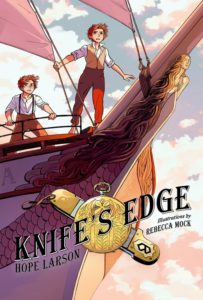
The internal character of Cleo and Alex is found throughout Mock’s gorgeous illustrations; it’s not easy making 12 year old twins look different, but she does. Cleo and Alex wear slightly different clothing, but it’s subtler things that let you know who they are. They part their hair on different sides; they have different postures; Alex’s gaze more frequently angles slightly down, while Cleo’s is up.

But the real difference is on the gorgeous cover. Alex is solidly braced on the railing, in his environment, but a little behind Cleo and subconsciously following her lead; she’s looking out to the horizon, posed like she’s ready to leap forward. The sailor’s world may not wholly accept her, so she’s looking for the place that will. That vision makes her susceptible to temptation and corruption, but brings with it the strength to achieve redemption.

By the end of the story, she’s ever so slightly taller than Alex, too — grown sooner than the boy that’s got it all figured out. And if Cleo (and Alex, and Father) doesn’t quite get the ending she figured, she’s smart enough to know that the happy outcome can be more subtle than a 12 year old with a head full of imaginings would initially suspect — finding her place in the world is a smaller victory than she’d expected when she set out from Manhattan’s slums, but a meaningful one.

Give both Knife’s Edge and Compass South to anybody that loves a good story of adventure, but particularly the pre-teen that needs reminding girls have awesome adventures too.


Spam of the day:

20 Summer Life Hacks To Get You Through The Hot Season

If this reads anything other than avoid pants, I ain’t interested.

_______________
¹ Alas, it appears there will not be a third or fourth book (which you’d think would be a natural with a series title like Four Points).

² She has a well-founded fear of what a particularly nasty pirate has in mind for her family, and doesn’t want to meet a potentially bad fate passively.

³ No matter how obviously that’s going to blow up.

Deep Bench

Did I just accidentally use a softball term? I think I did.

  • One may recall that, oh, two months back or so, NPR Books asked for input as to what comics people should be reading as part of a summer reading list. More than 7000 entries were submitted, and an expert panel¹ (revealed yesterday to include webcomics own Spike) broke that mass down to a list of 100 comics. Not the best, not the most well-known², but a wide list of comics works; having a familiarity with a good chunk of them means that you’ve got a handle on the art from (although dominantly as expressed by American/Canadian creators; there were not a huge number of manga on the list, and even fewer Eurocomics).

    And, as noted a couple months back, they gave webcomics a seat at the table — nineteen of the even 100 entries on the list are explicitly identified as webcomics, with more items listed in other categories that originated as webcomics, or are created by people that came up from webcomics, or which are web/indie in their essential nature. Here, then, are the webcomics (and webcomics-alikes) that mass agreement and expert opinion think you ought to be reading:

    John Allison’s Tackleverse comics, the editorial stylings of The Nib, Wondermark, Hark! A Vagrant, Homestuck, As The Crow Flies, Oh Joy, Sex Toy (!), Stand Still, Stay Silent, Check, Please!, Gunnerkrigg Court, Kill Six Billion Demons, O Human Star, The Less Than Epic Adventures of TJ And Amal, Saturday Morning Breakfast Cereal, Vattu. It would be hard to disagree with any of them.

    Originally (at least partly) webcomics, but tagged under different categories, you’ve got Nimona, Through The Woods, Megahex (Graphic Novels); Finder³ (Series Comics); Dykes To Watch Out For (Newspaper Strips, although it’s at least as much a webcomic); American Born Chinese (All Ages — not that age appropriateness alters the ability of a story to fall in one of the genre/topic categories). You also had once-and-future webcomickers Raina Telgemeier (Ghosts), Kazu Kibuishi (Amulet), and Ryan North (The Unbeatable Squirrel Girl). In all, better than a quarter of this stab at a canon is webcomics or webcomics-releated.

    There will be plenty to disagree with, naturally (no Achewood, Octopus Pie, or Drive?), but that’s why canons exist — to be argued over, refined, resolved, agreed upon, and rejected all over again. It’s a good start, though, and there’s almost certainly plenty for you to discover (on a fast skim, I appear to have read 53 of the 100 suggestions).

  • Also not on the list, for the piddling reason that it’s not technically published yet: a print collection of 100 Demon Dialogues by Lucy Bellwood (Adventure Cartoonist!), which project wrapped up about two hours ago (as of this writing), and which Kickstarter launched shortly after.

    It’s been a terrific project to watch over the past three months or so — Bellwood has been dealing with the voice in her head (he’s a jerk) that tells her what she can’t do by forcing the little bugger into conversation. We’ve all got that demon, reminding us of our failures and telling us not to bother, and remembering that fact is a pretty good way to rob them of the power they have over us.

    The book is going to be gorgeous, the demon plushes are going to be great, and you want to get in on this. At the (again, as I write this) 1 hour 45 minute mark, Bellwood’s at just under 38% of goal, but kindly do not sleep on this. The campaign will run less than three weeks, and if you miss it your little jerk demon will certainly tell you that you screwed up.

    And if nothing else, the video is priceless. I need to know who does the demon voice because it’s perfect.


Spam of the day:

Confirmation Needed: $100 Kroger Gifts Inside

I don’t believe there is a Kroger (or as we said in my Midwestern college days, kro-zhay, ’cause it’s obviously French) grocery store within a 5-6 hour drive. Maybe next time try to bait me with a fake coupon that wouldn’t be essentially impossible for me to use?

_______________
¹ Somewhere, heads are exploding over the fact that four of the panelists are women. Sources close to the explosions were quoted as saying Girls are icky and get their cooties on my funnybooks.

² But which inevitably includes Watchmen, The Dark Knight Returns, Persepolis, Maus, Jimmy Corrigan, A Contract With God, and Action Comics #1

³ Finder’s been both, so this one is arguable.