The webcomics blog about webcomics

Comics Camp: Sunday

I’ll be honest; Sunday started a bit stressfully for me; Pat Race had asked me to give a presentation on the history of webcomics, and I was in absolute terror it would devolve immediately into uselessness:

Hey, Ryan North? Remember when you pranked Wikipedia about chickens? That was great. And Kate Beaton, you did a comic where a duck said “Aw yiss”. That was great, too.

And to be honest, I have to this day little memory of what I actually said. I have notes, mind you, that say things like The first webcomics are about as easily identified as the first jazz or punk songs and (double-underlined) Algonquin Roundtablesque!!

I remember my main thesis being that webcomics (aside from being a useless term, but we haven’t come up with a better one yet) is less a medium of distribution and more of an attitude: creator ownership, minimal gatekeeping, merchandising on the back end for scrappy entrepreneurship. It’s an attitude whose technical and business rules are constantly changing, and whose only constant is the ease of collaboration. Not just between cartoonists, either; I remember this bit:

So one day I leave my offices at Bryant Park in Manhattan, and as I walk by the southern end of Times Square, I noticed a full-sized billboard advertising W00tstock 2.0; it’s portraits of a former child actor/writer, an SFX goofball that blows things up for science, a pair of internet musicians/pirate fetishists, and it’s all been done 8-bit style by a quasireclusive pixelsmith.

If Dorthy Parker got drunk with fewer writers and more sculptors, aviatrixes, and telegraphers you’d approximate the degree of cross-media collaboration you have going on now. Instead, you’ve got Marian [Call] including NASA mission controllers in her shows and Molly Lewis gets hired by quasi-respectable party game designers to write a Christmas song about a Hawai’ian goddess with a flying vagina¹ because why the hell not.

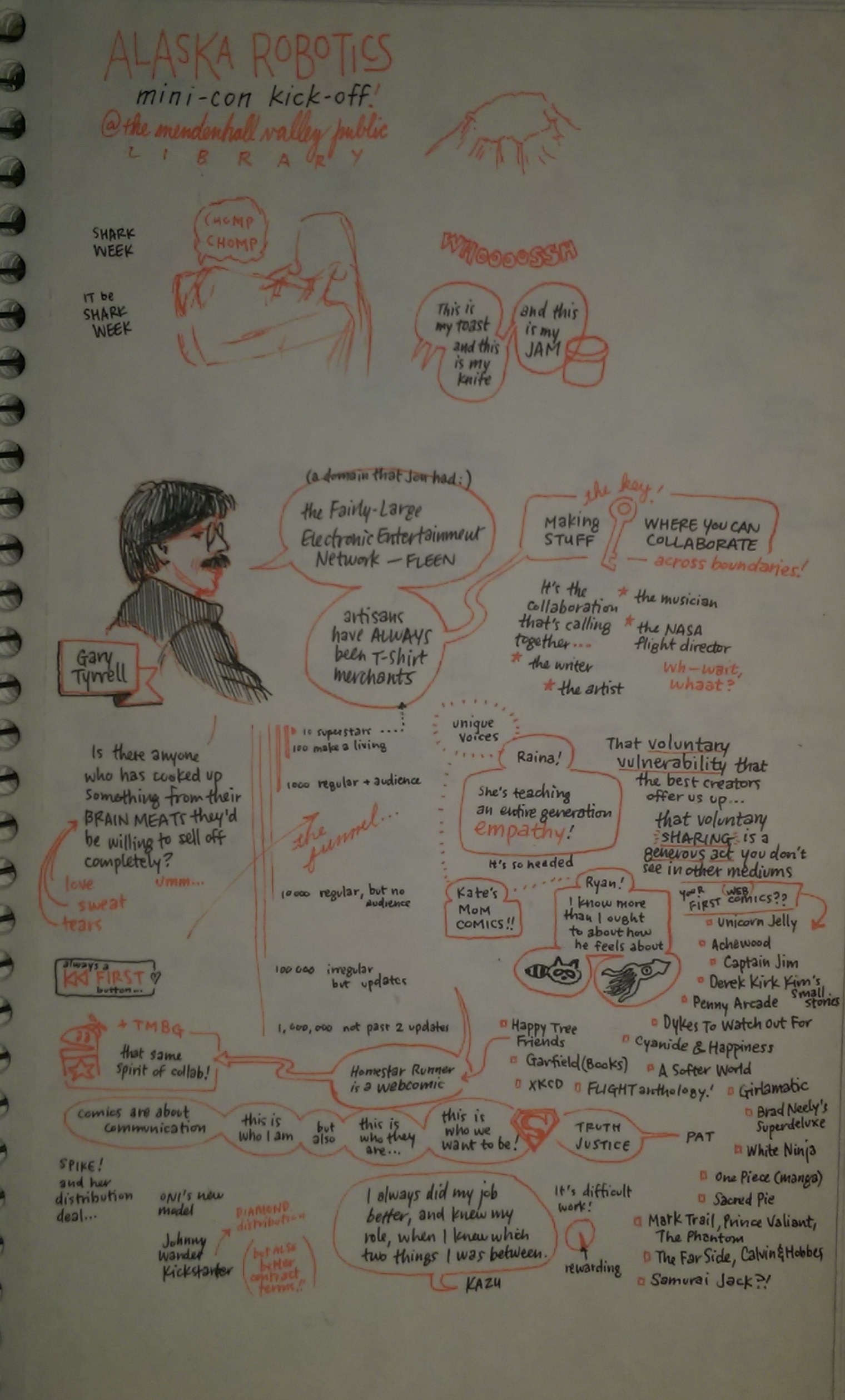
Shortly after that, I shifted away from talking and turned it into a discussion session, getting people to share what they saw webcomics as, where they started, what their experiences were; considering that the room contained the likes of Kazu Kibuishi and Ryan North, it seemed a pretty good course to follow. Fortunately, the invaluable Jason Alderman did his thing and sketch-noted the session²; if you follow his twitter, you’ve seen these before when he attends sessions at various conferences. He doesn’t just take notes, he renders the speakers and finds their key points in real time, turning them into the most beautiful recaps imaginable. When you meet him, demand to look through his notebook, because you will very quickly get smarter on a wide variety of topics.

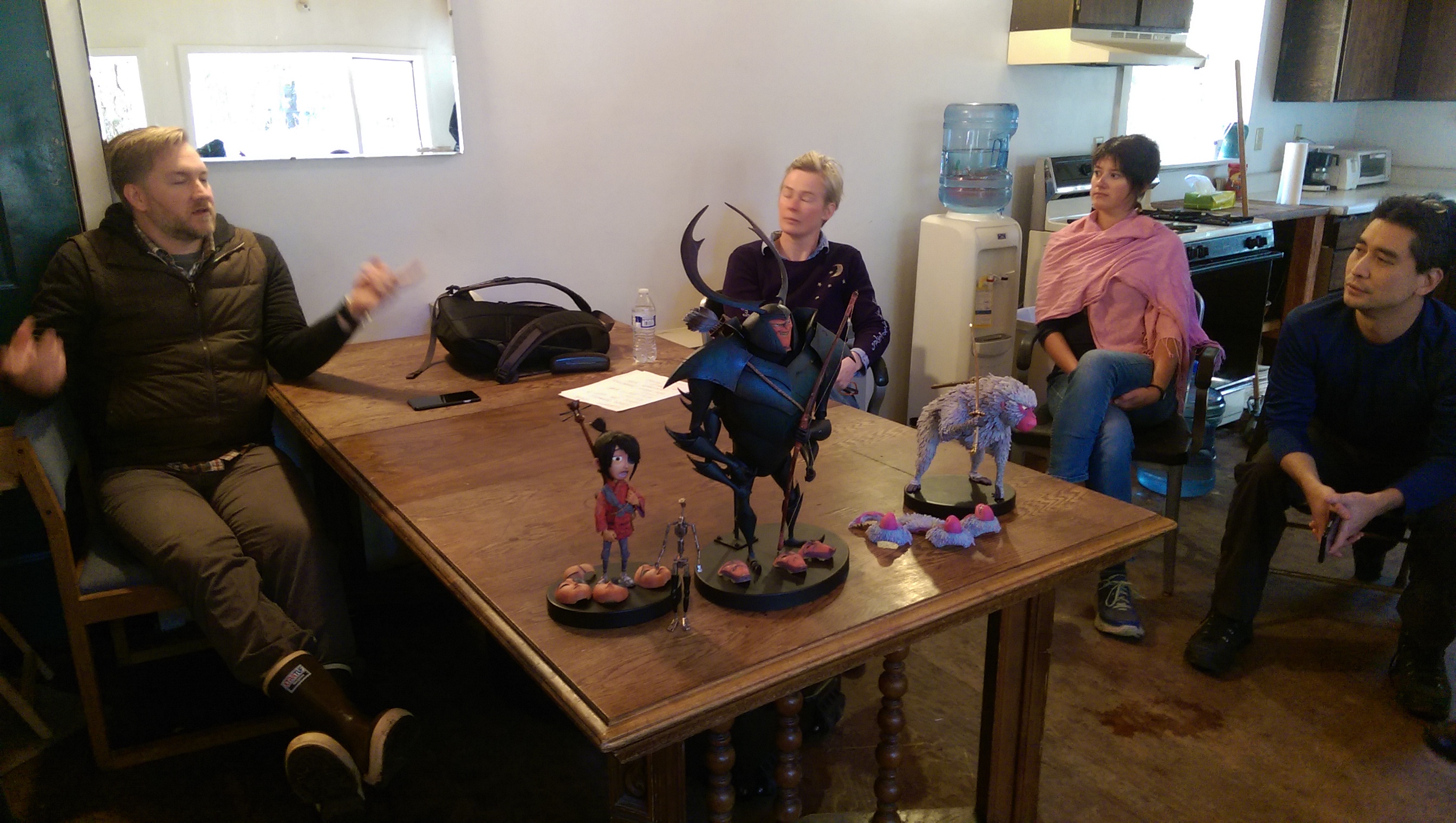
It was a good time; people went out of their way to thank me for the discussion later, and having the first time slot meant I was able to relax for the remainder of Camp … thanks, Pat! Even better, I got to see the next session, where Jeremy Spake and Georgina Hayns (mentioned yesterday) brought out the puppets and armature they’d shown at the Mini-Con, and really got down to details with us. For 90 glorious minutes we learned about fabrication, the CNC and 3D printing techniques used to construct the puppets³, and had our minds blown by the intricate details. Much more about this down in the photos section. Let me just leave you with a quick thought, though — when the stop-motion needs to look especially smooth, there are variant puppets with multiple limbs or whatever so that, say, an arm can be in multiple places at the same time. It’s the stop-motion equivalent of smear animation.

At lunch, I learned just how different life in Alaska can be; Sarah told me about living on an island approximately 100 km west of Juneau, where a fortunate quirk of geography allows a straight line of sight to a cell tower that provides enough internet to permit a freelancer’s life. She consults on land use and conservation policy, mixed with teaching art and movement. The nearest neighbors are 5 km away, and overwintering is a matter of personal choice and preparation. If the apocalypse ever comes, I want to convince her that I’d somehow be useful to her because she represents my best chance at survival.

Figure drawing took up a chunk of the afternoon, as did various project noodlings. Alderman brought along a little hand-cranked music box mechanism and a set of paper sheets that could be punched with holes to specify what notes would be played; think a very small player piano4. Call punched one of her songs into a strip and then wondered if it was possible to turn that into a Moebius song. Turns out it was, and the very quiet music became nicely amplified if the mechanism was held firmly against the body of one of the many camp ukuleles. Did I mention that there were 40 ukes delivered to Camp, leading many to take up the instrument? Because that happened.

Raina Telgemeier taught about how to present and get paid to do so; Tony Cliff showed how to snazz up those presentations with fancy flying transitions. Dinner featured the most nutritious cut of steak, and my turn at clean-up meant I missed much of the most significant session of the weekend as Cliff convened the Pacific Order of Onomatopoeia Professionals First Annual Regional Terminology Summit5 to decide once and for all how to spell certain sounds in comics. Suggestions were gathered, voting was conducted6, and Cliff released the final results [PDF] a couple of days ago. Comics creators, please note that the results linked to are definitive, official, and must be used as shown on pain of looking very foolish.

The last program of the night was the most insanely creative thing I’ve ever been involved in, but I’m going to be purposefully vague; as I mentioned at the start of these recaps, some things that took place at Comics Camp can — should? may? — only exist in the context of the time and place they took place. To delve into them too deeply is to rob them of meaning.

So it was as we gathered to create a musical — a main character was brainstormed, the introductory, “I Want”, villain, and emotional turning point songs were outlined, and we broke into four groups to actually write the damn things. I will show you in the photos section some wisdom from Marian Call, who shared her process for getting that first line of a song written; I think her technique applies to nearly any creative endeavour. Ultimately, I contributed two titles7 and one good line8.

Just about an hour from the start of the exercise, The Doubleclicks started playing the first song and the others followed as quickly as one musician could sit down and the next stand up. I am being completely honest with you when I tell you that more than one of them has been rattling around in my brain near continuously ever since; they are legitimately that sticky. Surprising everybody and nobody, there was a Hamilton-style rap from Pat Race.

I called it early that night, and so it wasn’t until the next morning I learned the anticipated northern lights were thwarted by cloud cover, but Ben Hatke mitigated the disappointment by teaching people how to breathe fire. In case you ever wondered what mineral oil tastes like, about half the Campers can tell you.

Photos

  • Along with everything else, Jason Alderman’s handwriting is extraordinarily neat. Sketchnotes of my talk on the history of modern [web]comics.
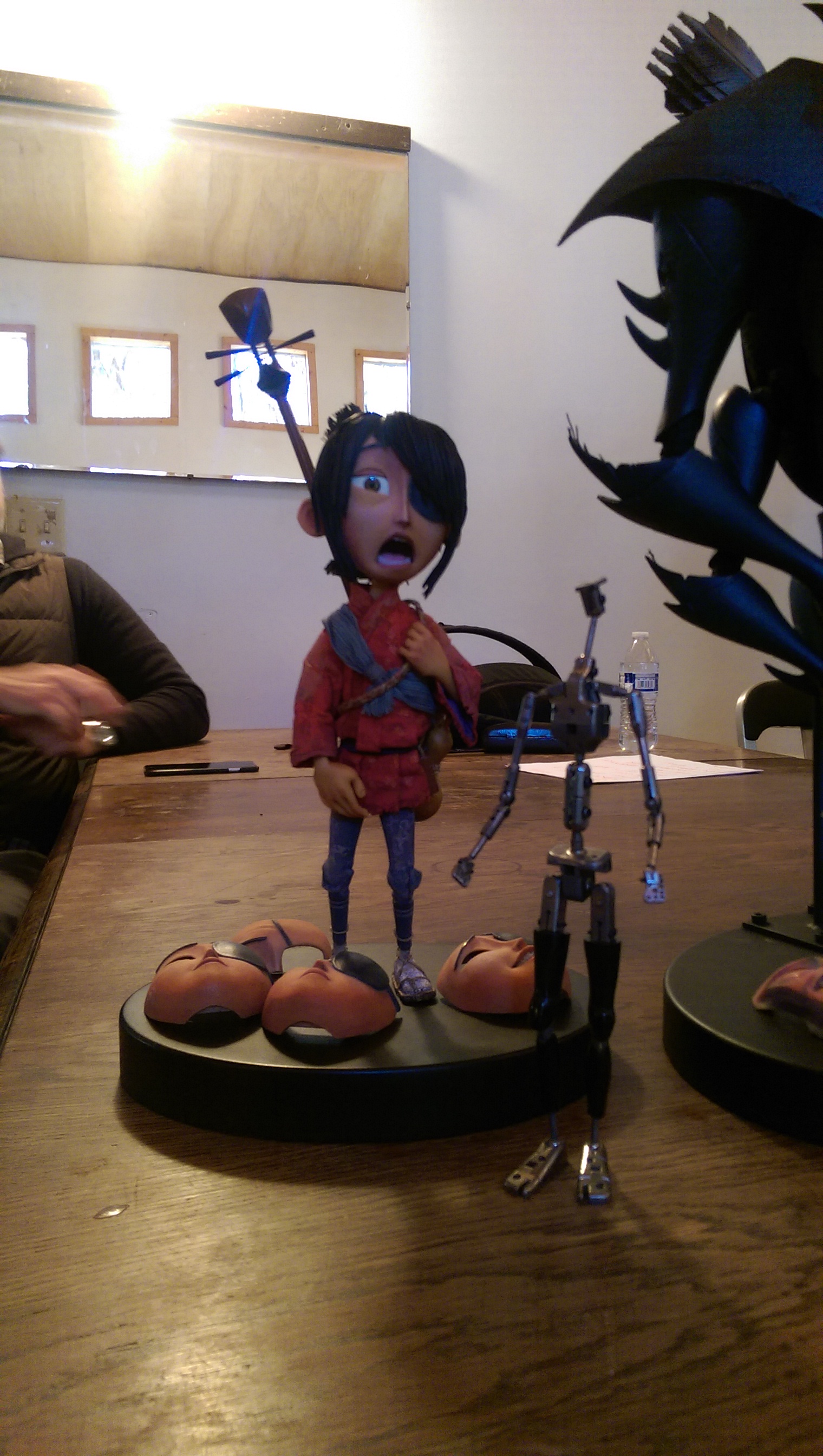
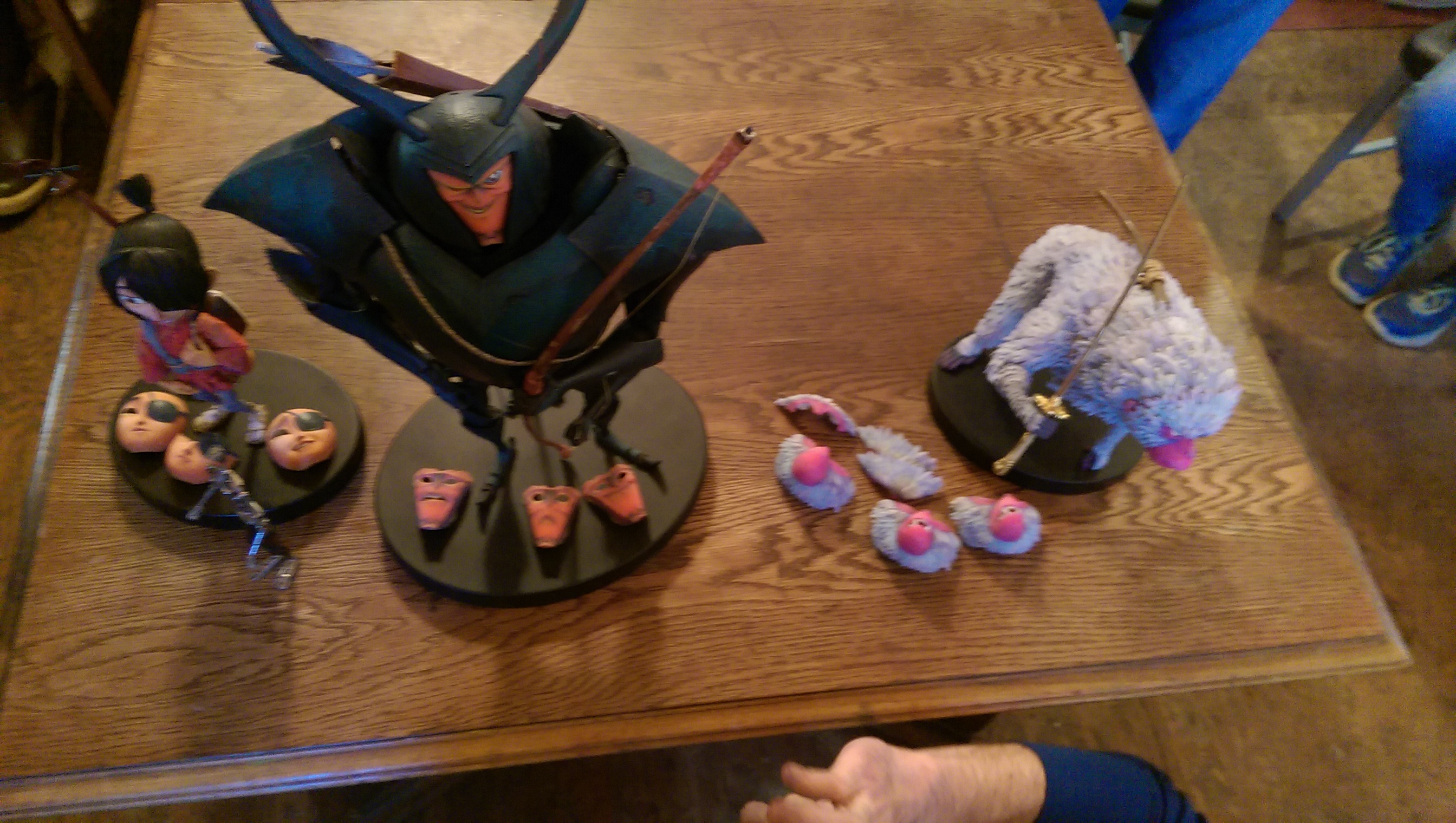
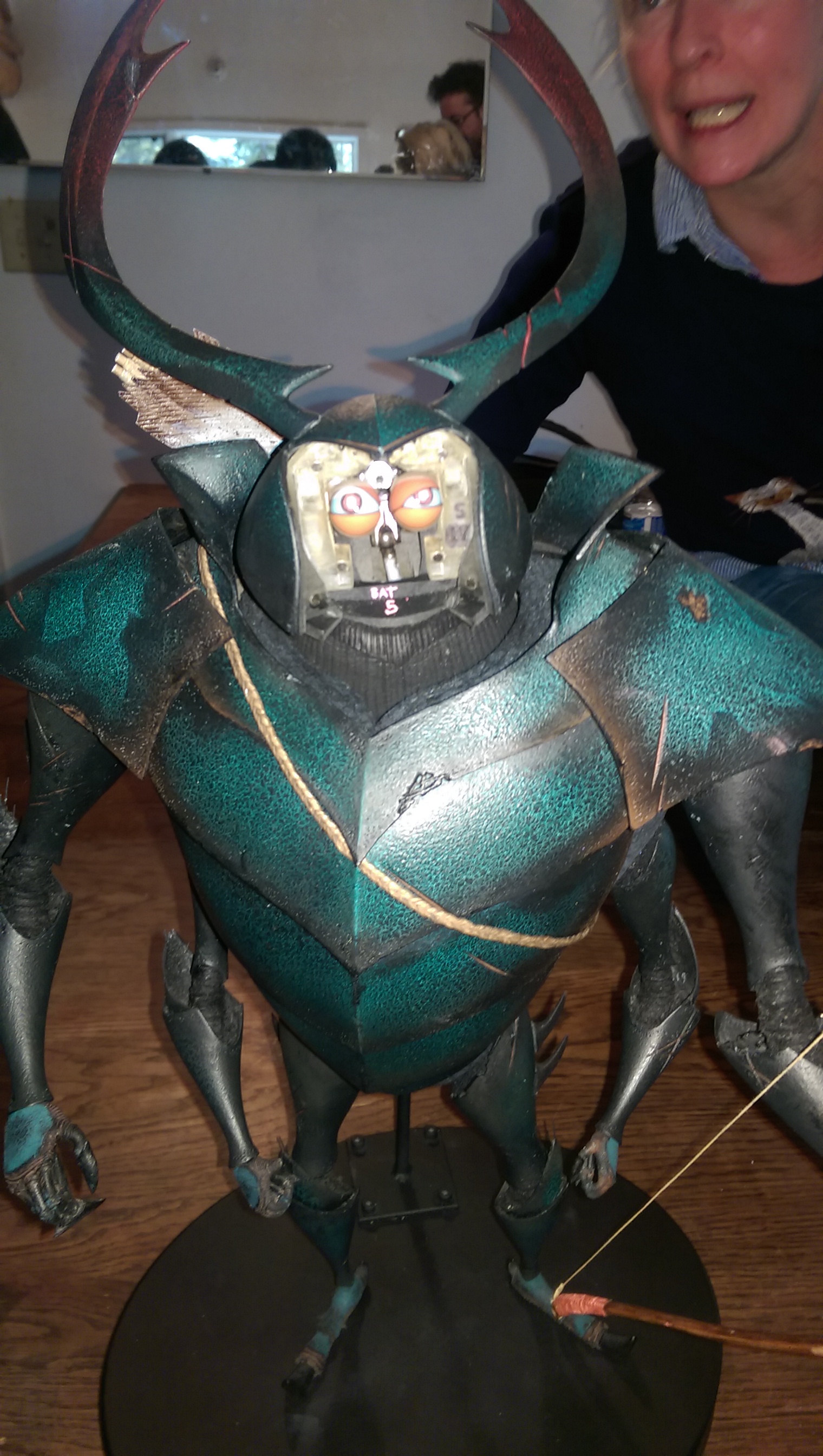
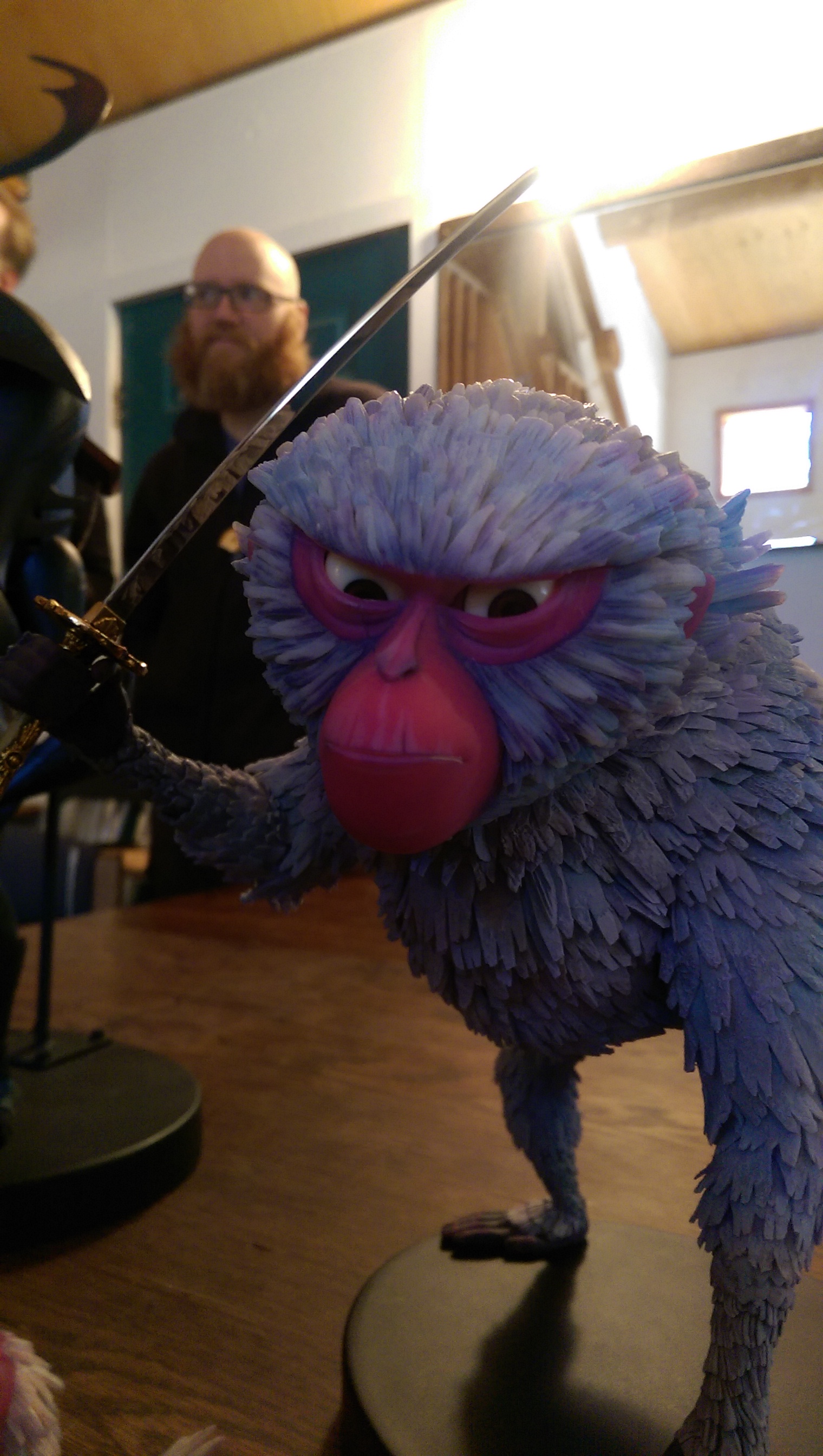
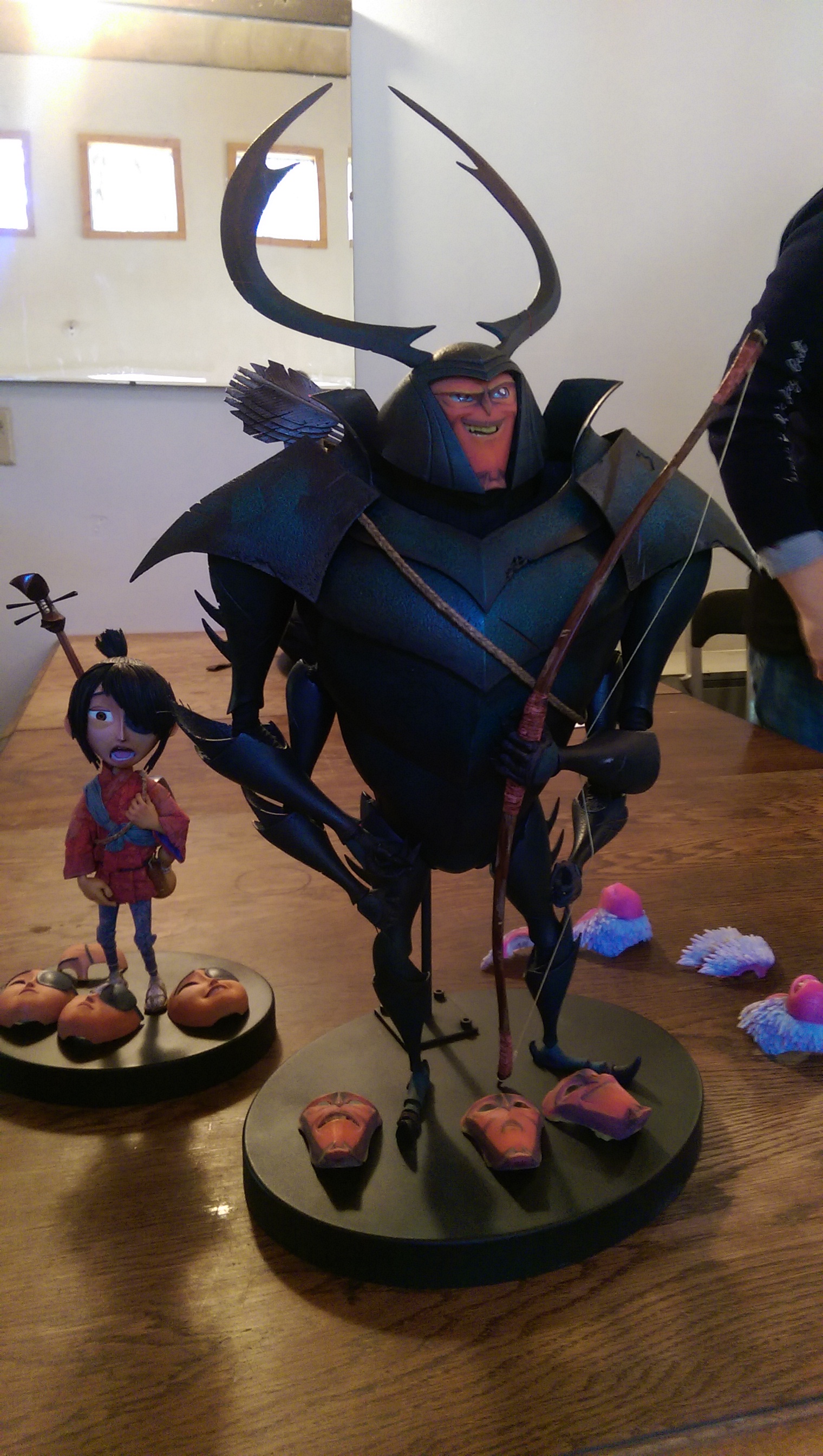
  • To start our deep dive in the Laika’s finest, let me note that it’s possible to take a photo where just about everybody’s eyes are closed. From left: Jeremy, Kubo, Kubo’s internal armature, Beetle, George, Monkey, Sarah, Kazu.
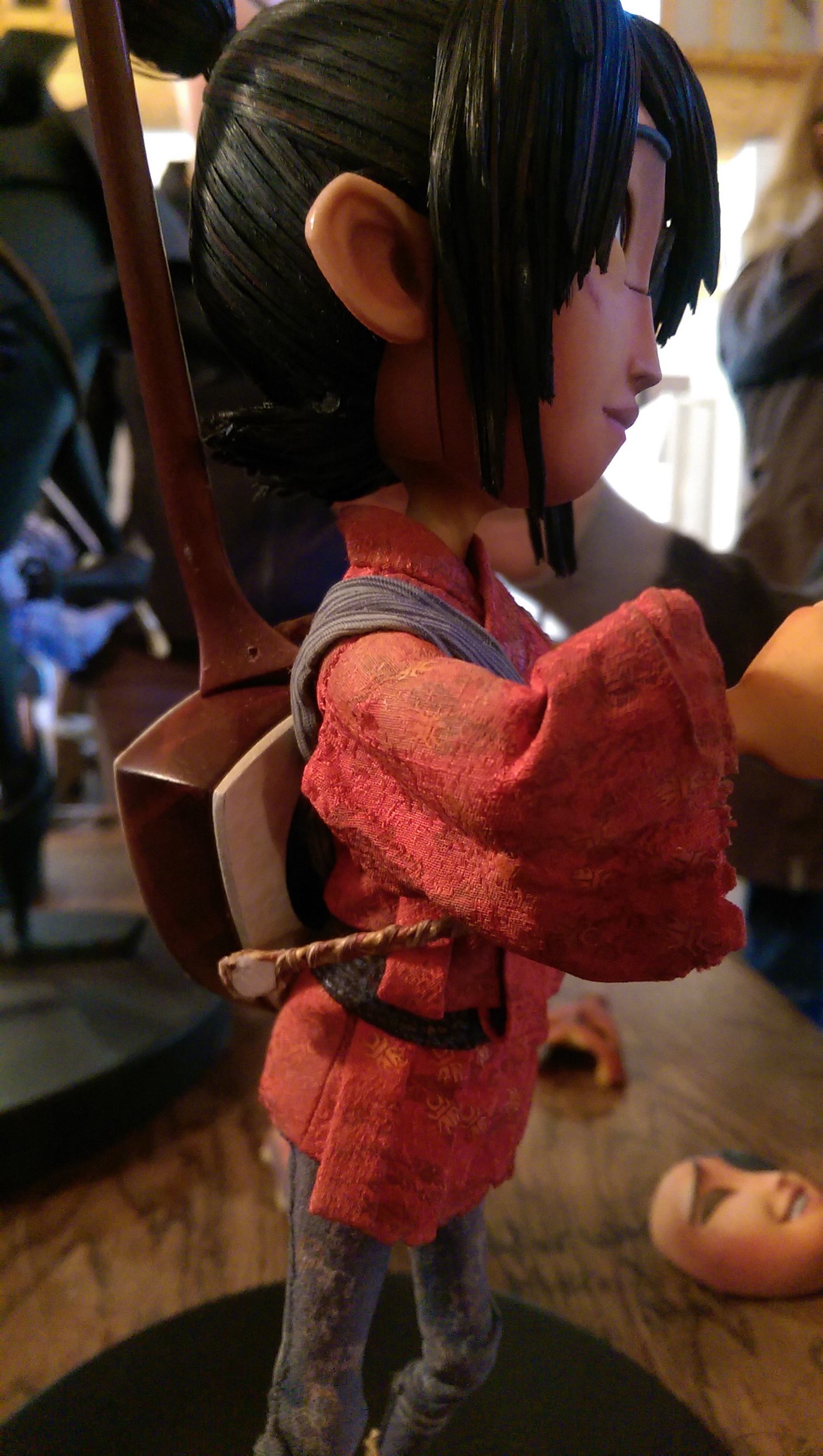
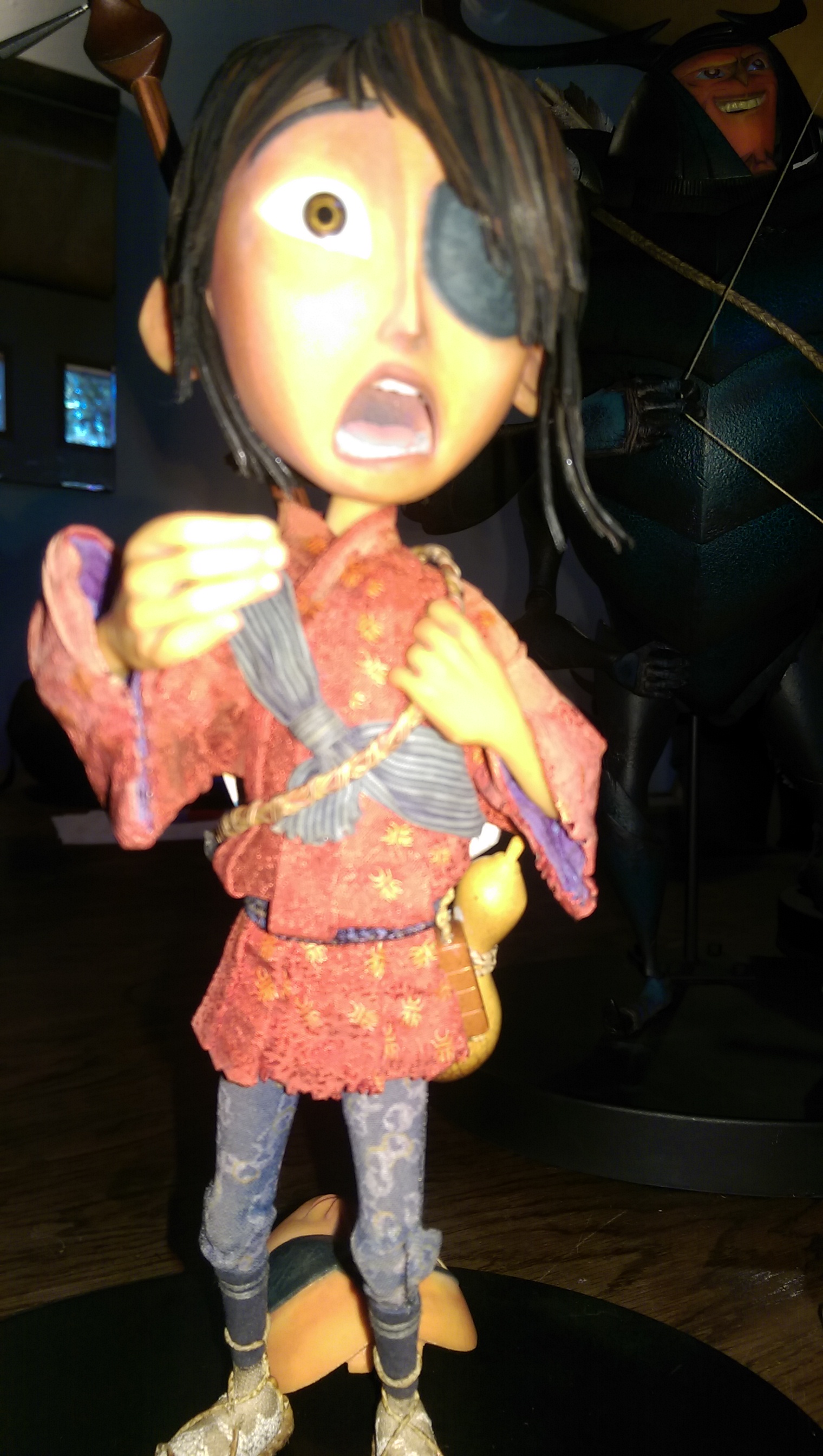
  • The puppets all start with an internal armature; here you have a full-dressed Kubo and his internal structure. You can’t see it but it’s got tensioning screws for each and every joint except for the fingers and the jaw. The fingers don’t have metal inside (too small), but are fully poseable. The jaw isn’t jointed, but implied by the shape of the face plates.
  • Okay: faces. They each consist of an upper half and a lower half; they allow for different mouth positions and expressions, and they pop right off. High strength miniature magnets hold the plates in place, and each piece is inscribed with a unique serial number describing exactly what it is. Popping off just the upper face gives access to the eyes and eyelids, which can be individually positioned however you like. Here’s a better shot of the upper and lower eyelids.
  • With the face plates in place, seams are still potentially visible — as here, in the bridge of Kubo’s nose — which are removed digitally. George mentioned that on Coraline, Henry Selick argued strongly to leave the seams in, as an acknowledgment of the physical nature of the stop motion creative process.
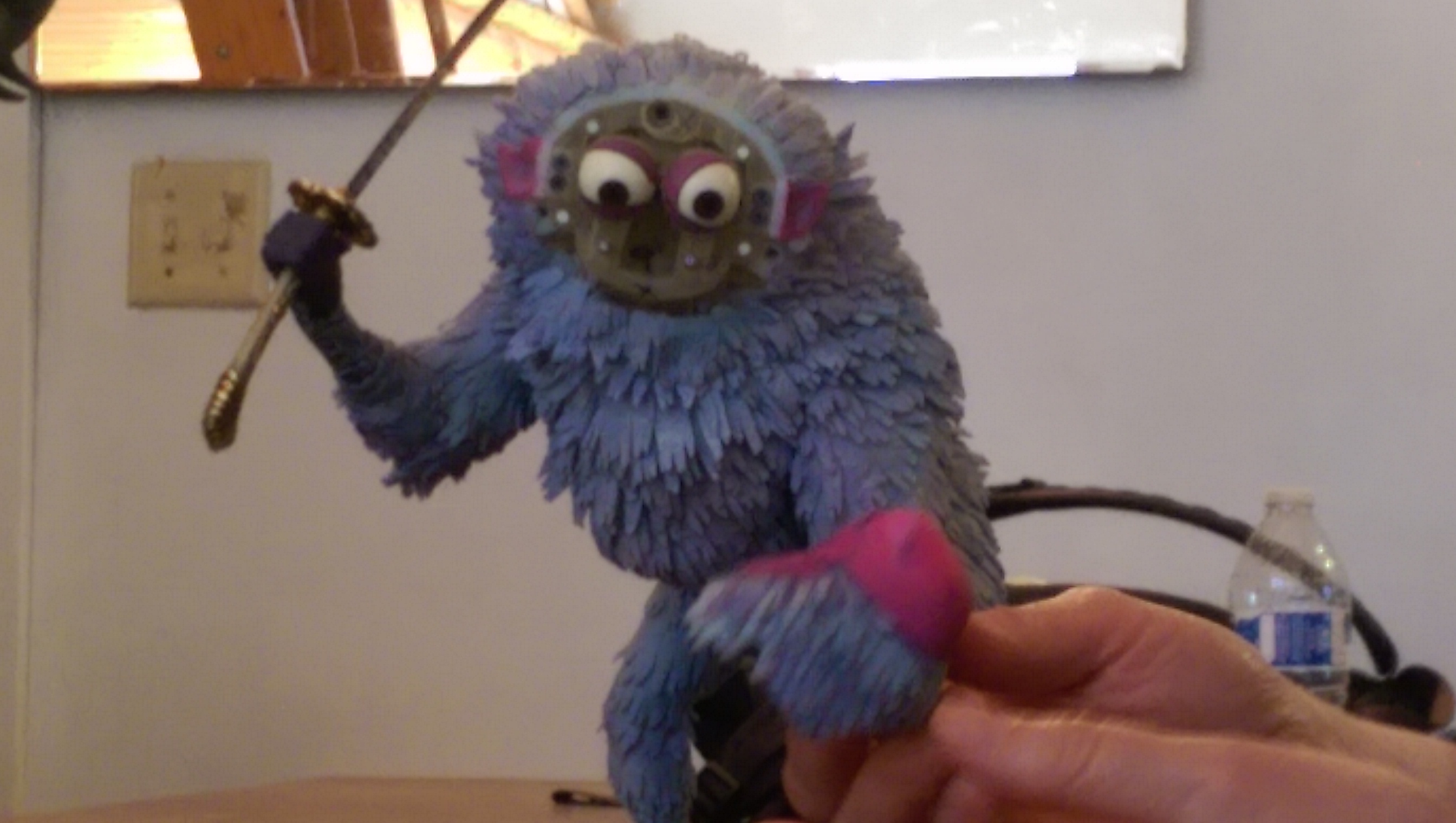
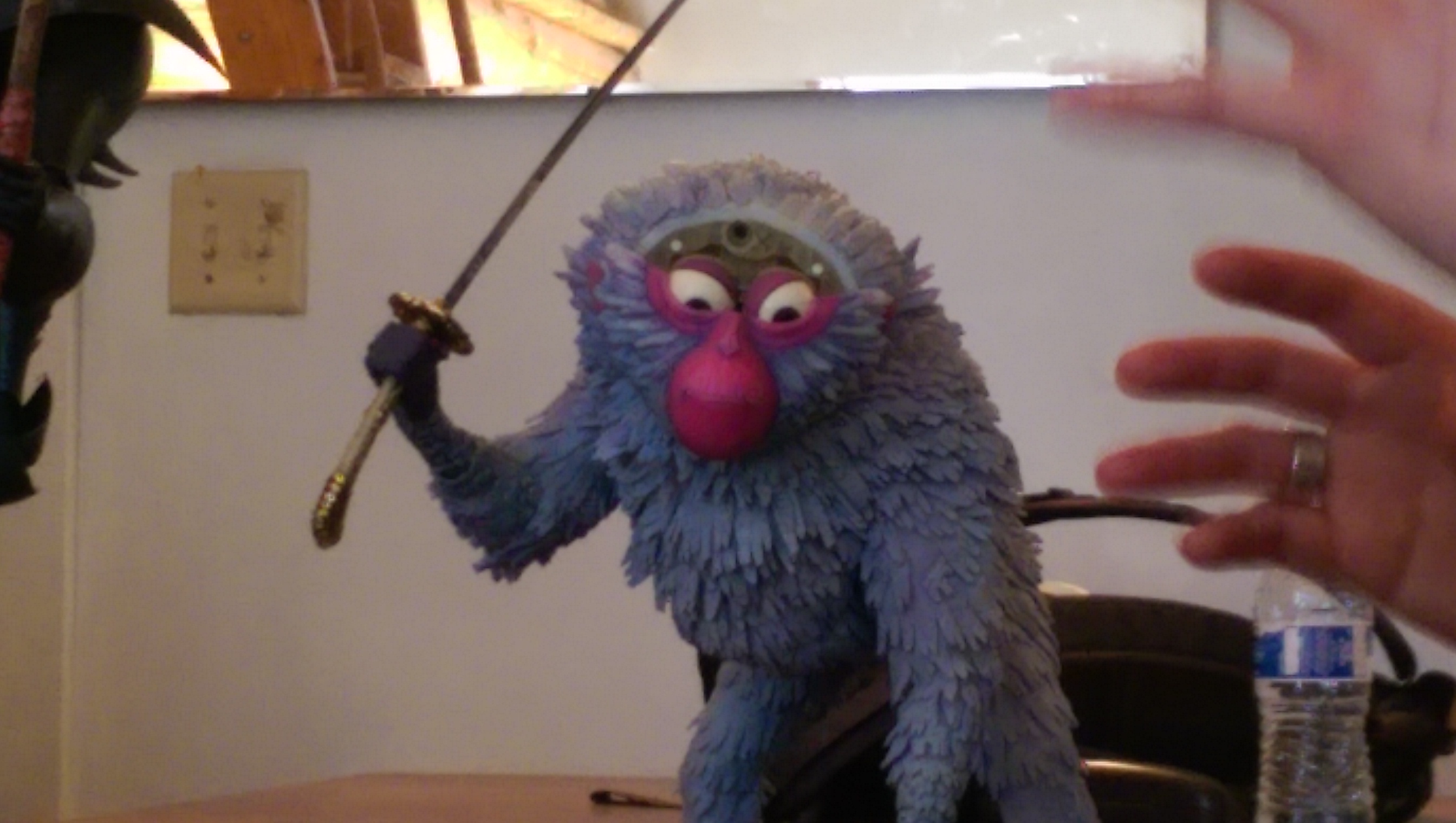
  • The models themselves hide access points for tensioning their armatures, and connection sockets for when the model must be supported externally due to posing; in Kubo or Monkey, it’s under clothing or fur. In Beetle, there are little pop-off panels and bits of cloth where joints meet. Monkey’s fur is made from a four-way stretch fabric which has been impregnated with a silicone; it stays where you pose it. Kubo’s hair is human hair, likewise laced with silicone for posing.
  • I’ve over-lit this shot so you can get a good look at the clothing; Hayns said that cloth is a particular challenge because it doesn’t look right at scale without significant effort.
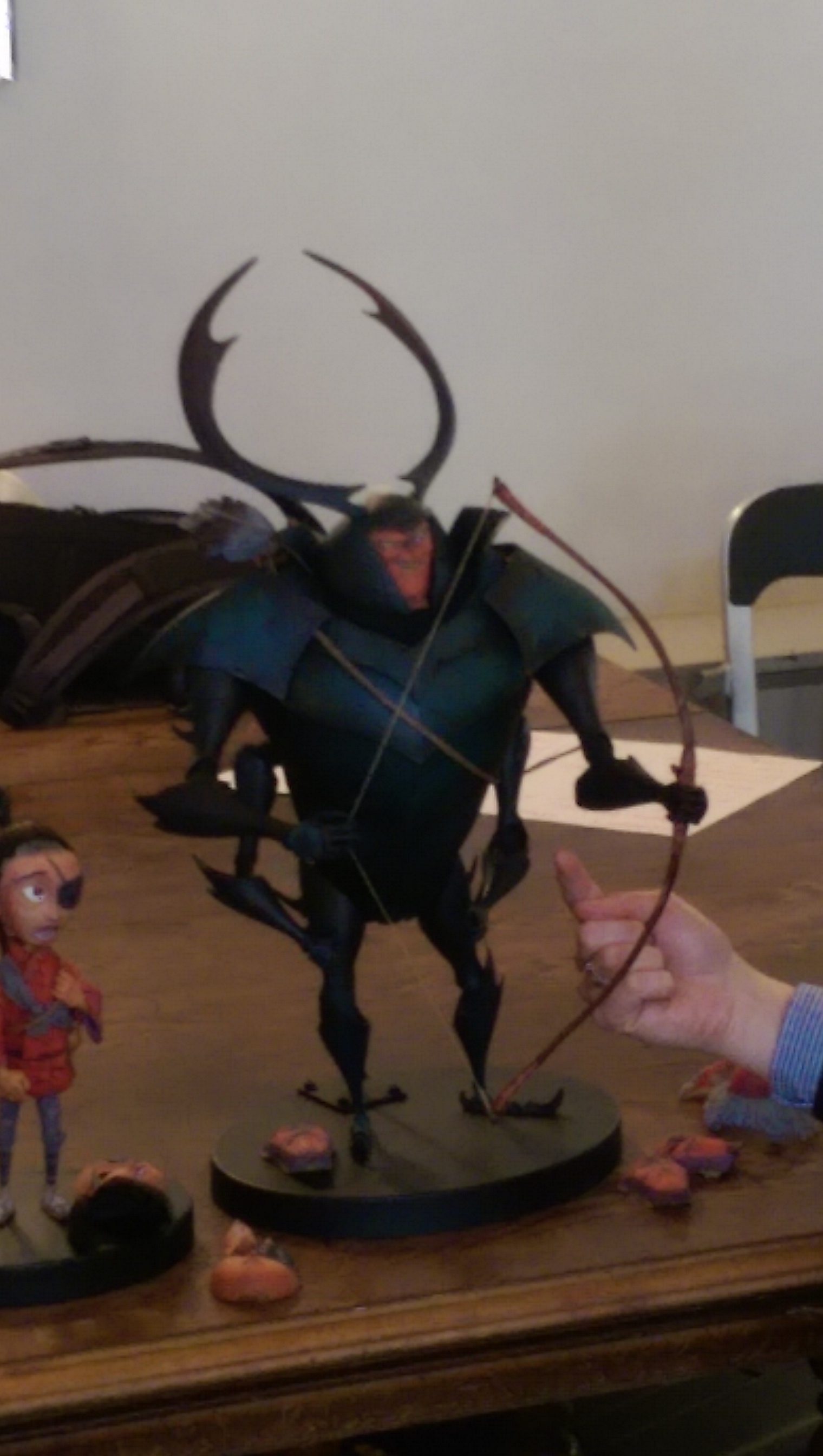
  • Everything on these models is poseable. Beetle’s six limbs can move widely enough to draw his bow, for instance. It’s not a different model or a different bow. We were all very careful in positioning the models, despite the fact that they’re meant to stand up to significant wear and rough handling. There’s just so much care in their construction, we couldn’t treat them cavalierly; they are legitimate works of art and the highest craftsmanship.
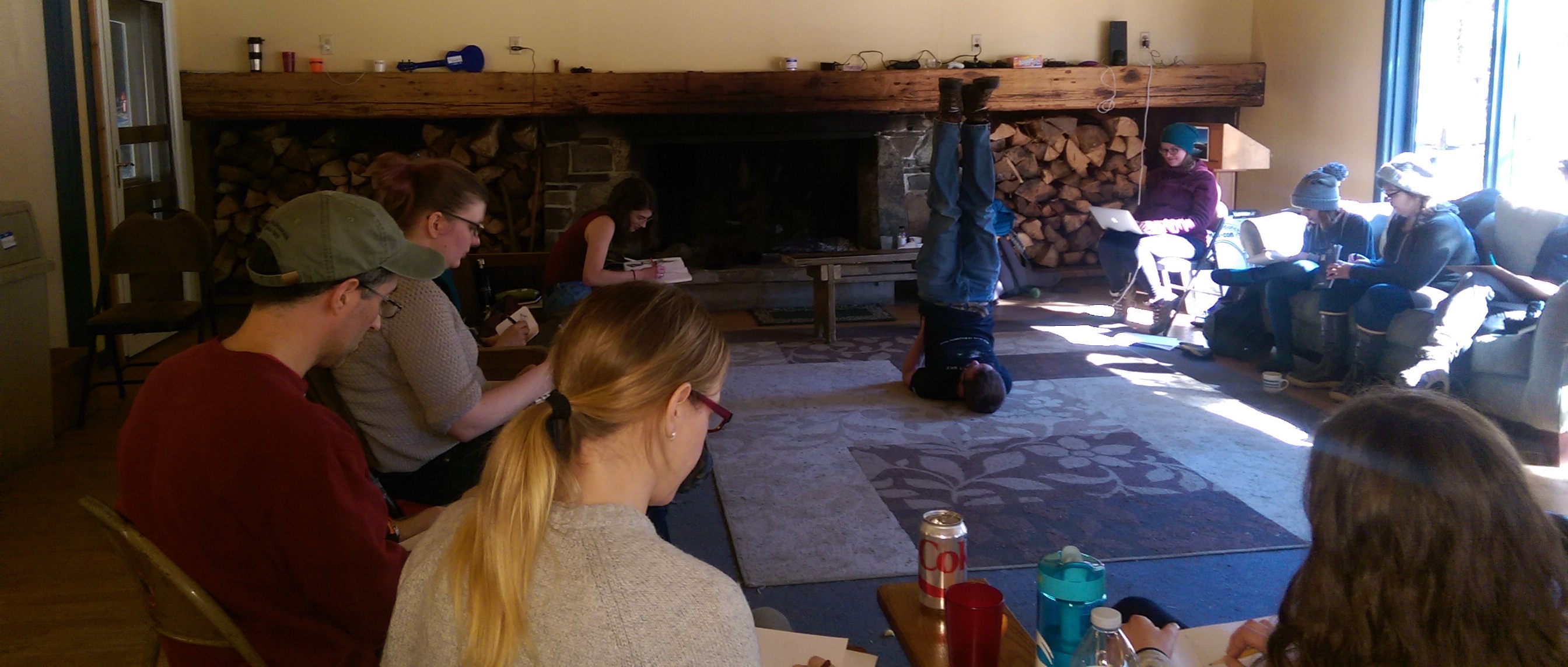
  • Figure drawing; the fellow providing that rock-solid five minute pose (!) is Khail Ballard, and you should read his stuff. Ballard also played the lead in that night’s musical.
  • You thought I was kidding about the ukes, didn’t you?
  • Voting underway in the wake of the POoOP FARTS debate.
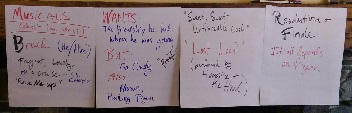
  • How to get to that first line, by Marian Call. I’ve been thinking about this one a lot.

________________
¹ The fact that I got to nod at Molly Lewis while saying that last part is a highlight of my life.

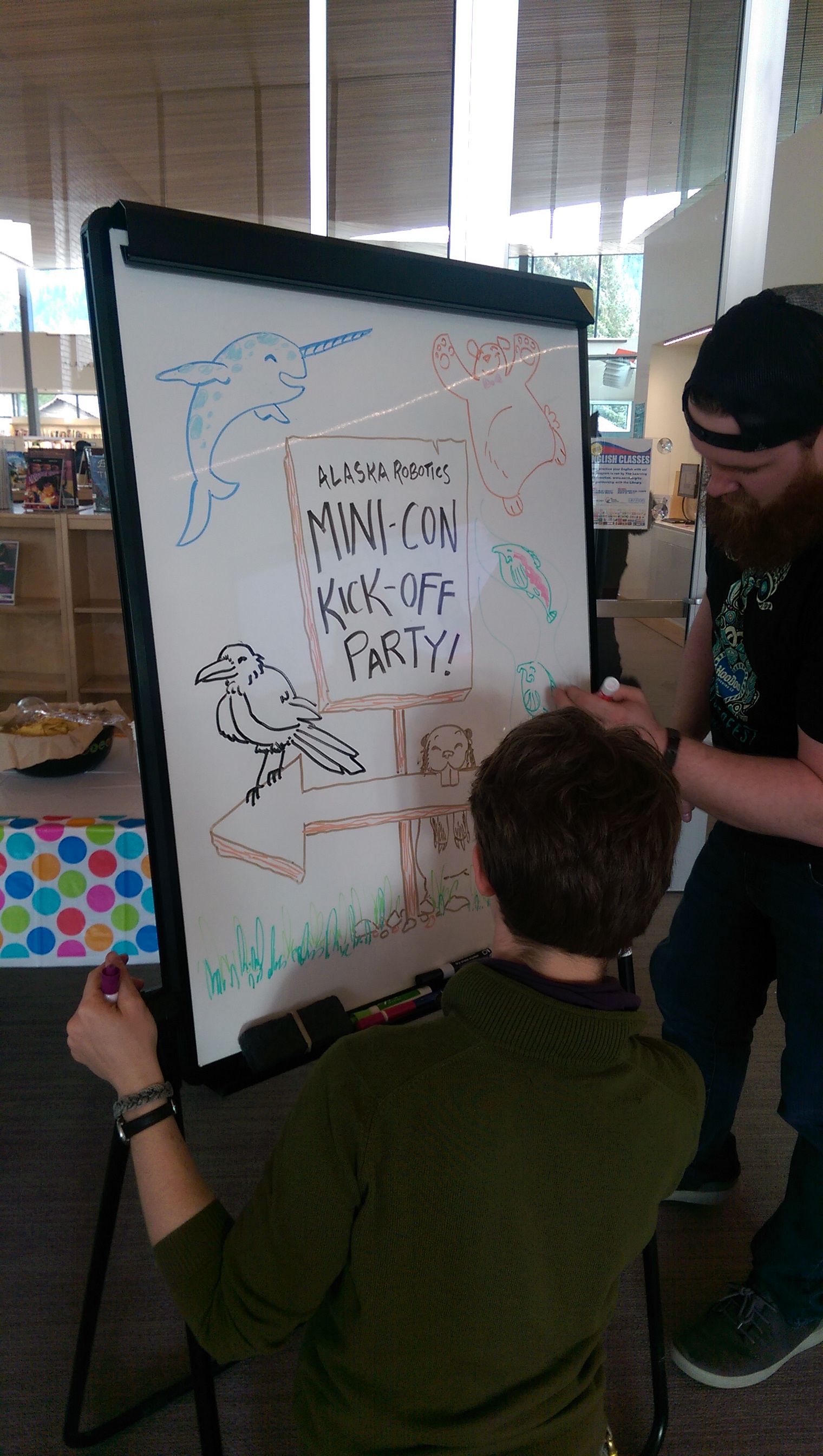
² Bonus: preliminary sketches of the library kickoff show!

³ Of which there are potentially dozens of each character — and each animator has a precise preference about how much tension there is in the articulation, which presents design challenges you can scarcely conceive of.

4 A discussion of which led to me holding forth on one of my favorite topics — how Hedy Lamarr used player-piano rolls to defeat the Axis in World War II and at the same time invented frequency-hopping spread spectrum, which makes your cell phone possible.

5 I’ll wait.

6 While I did not make any spelling suggestions, I did exercise my voting rights.

7 The “I Want” song, Proof, and the villain song, Sweet, Sweet Untraceable Cash.

8 Near the end of the first verse of Proof; the music for that song was all Marian Call, the remainder of the lyrics were by her, North, Telgemeier, and Hollis Kitchin, who runs the best bra shop in Juneau. Other groups were headed up by the Webber sisters, Lewis, and Seth Boyer.

Comics Camp: Mini-Con

Saturday in Juneau was going to be busy — campers would be checking out of their hotel, depositing luggage for collection and transport, setting up for a public convention in the Juneau Arts and Culture Center, having a one-day convention, tearing down, and getting on the bus to camp, all by 6:00pm. Worse, they would be doing so under the most trying of conditions imaginable: it was sunny.

Juneauites¹, it was explained, would never waste the opportunity to have a sunny day in the outdoors — at least, not until a ten or twelve of them in a row happen, by which time you’re exhausted from so many daylight hours and being active and the crash happens. The previous year, I’m told, it was raining and thus shoulder-to-shoulder in the JACC; this year was merely a respectable crowd for a one-day free event, which was starting at 10:00am. Breakfast, brisk walk, pack-in. With no specific duties for most of the day, I spent a lot of time as a runner and line-wrangler for Floor Boss Jessica.

The room was centered on two large table islands, one of which was where Alaska Robotics arranged signings. Kibuishi, Caffoe, Beaton, Telgemeier, North, Hatke, Brosgol, Carson Ellis, Tony Cliff, and Scott Chantler all did two hour-long signings, in twos and threes and (for the last two hours of the day) fives. Want to have some fun? Keep lines of people that want to get books signed by Kate Beaton and Raina Telgemeier from wrapping around and tangling with each other; it is legitimately the best problem to have.

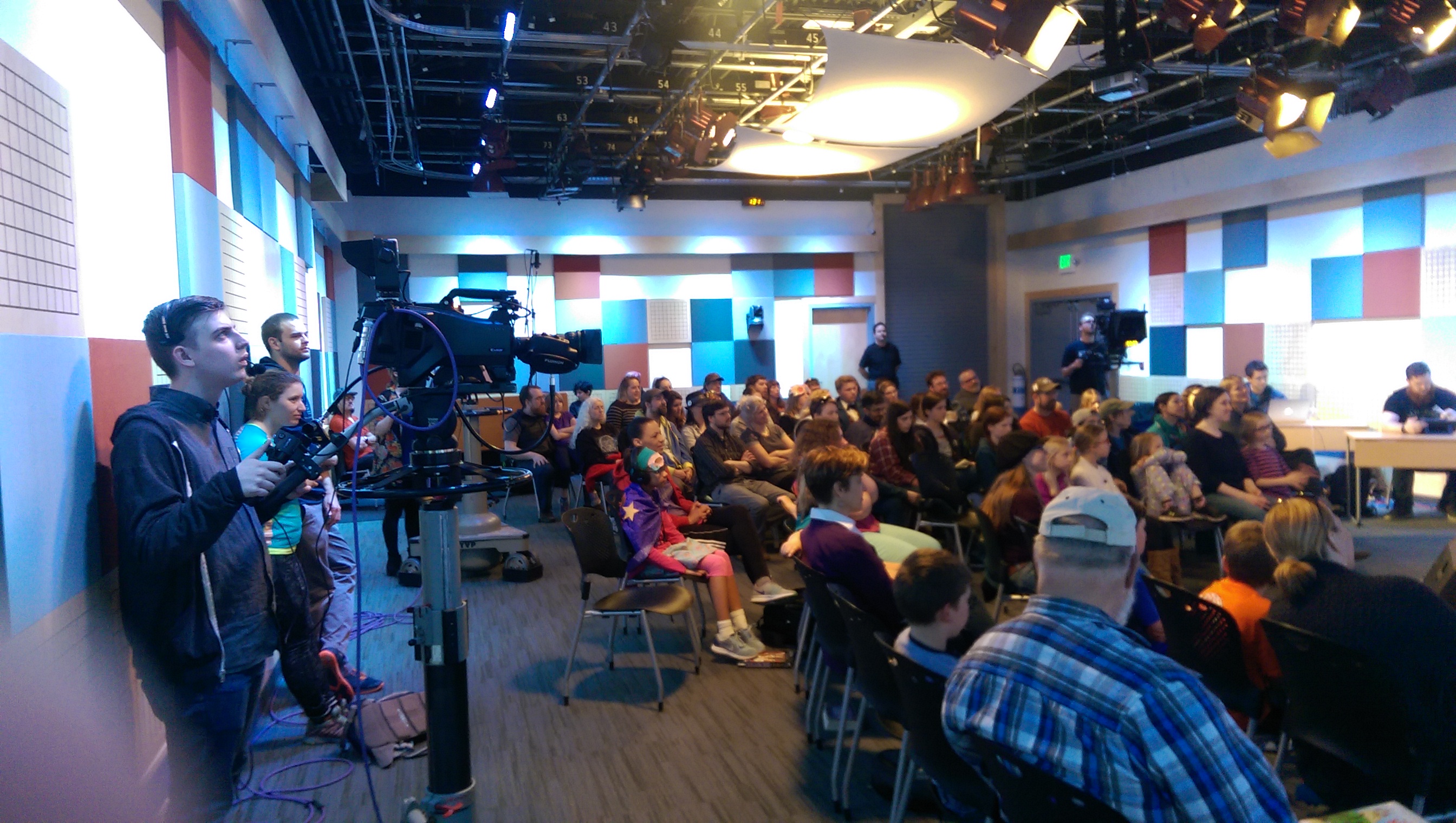
My major contribution for the day was working the associated public concert; next door to the JACC is Juneau’s public radio/TV broadcaster, KTOO. The musician campers (and local singer/songwriter Theo Houck, who performs under the name FySH) were going to be performing for 90 minutes, the middle hour of which would be recorded for broadcast across Alaska public TV²; the chief limitations on the broadcast section were to keep the language friendly and to avoid covers³. Both portions of the concert featured live drawing by Kibuishi and merman maestro Lucas Elliott.

If you’d like to experience what it was like well, hey: video. And in case you only have time to watch a portion of it, I’d recommend you check out FySH’s portion (starting at the 15:00 mark) ’cause boy howdy, kid can play. I use kid not condescendingly, but because FySH is seventeen years old, has been songwriting from the age of eleven, and did a Santa murder ballad. It was great set. Not that the other performers were any less great, mind; I’ll just be talking about them later in this series. For now, suffice it to say that what you’ve no doubt heard about the drums being the heart of live music performance is wrong — it’s the cello.

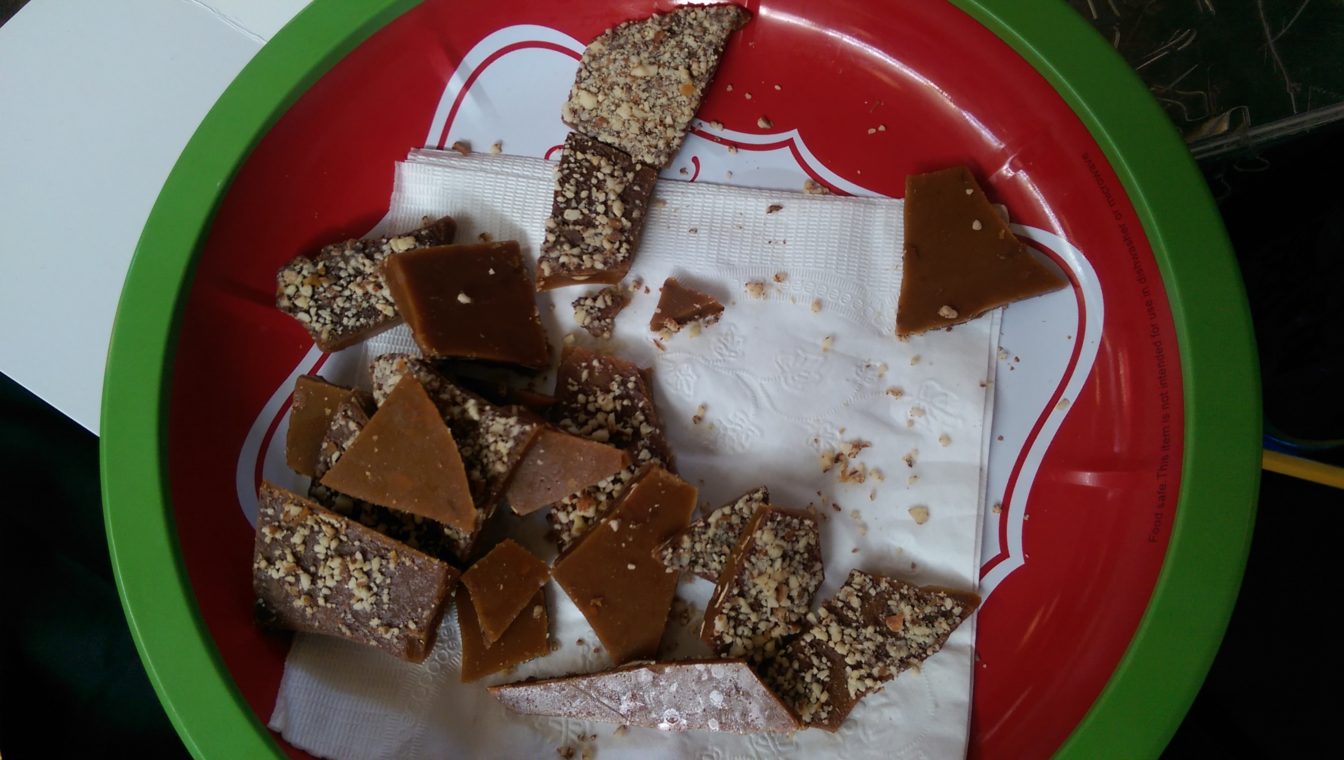
Post-concert saw a lull and then an uptick in the showfloor crowd; people that had been there in the early part of day left to enjoy the mere eight or so hours of daylight remaining; those who’d been in the great outdoors came by on their way home. Flagging energy was sustained by the most delicious almond brittle known to human tastebuds and then it was over. Showgoers left, tables got packed up, stock from the snack table gathered for weekend consumption, and a schoolbus appeared for the ride north.
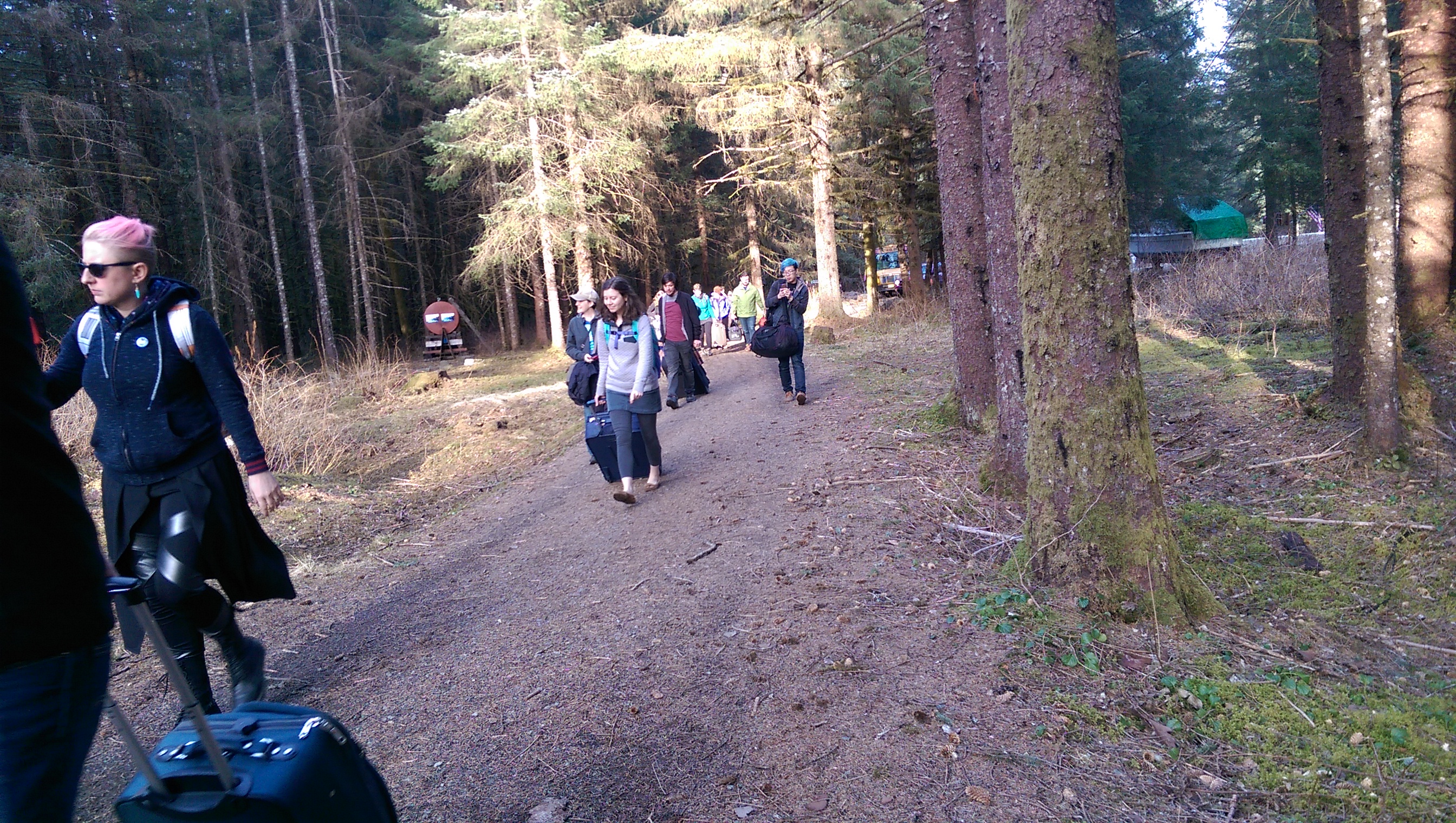
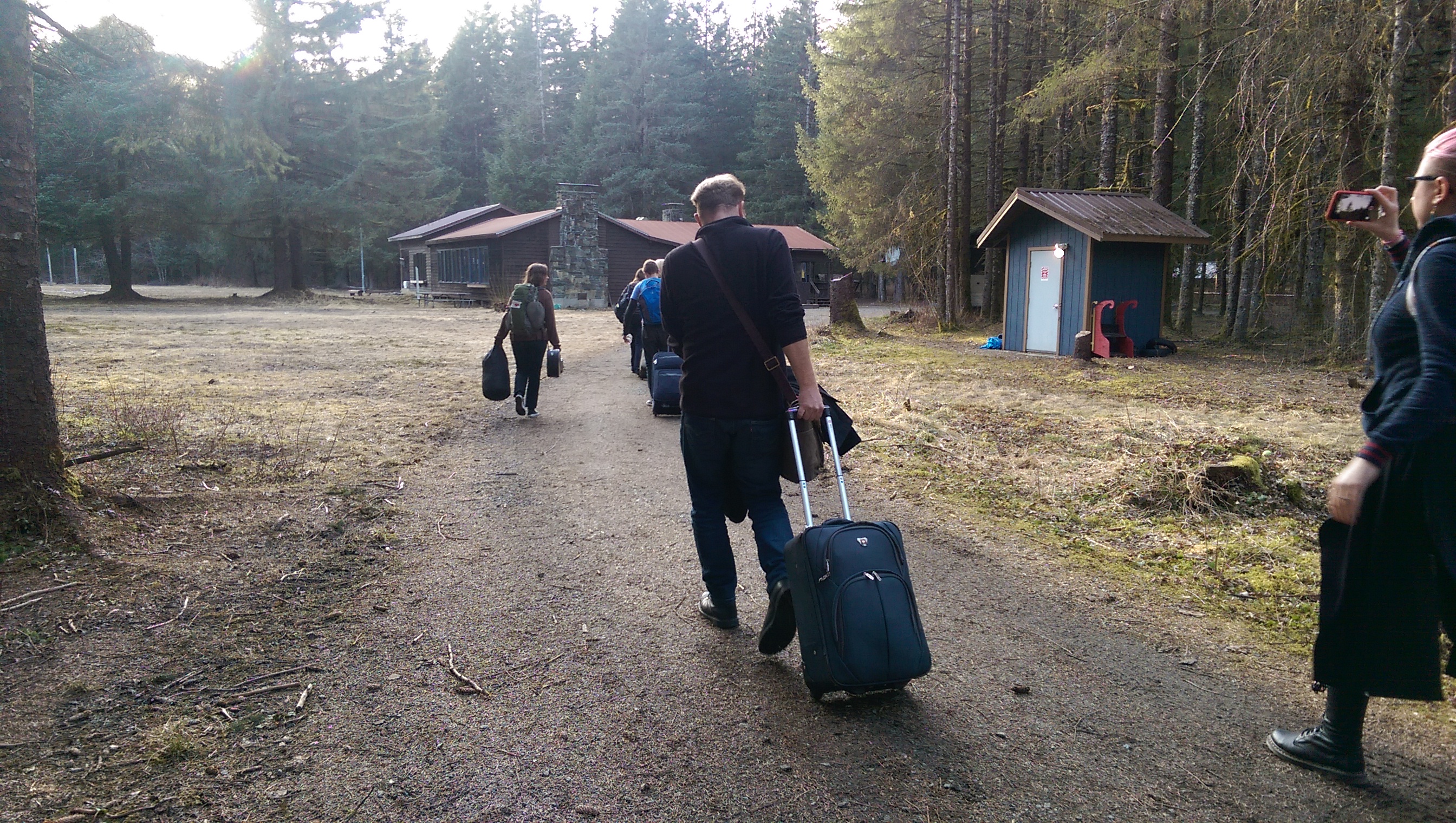
A long line of cartoonists and other ne’er do wells made their way along the last few hundred meters to the lodge, dispersed to drop luggage at their cabins, and returned for a casual dinner and announcements. Item one: lots of programming to start on the morrow4 with a schedule of sessions posted. Item two: close car and cabin doors, as at least one raven had already flown in to start exploring because ravens, man. Item three: name tags are over there (get to know everybody as best you can), snacks are over there, graphic novel library is over there, board games library is over there, s’mores ingredients are over there, and booze table is over here. They all got plenty of use.

Item four: everybody please sign up for a shift of either prep or cleanup for one of the meals, and try to eat with different people each chance you get. Item five: your phone doesn’t work out here, so leave notes for one another on the message board. The night featured meetings and re-greetings, with multiple groups heading off away from the lights to look at stars and the Northern Lights and a cut-throat game of Secret Hitler. Or was that Sunday? Maybe Monday? Time started to blur a bit and we’d only just started.
Photos

  • Saturday morning; this is from the same hotel room as yesterday’s picture.
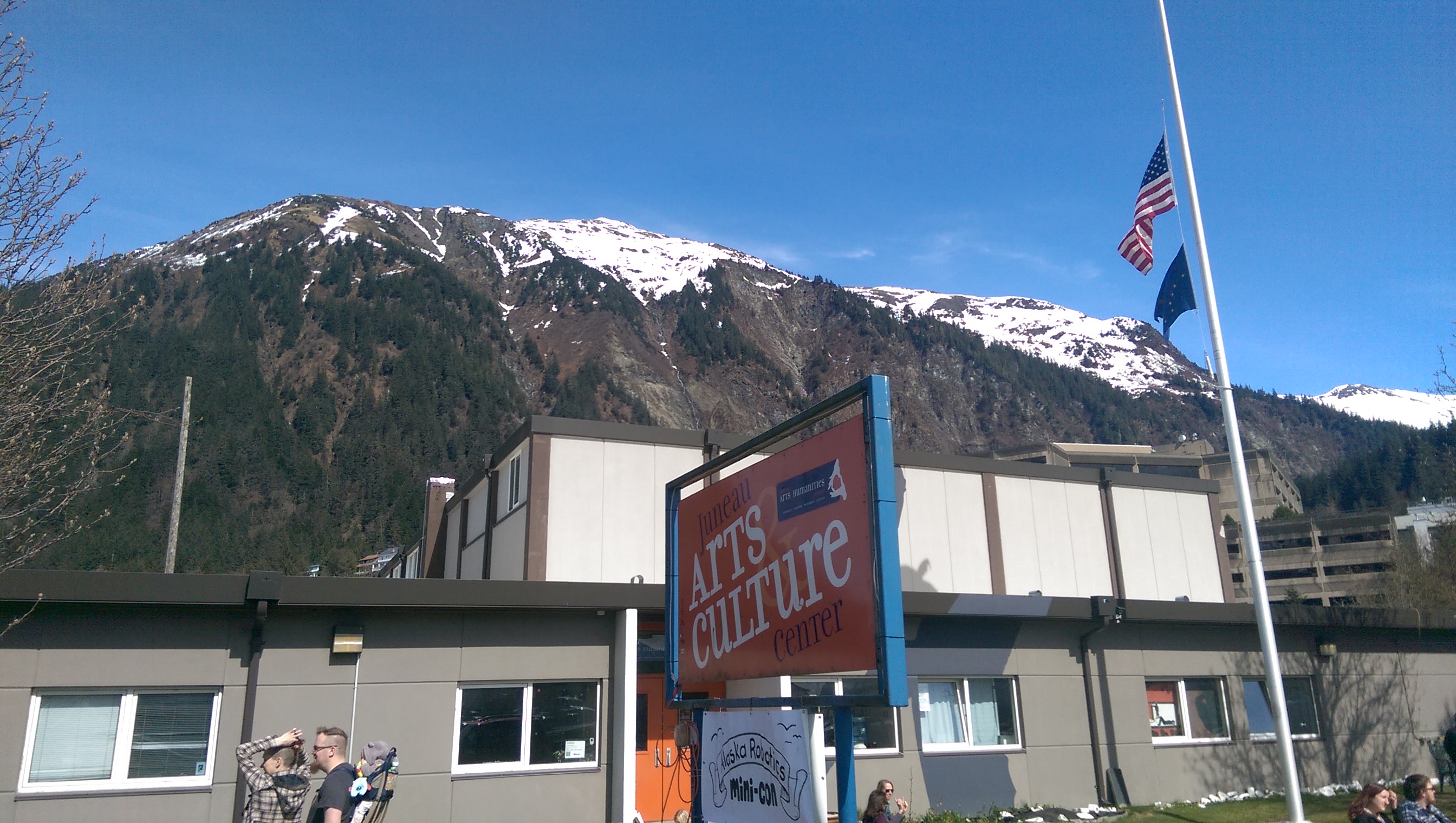
  • The Juneau Arts & Culture Center. Lots of things happen here, and you’re never far from the wilderness.
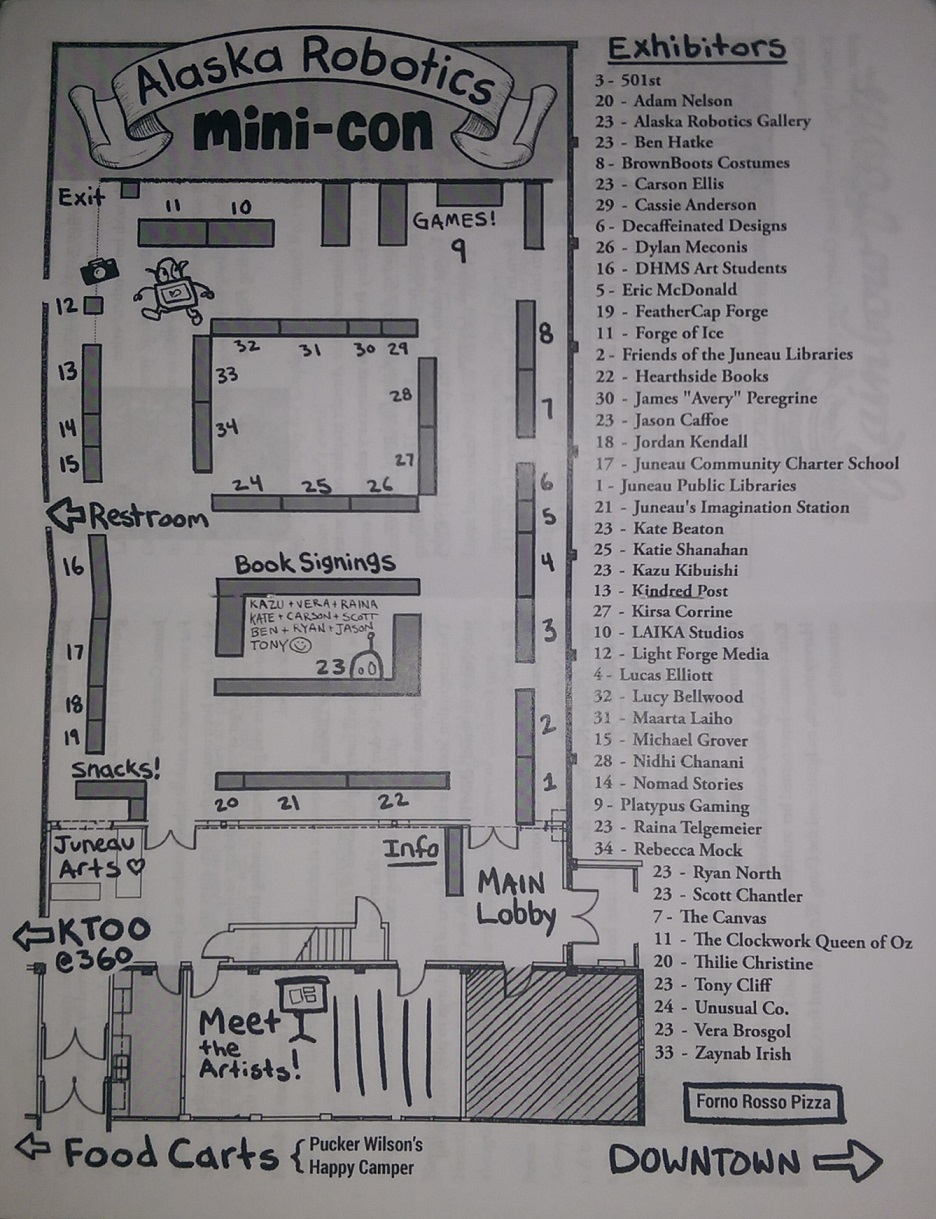
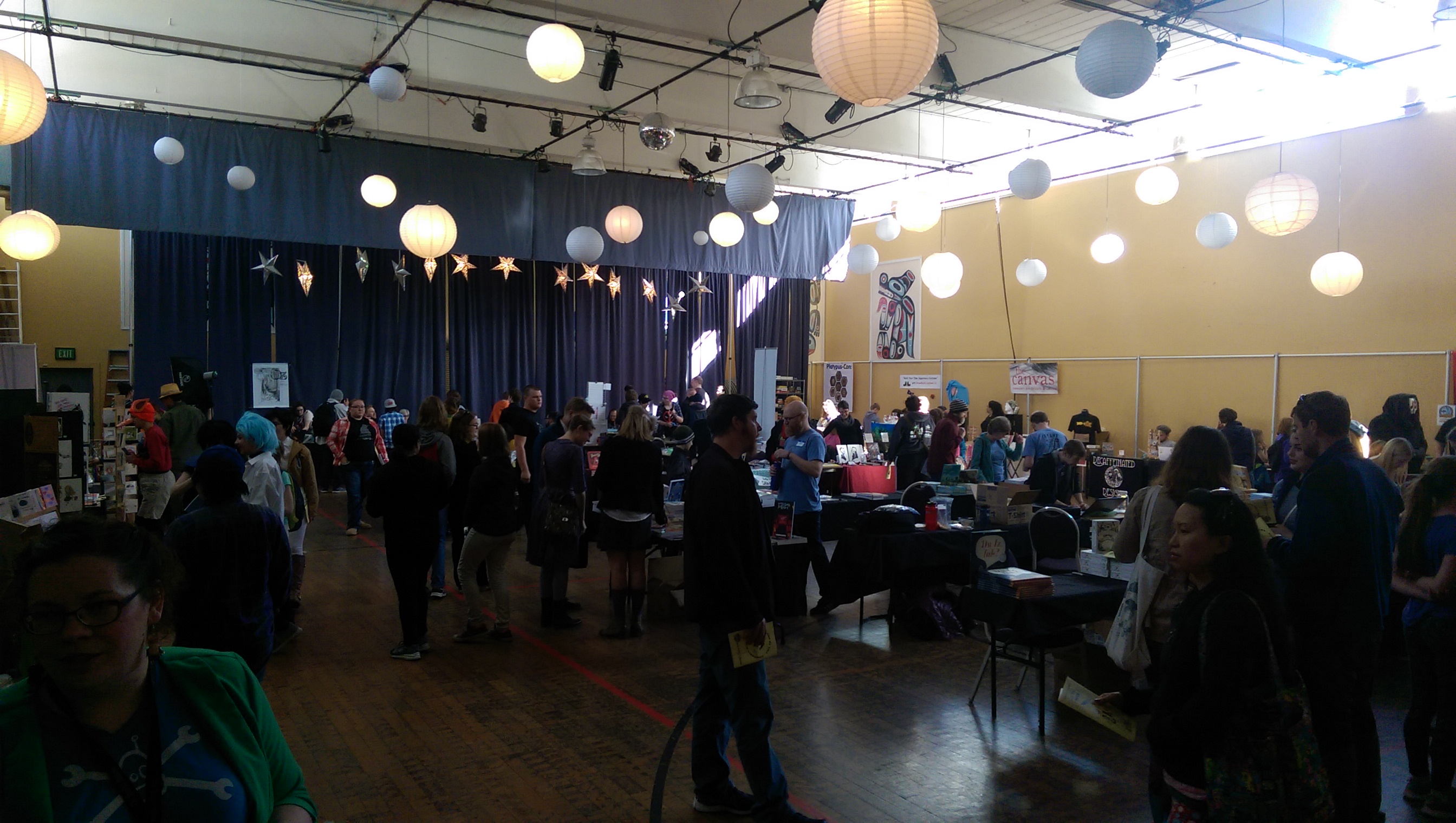
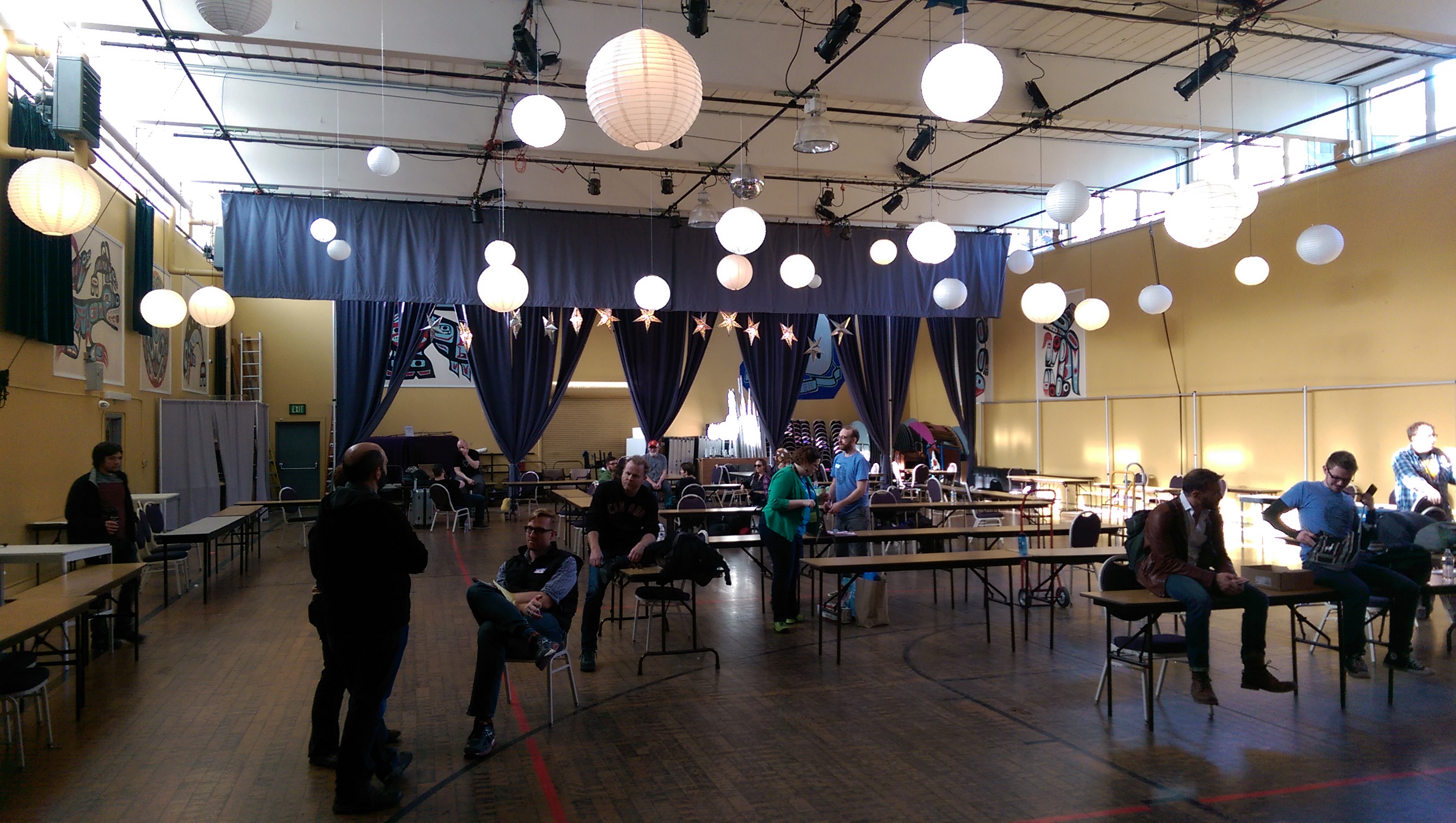
  • The show floor in diagram form, and POV from the snack table. The biggest crowds were at the signings, and at the Laika display near the back corner. Jeremy Spake (in charge of armature construction) and Georgina Hayns (head of the puppet department) brought working puppets from the production of Kubo And The Two Strings, of which much more tomorrow.
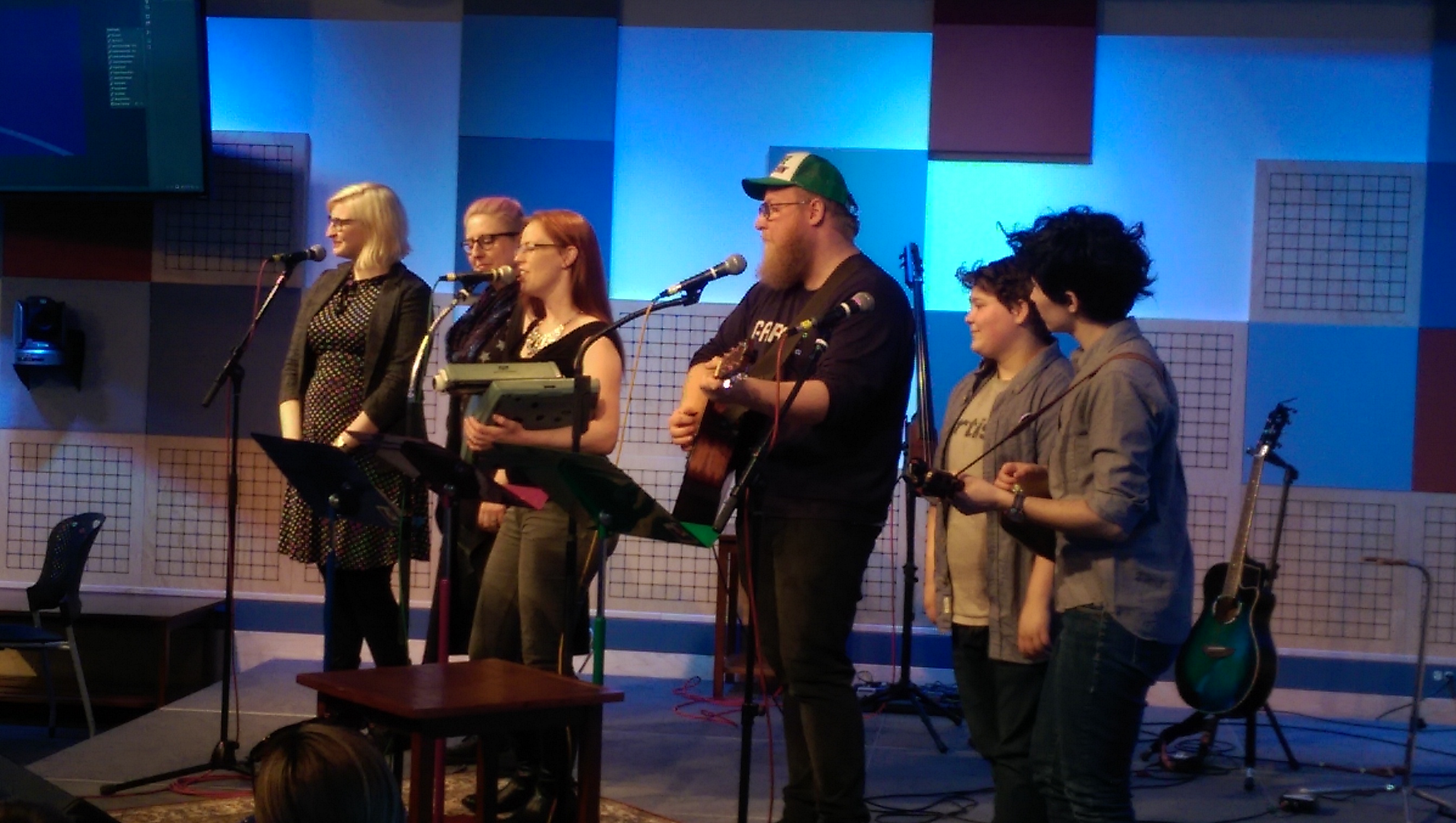
  • The concert featured a studio audience space and played to a full room. The musicians were, from left, Angela Webber, Aubrey Webber, Marian Call, Seth Boyer, FySH, and Molly Lewis. Keep an eye out for FySH in the future — he’s going places.
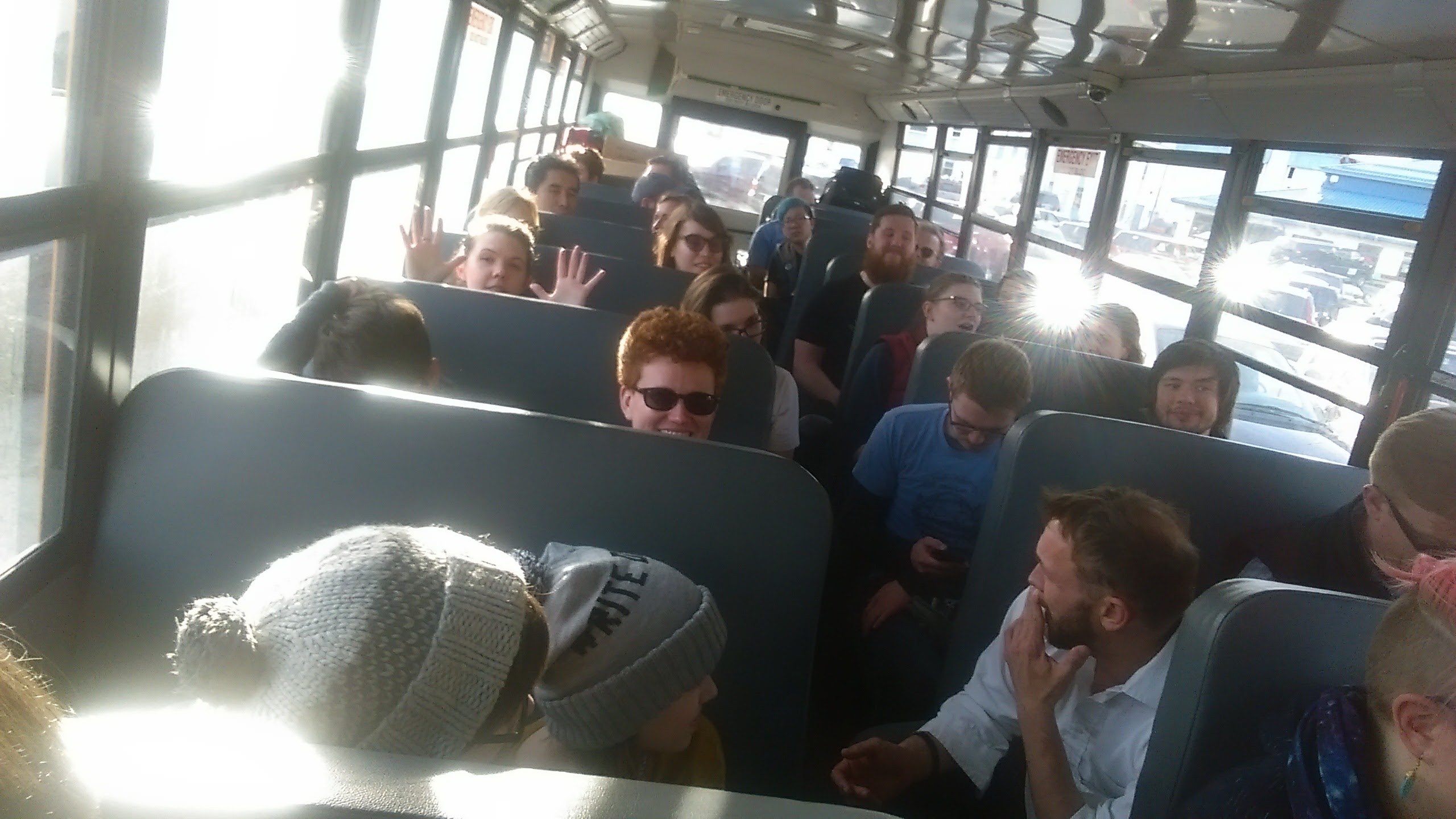
  • Teardown (fueled by the last of the brittle) and the bus crowd. After luggage took up the back few rows, there were exactly enough seats for the people not driving their own cars, as long as you put large people and small people together. Me and Seth Boyer got to know each other pret-ty well on that ride.
  • There was significantly less trudging than the photos seem to indicate. It’s possible that this raven is the one that was investigating the interior of cars.
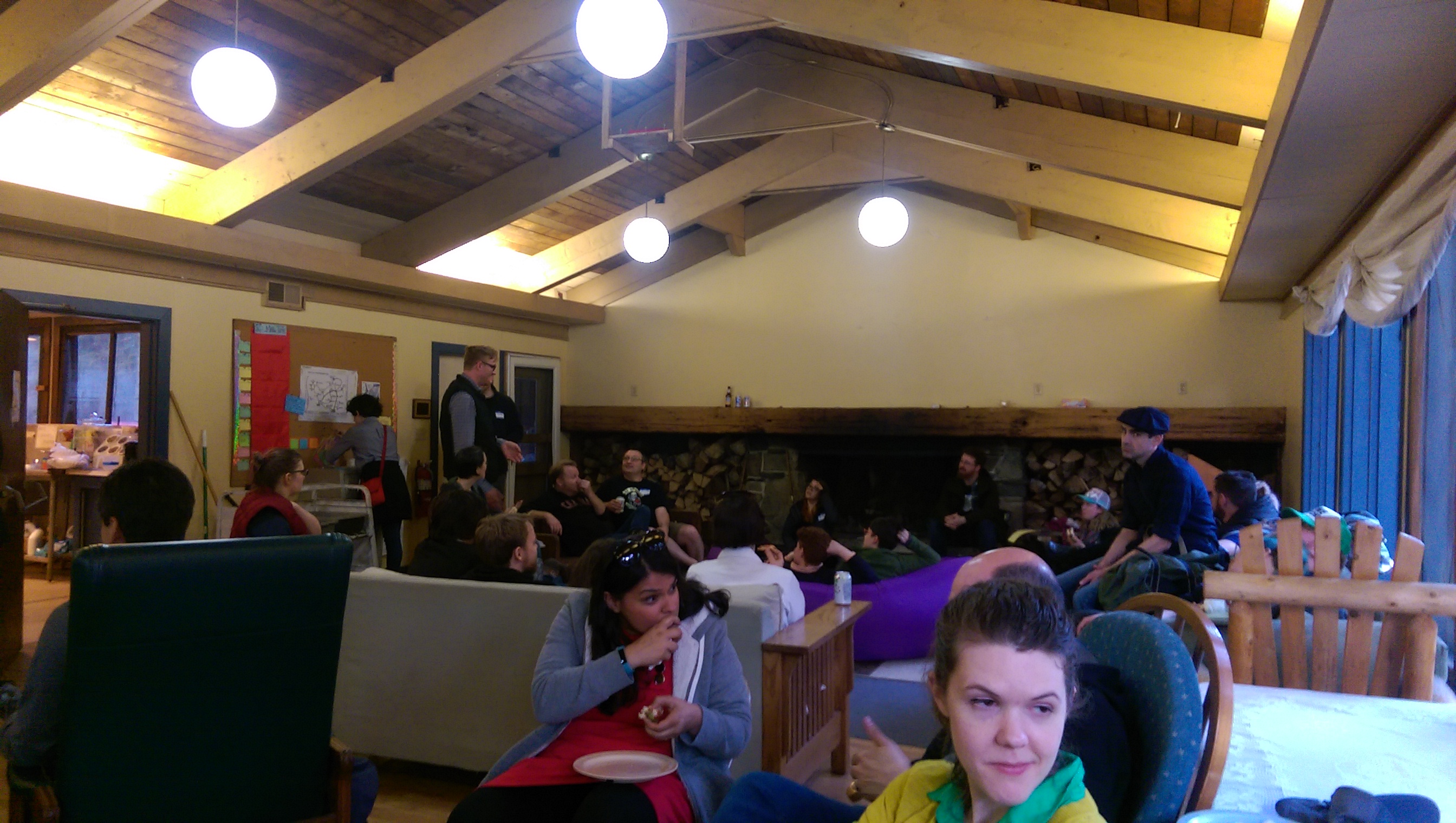
  • A pretty good fraction of the campers gathered for introductions and to exchange information.

______________
¹ I looked it up, but I still like Junevers, if only because it sounds like jenever.

² And possibly yours; your local public TV station can contact KTOO and request a copy of the recording for broadcast.

³ The warmup and cooldown sections were just for those in the room, and featured a killer Seth Boyer rendition of Part Of Your World that needs to been seen to be believed.

4 Pat Race put me in the first programming slot, talking about the recent history of [web]comics.

Comics Camp: The Juneau Community

The thing about Pat Race is, he’s been bringing creators to Juneau to meet local fans and generally be available in a place not on the general tour circuit for years; the oldest story I’ve written on the topic was from April of 2013, and I’m pretty sure he was well into the habit by then. Small wonder, then that Friday of Camp Weekend would feature all of the invited guests (and anybody else with a clever enough hook — Jason Alderman wound up teaching kids how to make pop-ups from bits of paper and glue) heading out into the public schools to bring their insights to students.

It was an all-day affair, with creators being driven all over, from start of day until end, averaging two different sessions each. As a result, it was possible to run into people pretty much all day long, either waiting to make their way to a school, or coming back from one, or in some other in-between state. I wound up having breakfast with a rotating cast of creative types¹ and then hanging about the AK Robotics offices with Katie Lane — who had some contracts to work on, which for her is a legitimately fun morning — for a bit before grabbing a nap. Lunch meant tacos and then an impromptu vibe settled among the Camp folks in downtown — there’s a glacier in Juneau, and by gum we were going to see it.

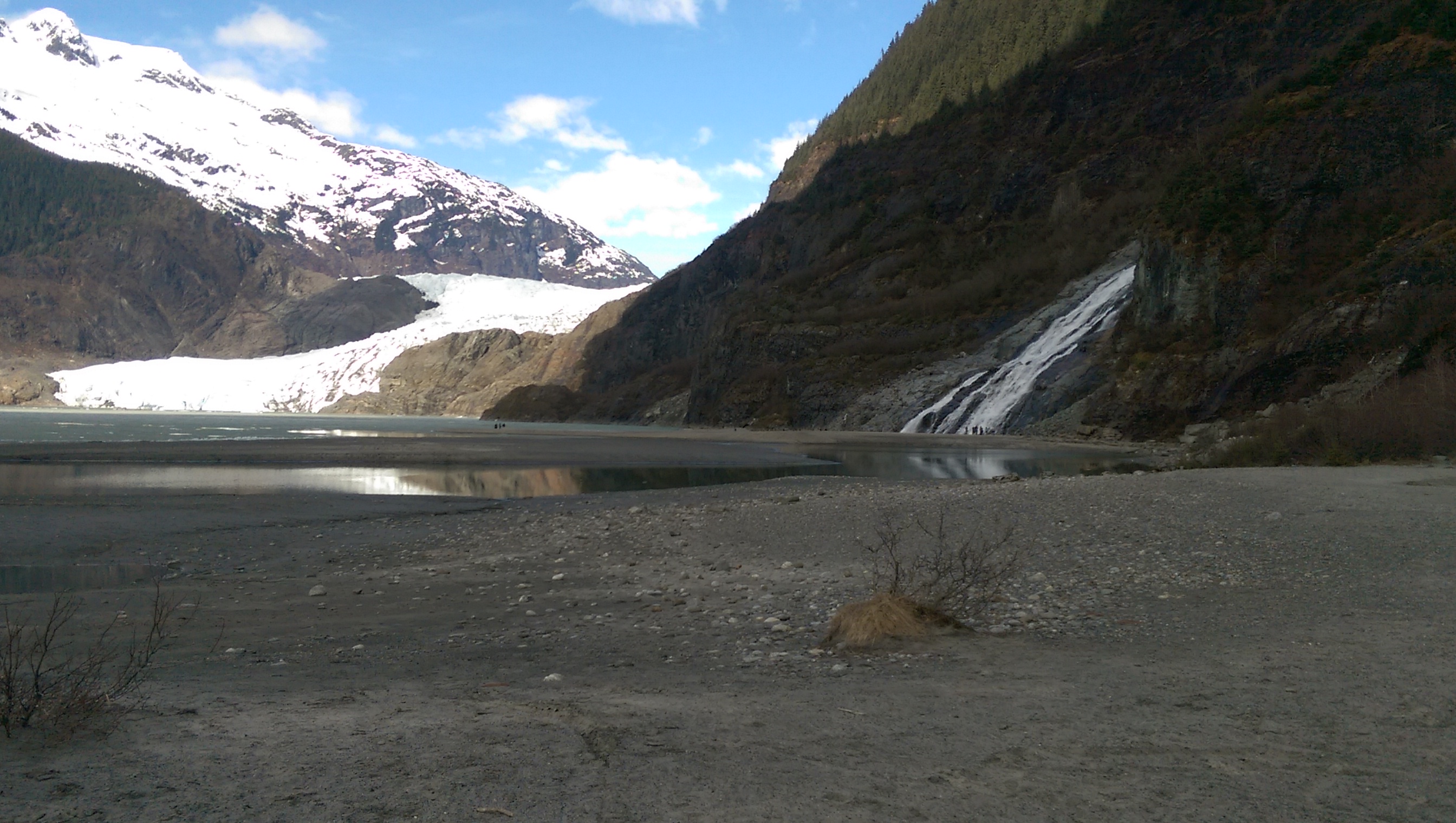
Eventually, three taxiloads (taxis-load?) of us were deposited in the parking lot of the Visitors Center of the Mendenhall Glacier in the Tongass National Forest and we started out for the big hunk of ice across the sandy beach. Here’s the thing about Mendenhall, because I’ve been there before: you have no idea how far away it is. There’s no scale, and after walking for 30 or 45 or 60 minutes, you may have come significantly closer to, say, a waterfall on the way, but the glacier itself is no closer and no larger. It is still impossibly far away, and it’s getting time to head back to town (some of us had obligations to help with prep for the library event that night), and anyway, what are those tracks in the sand?

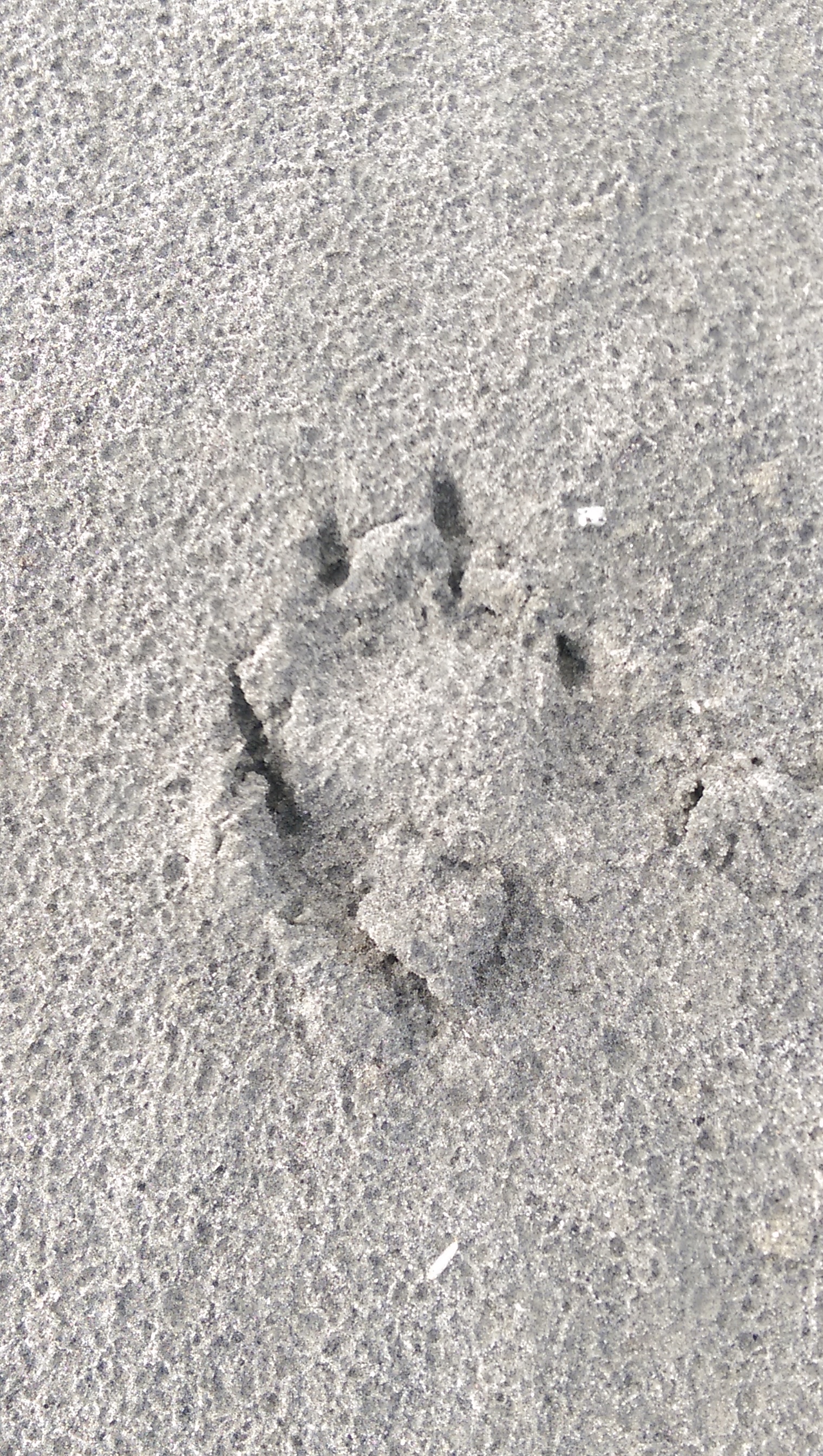
Bear. Definitely bear, except for the ones that were clearly wolf. They probably don’t feel like coming out in daylight, and there’s a good 300-400 meters of clear land in all directions so nothing can sneak up on you², but still … finding bear tracks is an excellent way to focus your mind on the general topic of being elsewhere.

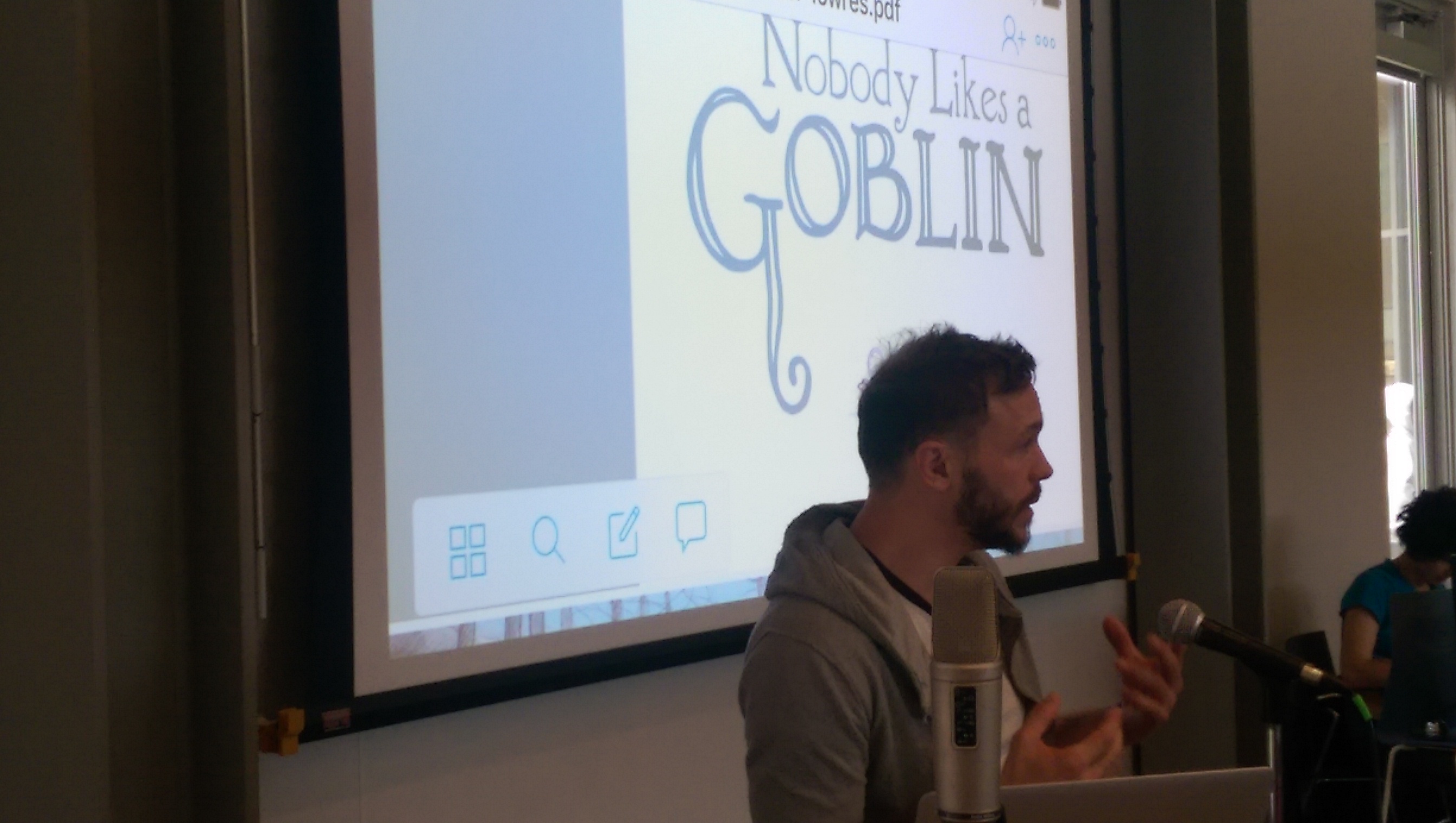
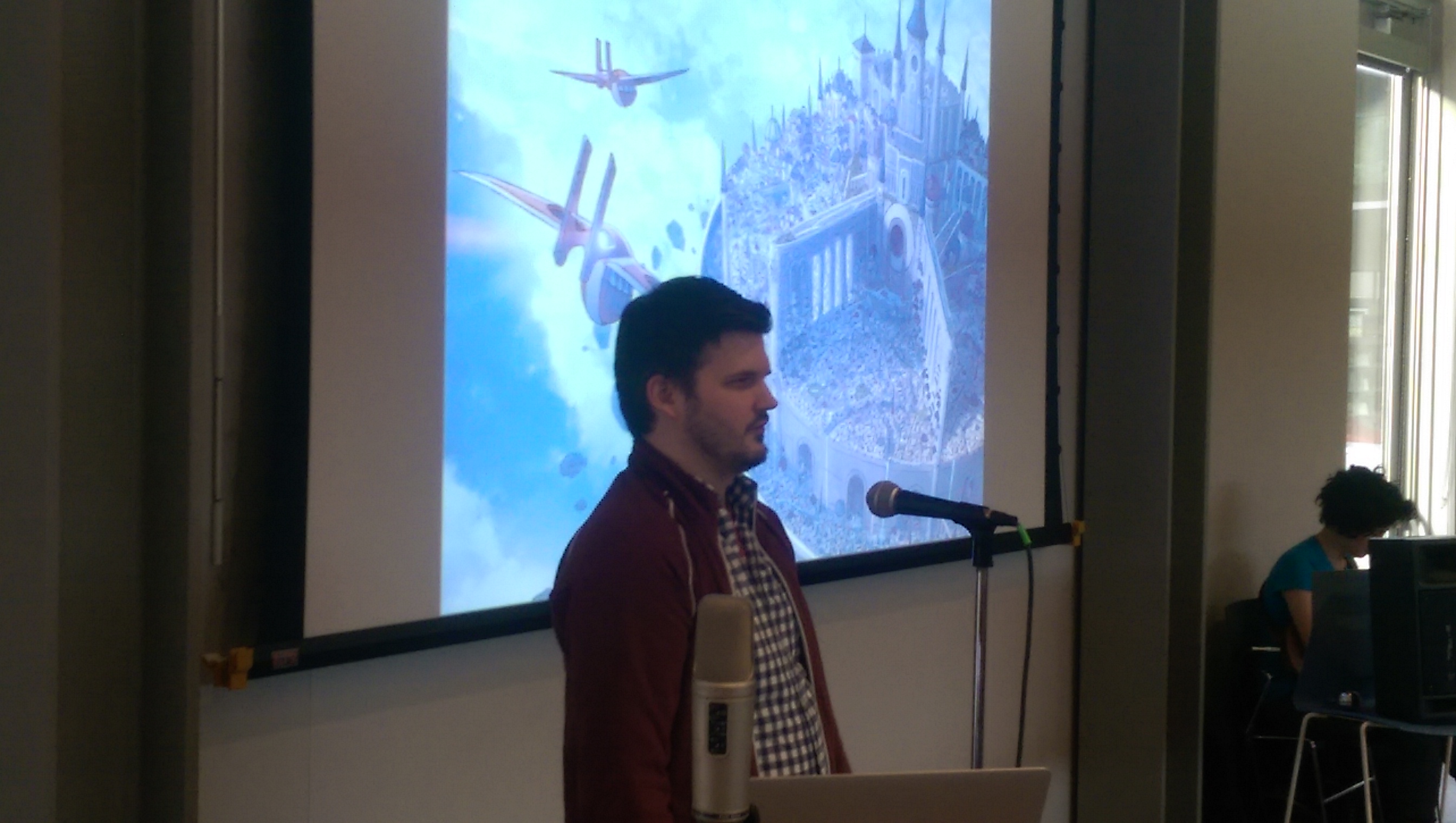
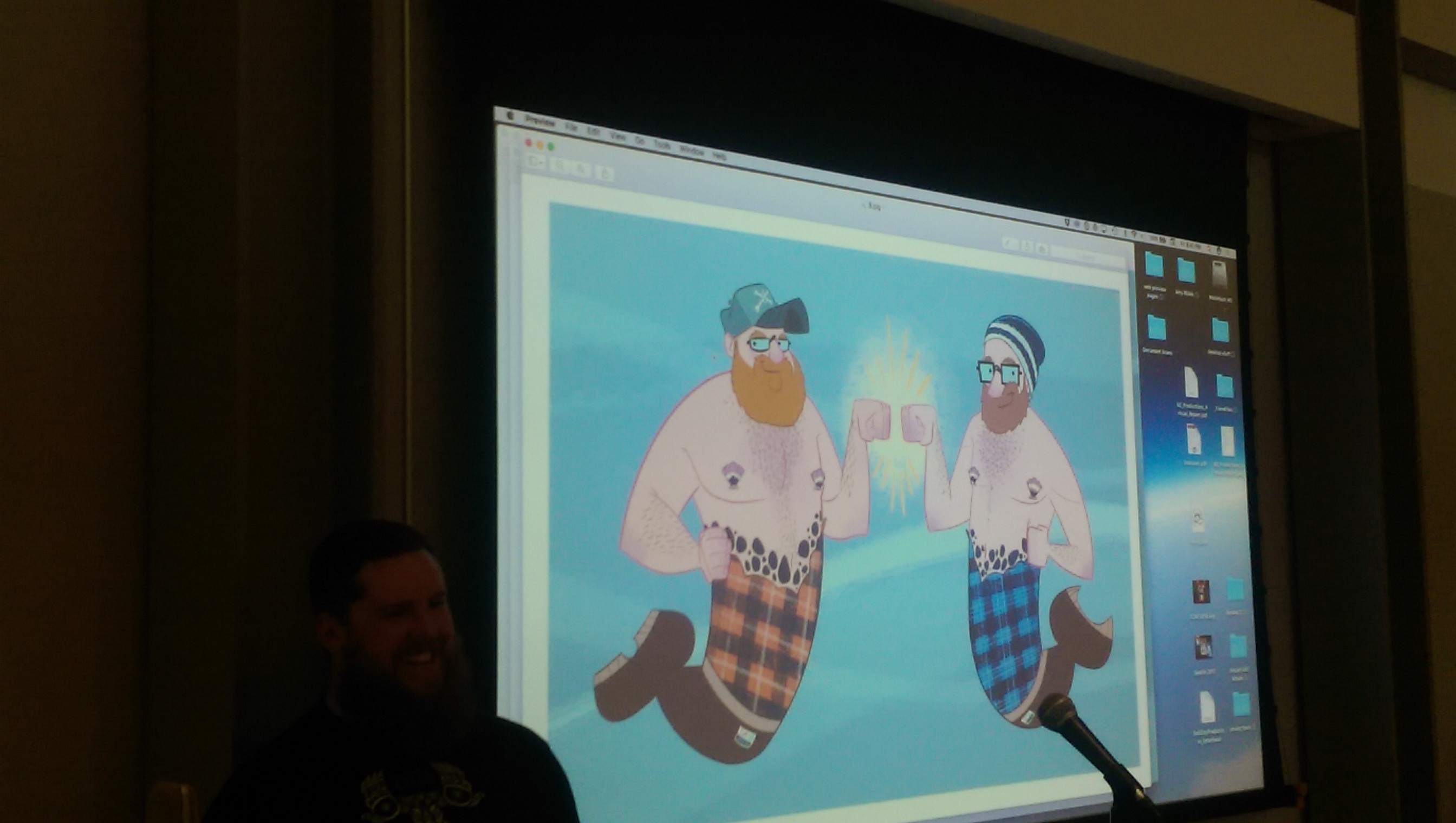
The library event would involve all of the musicians, and ten or so of the comics folks, each getting five or ten minutes to play, or tell a story, or demonstrate an aspect of their work; I was asked to help make sure each knew when to make their way to the microphone, and to ensure that their presentations (if any) were loaded. It was a terrific success, with the standouts being Jason Caffoe’s demonstration of exactly how much his colors add to Kazu Kibuishi’s inks³, Ben Hatke’s reading of Nobody Likes A Goblin with all the voices, and Lucas Elliott’s series of mer-men portraits, ending with a loving tribute to Pat Race and Aaron Suring.

Breakdown was followed by a trip to Fred Meyer for camp essentials like earplugs, cocoa, and hand warmers, and then back to downtown where Race had arranged a party at Juneau’s about-to-open distillery (about two weeks from the time of this writing) for Moscow Mules and much good conversation. If you get into Juneau, it’s right across the street from the Baranof Hotel, and the wallpaper is both distractingly random and oddly beautiful. It’s going to be the PDX carpet of southeastern Alaska.

The gin, by the bye, is excellent and hasn’t been proofed yet, so on the night it was somewhat north of Navy Strength; the distillers are passionate about their craft and attentive to detail (I walked by four days later and they noticed me, grinning and waving), and they are going to be making some excellent stuff. But four time zones and strong gin make for a tired Gary, with an early start to the mini-con the next day.

Photos

  • Friday started out foggy; view of downtown Juneau from my hotel room.
  • Ravens act like they own the place, but tell me that spread of feathers isn’t gorgeous.
  • The Mendenhall Glacier, I’m told, is significantly smaller than in the past. But after 45 minutes of walking, it is still impossibly large, impossibly far away.
  • Probably just a cub, but still further across than my size 8.5 shoes.
  • Lucy Bellwood (adventure cartoonist!) and Lucas Elliott illustrate the welcome sign. Fun fact, Pat Race’s mom has been a librarian in the Juneau system for decades, and parents bring their kids to storytime with her because she’s the one that read to them when they were kids.
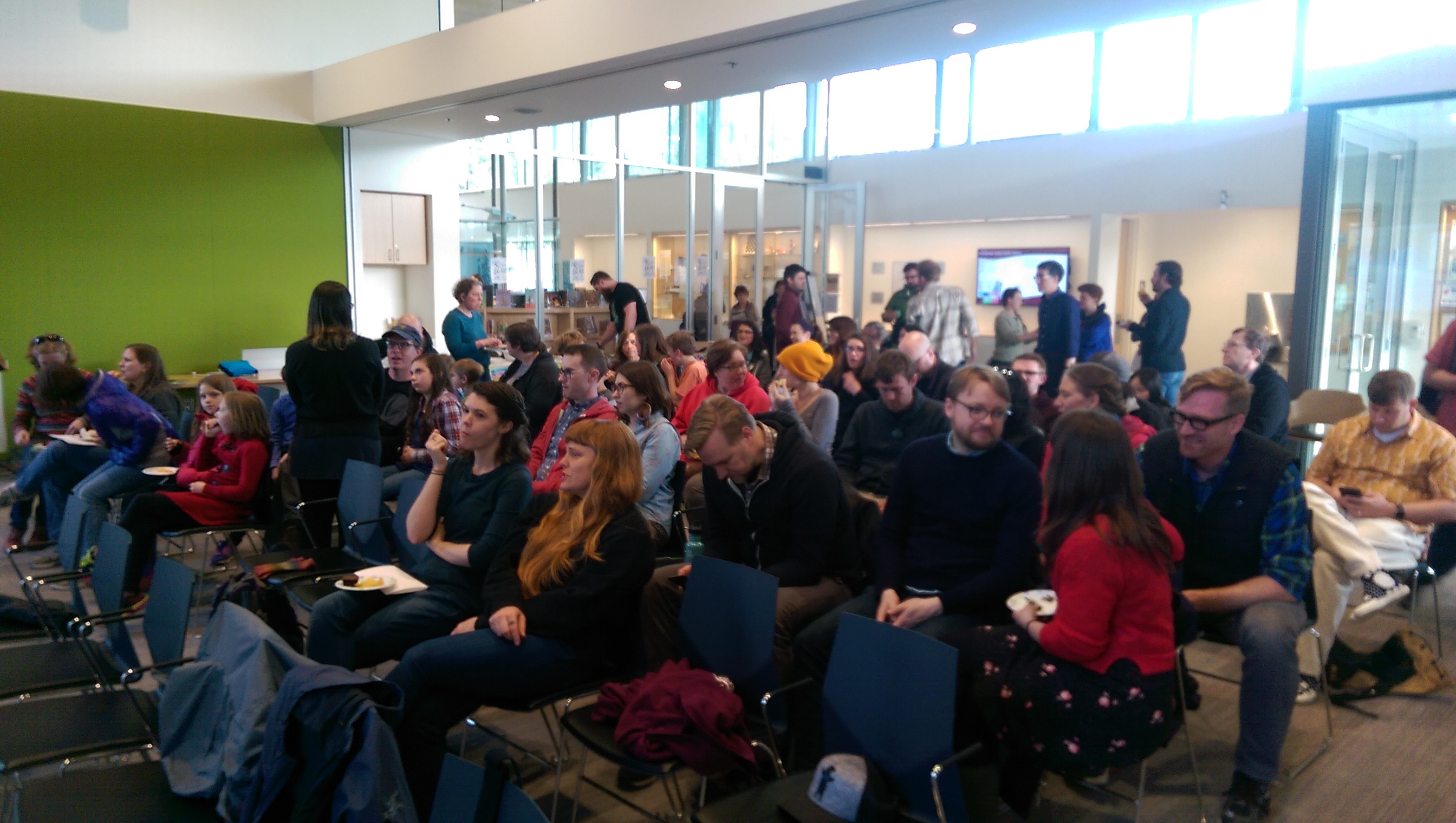
  • The library crowd required the back wall of the room to be retracted (the track is where the green section of the side wall ends) in order to set up all the chairs necessary.
  • Ben Hatke, when there is enough room, ends readings by doing backflips. Sadly, there wasn’t enough room.
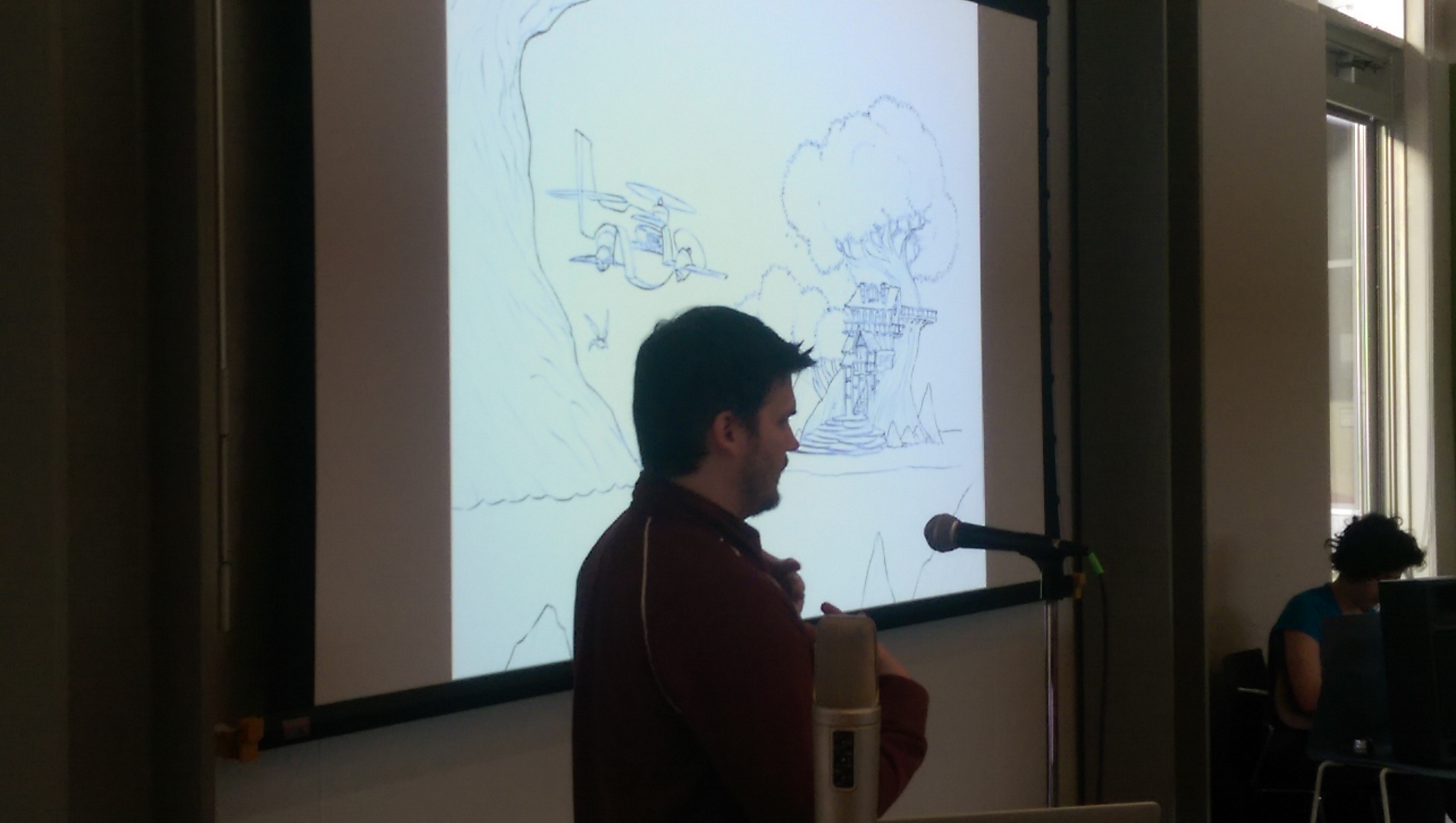
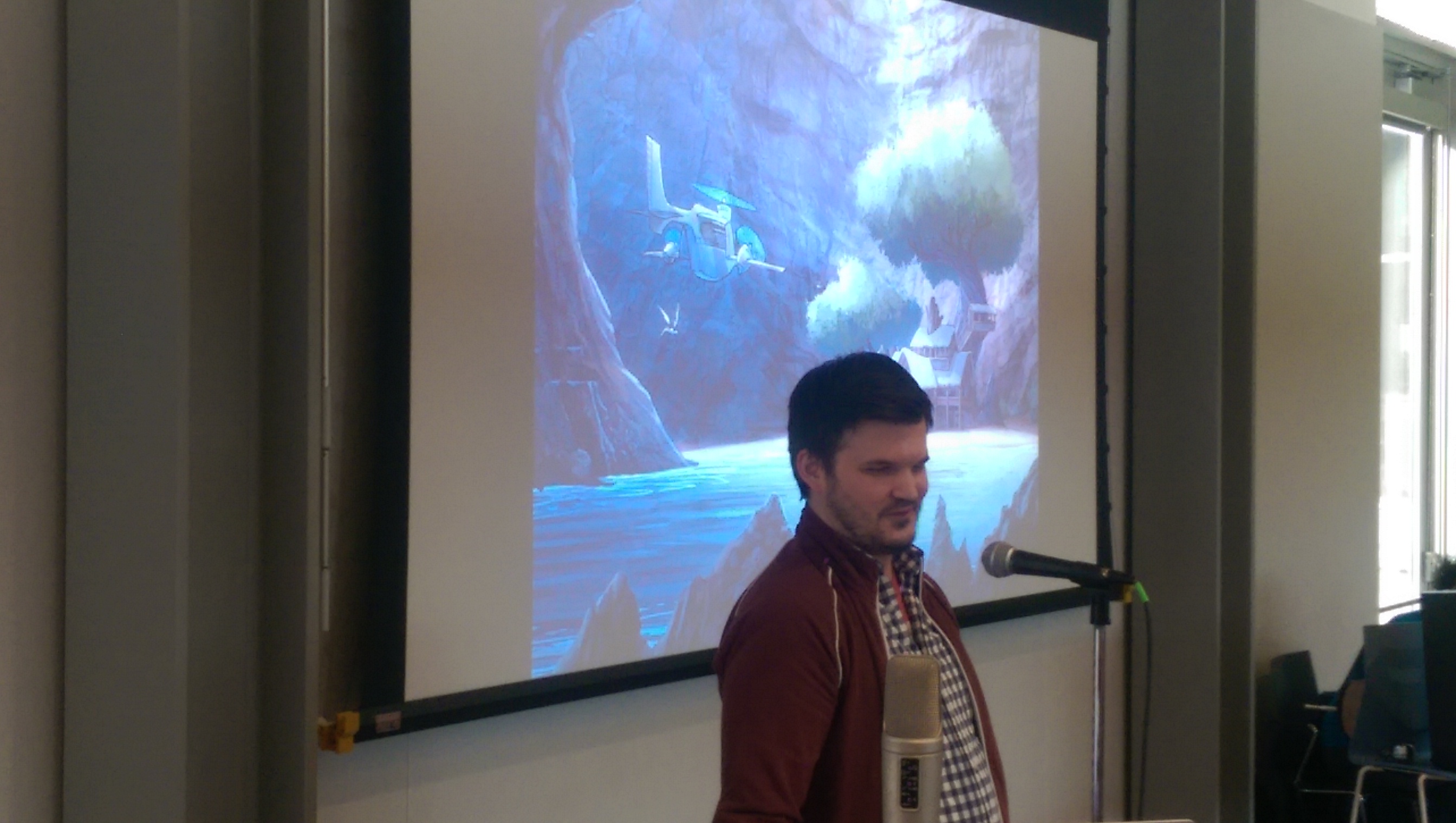
  • Jason Caffoe with a fairly finished set of Amulet inks, and the corresponding colored image. There weren’t really any inks to speak of to guide him in this skyscape. The degree to which he is a full partner in Kibuishi’s work cannot be overstated.
  • Lucas Elliott with his rendition of MerAaron and MerPat. It’s a thing of beauty.

_______________
¹ Including a lengthy discussion with Ryan North as to whether or not a complex document like a college thesis could be written entirely in emoji. I contended you could, drawing an analogy to Chinese ideograms. He argued that emoji don’t necessarily have specific agreed-upon word meanings. I countered that ideograms could change meaning or pronunciation depending on context.

He landed the decisive blow in pointing out that different vendors draw different symbols with the same Unicode address, so you don’t have the uniformity necessary. We both agreed that it’s simultaneously a tragedy and awesome that Unicode’s language specification is never going to be finished at least in part because it has to deal with petitions for inclusion from the likes of the Klingon Language Institute. Ryan’s always a rad dude to talk to.

² Except ravens.

³ To the extent that sometimes he’s given a two-page spread with the instruction Give me a floating city in the sky or Make this mountain look treacherous and not much else. Sometimes it comes together in a single image, sometimes there’s multiple revisions to get exactly what both of them want.

Comics Camp: Prelude

The word started filtering back to me about a year ago; the Comics Camp that Pat Race, Aaron Suring, and the rest of the Alaska Robotics crew staged had been invigorating — even life changing — for those that had attended. When Pat was kind enough to extend an invitation to attend the second iteration of Comics Camp, I filed it away for future recall. When he emailed me after the application form went live and prodded me with a polite No, really, we want you to come, my course was set.

When he sent the list of guests and camp attendees — some 20% of whom I knew personally, another 15% or so from their work, but for the most part intriguingly-described strangers — I began to suspect I’d made a very good decision. I was pretty certain about the time I wandered off my Newark-Seattle flight and realized that my Seattle-Juneau flight would be the same plane and hunkered down for the layover.

About half an hour later, while wandering somewhat aimlessly, I was tackled from the side by Lucy Bellwood calling Gary, Gary, Gary!¹ followed by a high-speed drag-over to where a crew of camp-bound folks had assembled; a time zone away from Juneau, I was already meeting people for the first time (Jason Caffoe, Jeremy Spake, Andy McMillan) and renewing acquaintances (Kazu Kibuishi, Vera Brosgol²). Queuing up on the jetway, I noticed a tell-tale shock of hair and a shoulder-slung ukulele, and introduced myself to Molly Lewis, who in turn introduced me to Ben Solieu. Coming off the plane in Juneau, I received a text from Jason Alderman, who excitedly³ informed me he’d just figured out I was on his flight and he’d be along shortly.

Pat and Aaron and various local helpers with cars met us at baggage claim. Rides were sorted out4, plans were made for the remainder of the day; it was not quite 1:00pm (plus four time zones difference) and the afternoon was free for several hours. Alderman and I made plans with Kibuishi and Caffoe to grab lunch after checking into the hotel and calling our various families. We had Indian food and extensive conversation about the state of primary education in America and why Speed Racer is the most underrated film of the past twenty years5. Alderman and I peeled off for a mini-con volunteers meeting at the Alaska Robotics shop6, and eventually made our way out to dinner.

Gary! I heard from the street, and found a grinning Raina Telgemeier walking towards us. She’d heard about a larger group of folks who’d just gotten in and were gathered nearby; Alderman and I altered course to join her, and found ourselves enjoying excellent fare with just about everybody from earlier, along with Kate Beaton, Dylan Meconis, Katie Lane, and others I’d not yet met. I was on about hour 22 since I’d gotten up in New Jersey to start my travels and fading fast.

Fortunately, unlike most everybody else at the table, I’d have Friday mostly free while they visited school assemblies and classrooms (if memory serves, nearly three dozen visits took place, in every public school in Juneau). For me, things would kick in again at a welcome party at the main branch of the Juneau Library. It was going to be a hell of a weekend.

Photos
Normally, I scale down photos for compactness, but I’m keeping all of these at original resolution. Embiggen to get the full effect.

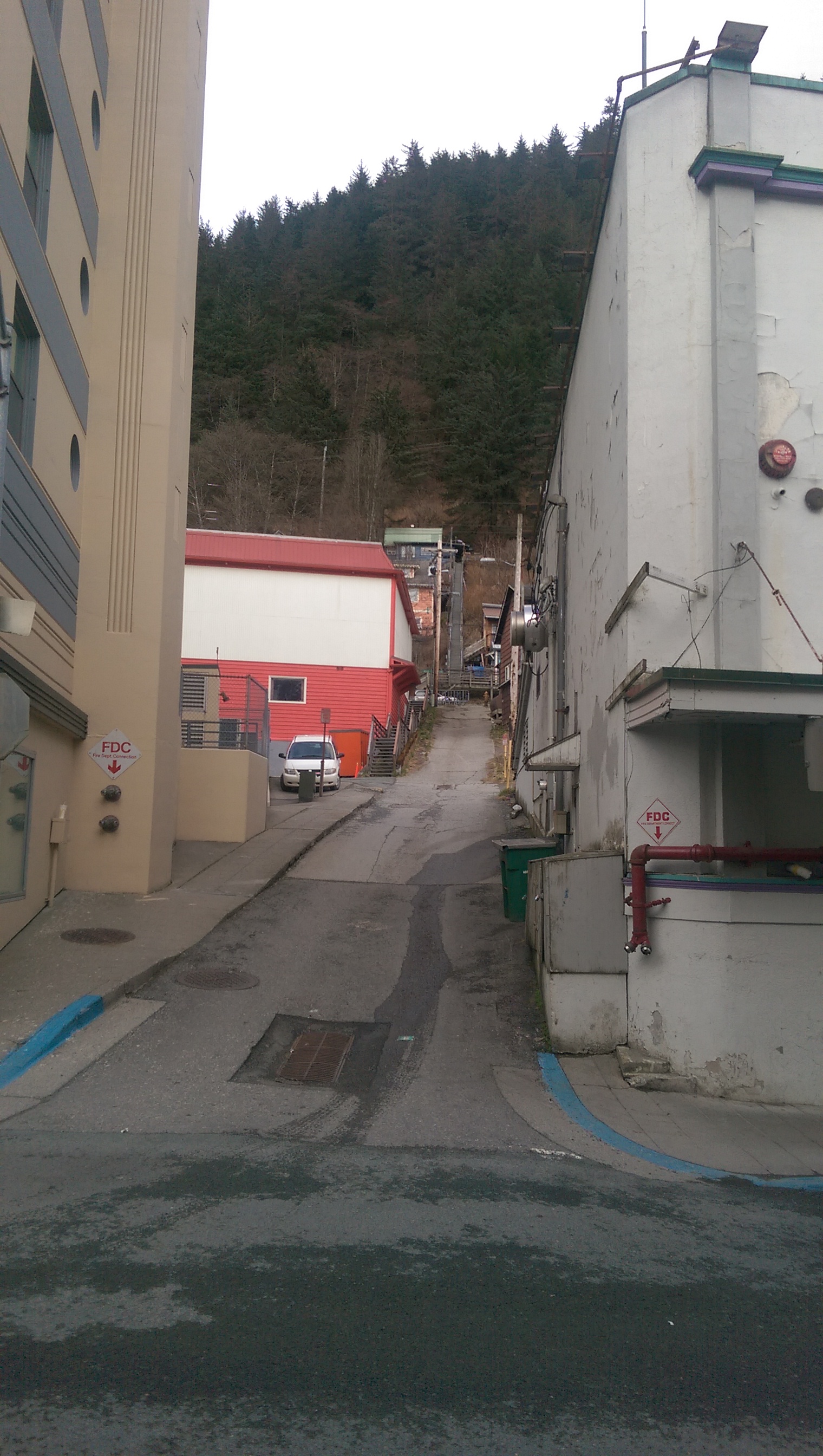
  • Juneau is a very vertical city; the alleyways between buildings and side streets (in this case, next to the hotel) would end in staircases going up the hillside. This was not the tallest of them.
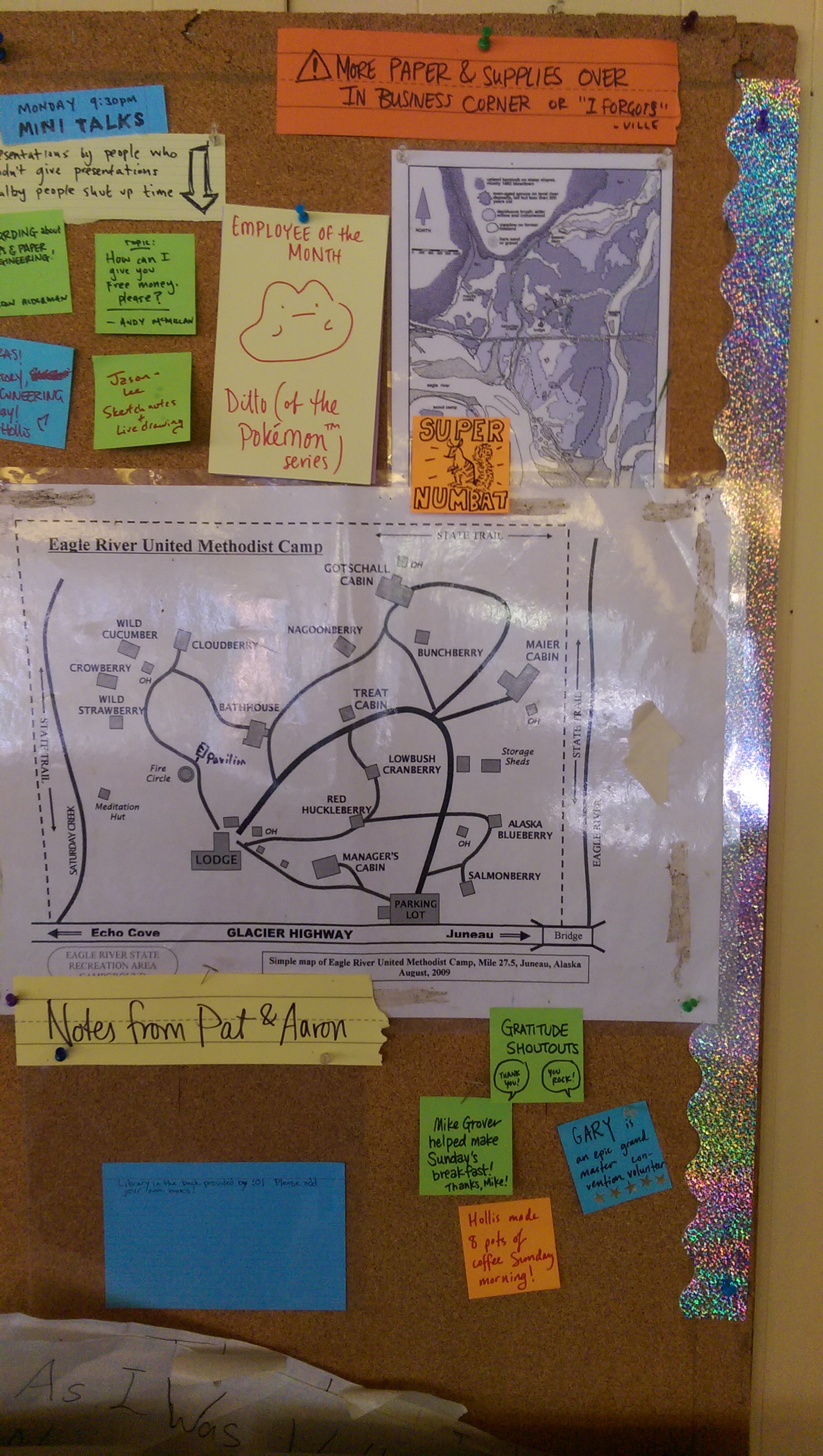
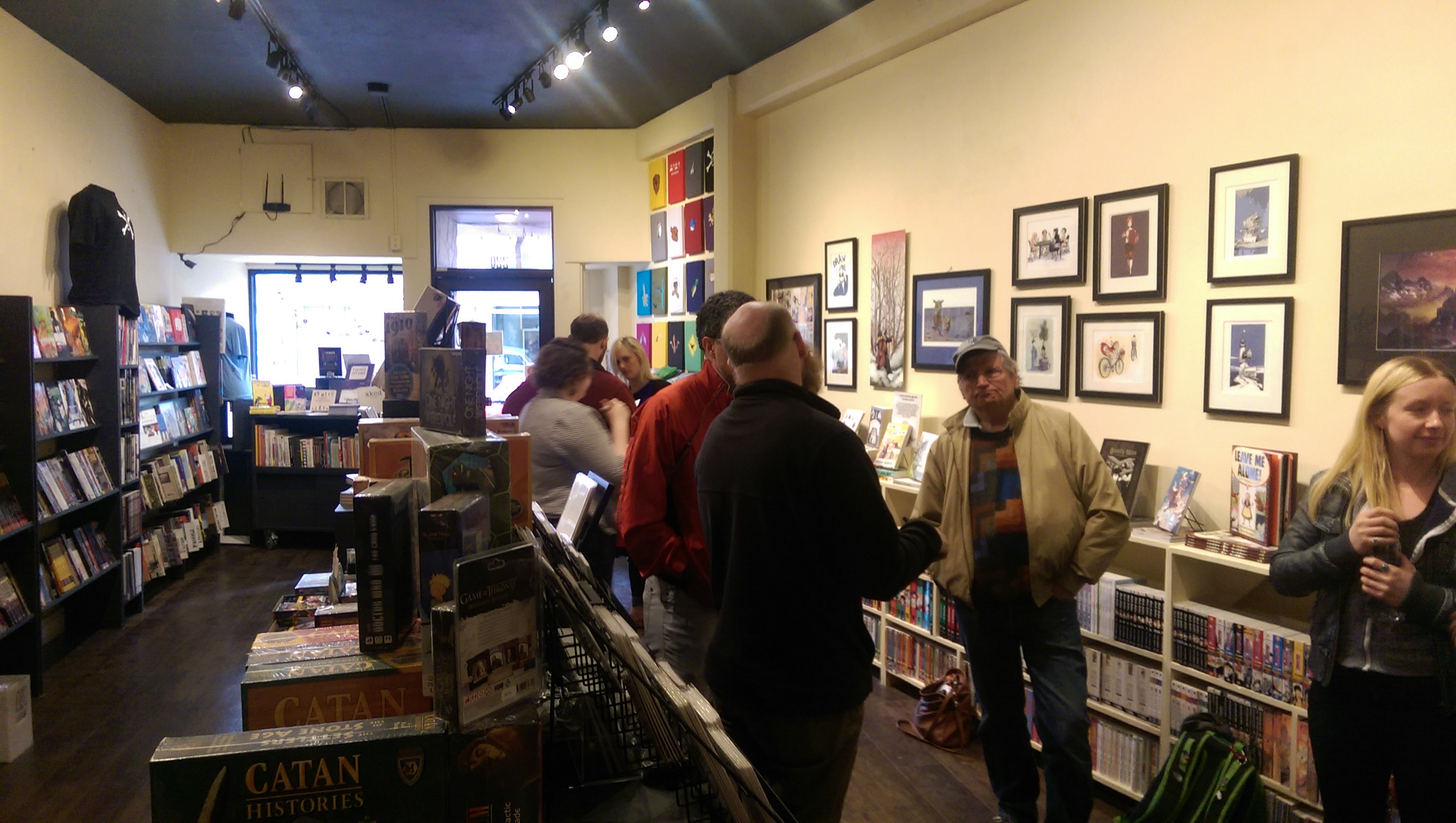
  • The Alaska Robotics Gallery is part very well curated comics shop, part game store, part music store, part fine arts space. I got the feeling it’s really a center of the community. A pair of girls, about 11-12 years old came in during the volunteers meeting and suddenly perked up hearing Kibuishi’s name. Is he here? Is he coming to [I forget the name of the school]? He signed my book last year and we drew with him! Race and company have made a concerted effort to bring artists and creators to this very isolated corner of the country, and as a result they’ve become key to its artistic life.
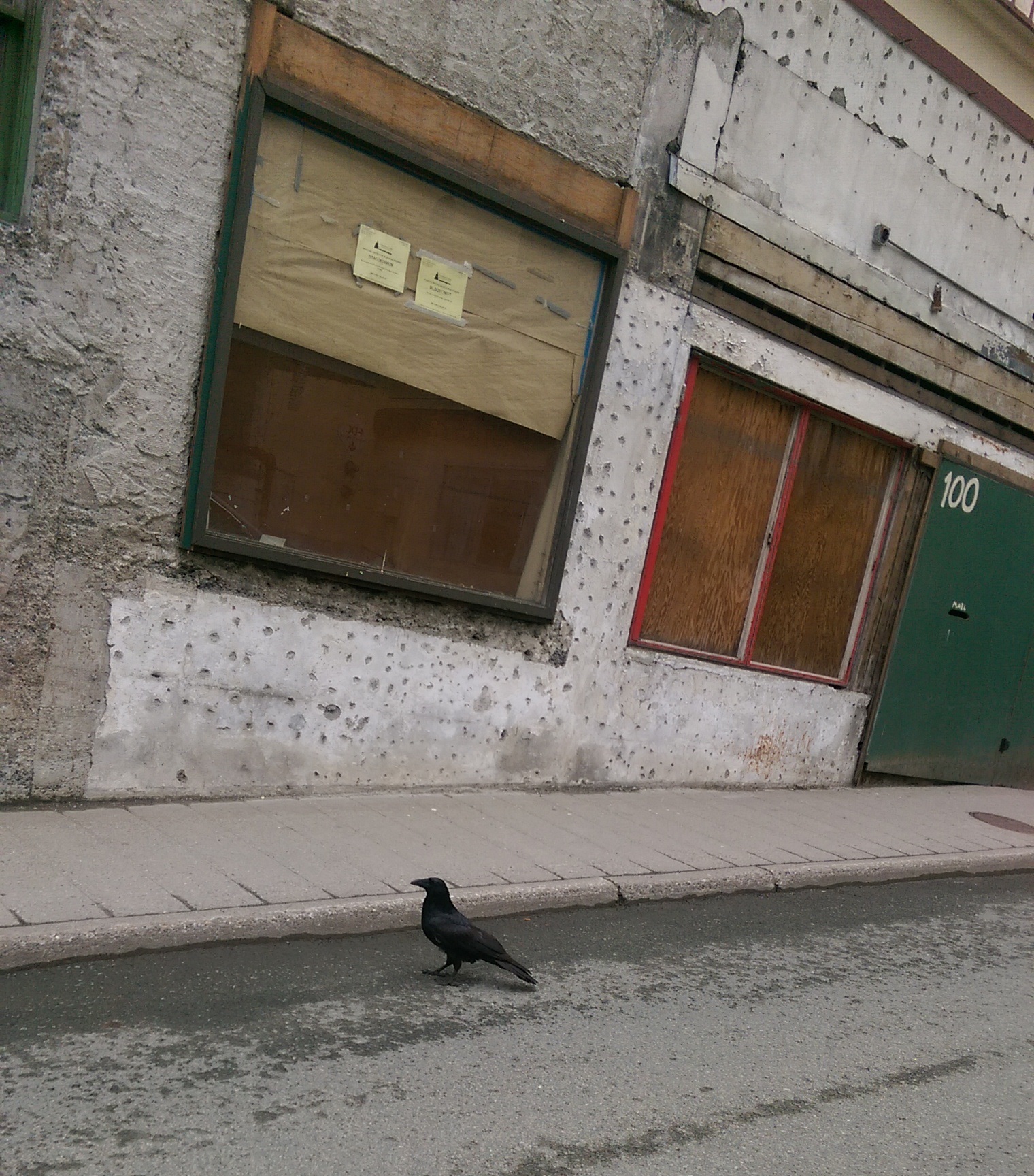
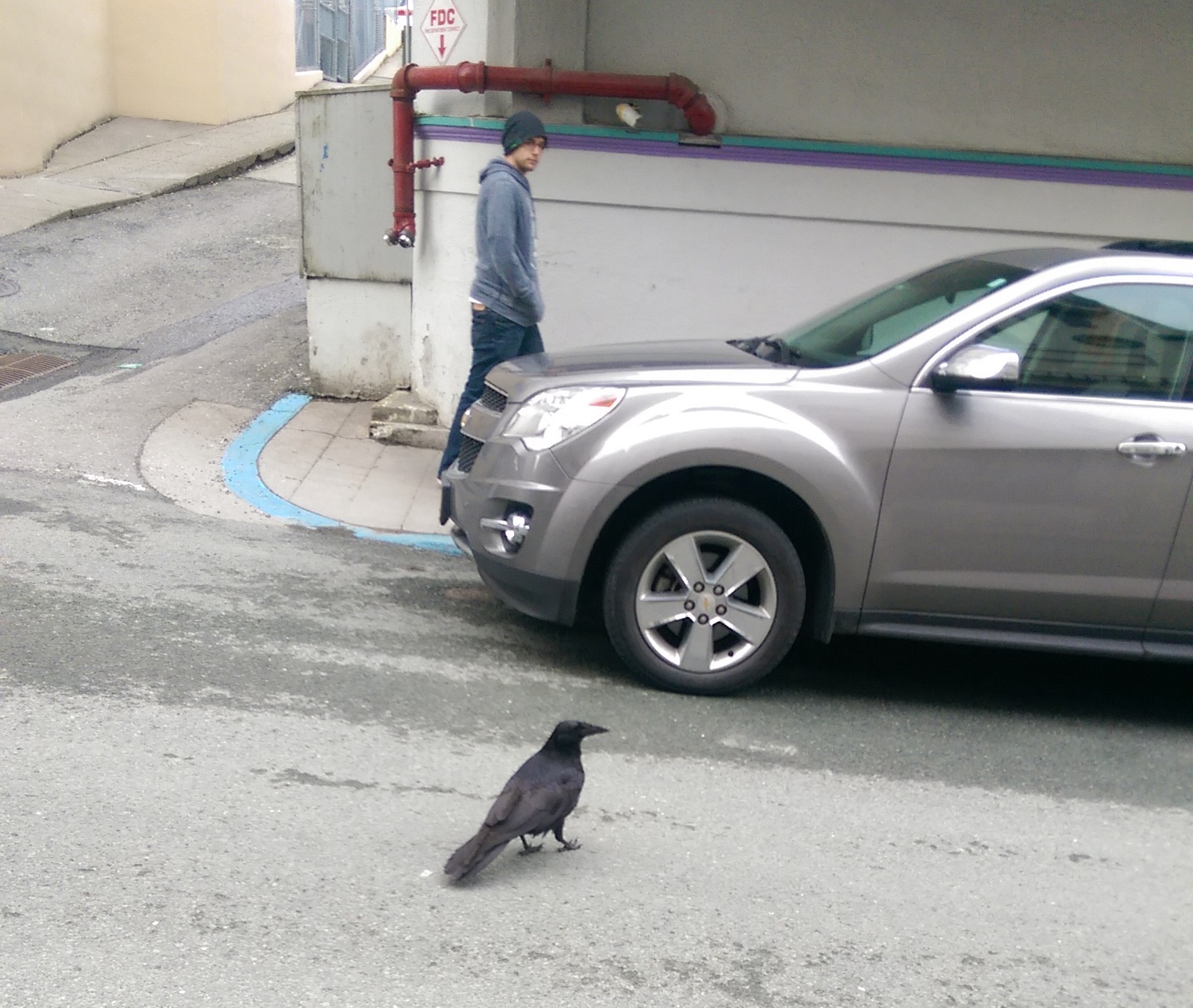
  • Ravens, man. This guy was just walking down the center of the street like he owned it. I tried to get closer to get a good shot, but he’d just wait until I was about five feet away and sidestep around me; the car should give you an idea of size, and this was far from the largest I saw. His body posture clearly said I don’t feel like dealing with you right now but if you decide to start something, I’m finishing it Chumpo.
  • Dinner. Visible from the near left side going clockwise you have Jason Alderman, Vera Brosgol, Kate Beaton, Morgan Murray, Kazu Kibuishi, Jason Caffoe, Katie Lane, Dylan Meconis, a hack webcomics pseudojournalist, Lee Post. Not visible but if memory serves, Lucy Bellwood, Andy McMillan, Alex Bates, and Lucas Elliott were there as well; pretty sure Lucas was the one I handed my camera to.

Spam of the day:
On hiatus while I talk about Camp.

______________
¹ She may describe it as a polite hello, but the enthusiasms of Lucy Bellwood are such that even simple greetings arrive with the force of F5 weather events.

² She looked at me slyly and asked Do you remember me? as if anybody could forget. For the record, the last time I saw Brosgol in person, I had just dropped her off at the SPX Sunday-afternoon softball game (when that was still a thing) having given her a lift in a car that I haven’t owned for seven and a half years now. So, fair question.

³ Jason does everything excitedly; small yip-yip dogs with quad espressos look calm next to Jason when you offer him a project that strikes his fancy.

4 In my case, courtesy of Rob Roys, Alaskan abstract artist. A query about seeing bald eagles evoked a snort from Roys, the essence of which was: Want to see bald eagles? We’ll be driving by the dump, they’re all there. Trash birds. Now the ravens, they’re cool and very smart. Don’t piss them off, because the particular raven that you piss off will remember your face and attack you later.

His opinions on both eagles and ravens were corroborated by other Juneauans — Juneauites? Junevers? what’s the demonym for Juneau, anyway? — on multiple occasions, and I got close enough to some ravens to decide that they is damn big birds and I would not be pissing any off. More about them when we get to camp.

5 If you ever get the chance to talk movies with Kibuishi, bring your A-game because I can promise you he’s thought more about the structure and symbolism of film than you have. It was an education.

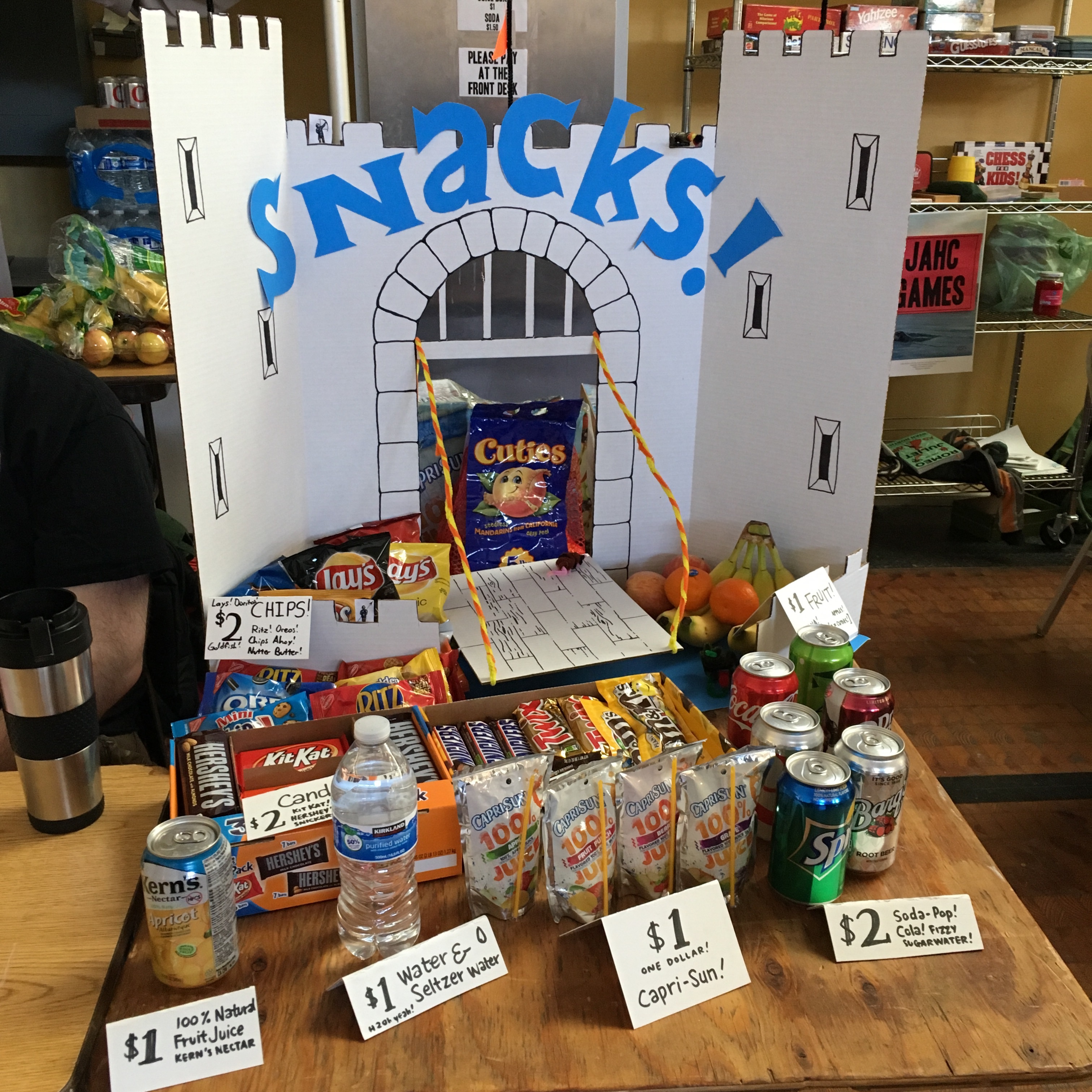
6 Where Jason was thrilled to hear he’d been placed in charge of setting up the snack table; he ultimately led the construction a friggin’ castle made out of cardboard, complete with portcullis, gatehouse, murder holes, arrow slits, and cannon. I, foolishly, did not get any pictures of it.
Update to add: But another camper did. Enjoy.

For Those Wondering, I Made It To Juneau

But I am very, very tired.

But I am also very, very happy with all the people I am meeting/reconnecting with.

And, if you should ever get the chance to talk film with Kazu Kibuishi, you should do that.

Food and sleep now.

By Way Of Reminder

The chief — perhaps only drawback of the Alaska Robotics Minicon and Camp Weekend Extravapalooza in (duh) Alaska is that Alaska is very far away from my beloved New Jersey, and thus requires long travel days to get there and back. I shouldn’t complain too much about my pre-7:00am departure tomorrow; my return flight from Juneau features a departure time of (meaning I must be at the airport, luggage checked, through security, and seated prior to) five friggin’ thirty in the morning. That’s gonna hurt, but it’s not for another week.

  • Let this serve as a reminder, then, that over the next week I’ll be in transit for significant parts of three days, and in a place with no network for three more¹. And as long as we’re reminding things, let me remind you that the giveaway of a copy of DRIVE: Act One by Los Angeles resident Dave Kellett — a US$50 value, if there are any left over after fulfillment; US$25 in softcover once they go up in the store — is still ongoing.

    To enter the giveaway, send an email with the subject GIMME BOOK to me (that would be gary) who has an account at the name of this here website, which is a dot-com. Entries are due by 30 April, and I’ll pick a winner at random after that.

  • And as long as we’re throwing out reminders, let this serve as the periodic reminder that the Cartoon Art Museum of San Francisco is closer every day to the time when they open up dedicated gallery and education space again. In the meantime, they continue their programs and involvement in the cultural life of San Francisco, with the latest announcement regarding their participation in the annual Queer Comics Expo:

    The fourth annual Queer Comics Expo will take place on Saturday and Sunday, 8-9 July, from 11:00am to 5:00pm at the SOMArts Cultural Center. This year’s QCE will be expanding exhibition space and programming², and will serve as a part of the Queer Cultural Center’s annual National Queer Arts Festival.

    Those interested in exhibiting, volunteering, or presenting programs at QCE, the application is here. You’ll be part of a San Francisco tradition, and help raise funds for CAM at the same time.


Spams of the day:
Gonna clear out the spambox before I head out, so that I’m not overwhelmed when I get back.

Someone may have ran a background check on you
This single nightly routine is killing you slowly and silently
Bags Lovers: 12 Hours To Save
Melania …
Pure Colon Detox

Oh no, they’re gonna find that dead guy in Reno; we humans call that sleep; this is a bunch of fancy designer purses and not laptop-protecting backpacks you guys are way off in your choice of topic; nnnnnope; and no way in hell I’m enabling images on that one. Thanks for playing!

_______________
¹ Y’all behave while I’m gone.

² The increased space means the programming tracks are approximately doubling over previous years.

Still Time To Meet The Goal

I can’t believe I missed talking about this earlier, and here’s April more than halfway over. Okay, enough recriminations, just listen up, ’cause a genius is talking.

No, not me; not even vaguely me. Gene Luen YangMacArthur Fellow, current National Ambassador for Young People’s Literature — has declared April to be the time for everybody (okay, it’s really aimed at younger readers, but let’s make it everybody) to Read Without Walls. Declaring things is one of the things you get to do when you’re an ambassador, along with getting out of parking tickets and getting to go through the quick line at Customs.

Actually, Read Without Walls has been Yang’s mission statement since he was inaugurated in January of last year, but now he’s making that aspiration into a specific challenge, with the help of the people at Macmillan (parent company of :01 Books, his longtime publisher).

Yang’s three-part challenge to you is to do one of:

  • Read a book about a character who doesn’t look or live like you.
  • Read a book in a format you don’t typically read — graphic novels, poetry, audiobooks, plays.
  • Read a book about a new subject you don’t know much about.

And after you’ve done so, pass the challenge on to others. And hey, why should kids have all the fun? You’ve got time in April still (and if you watched Yang’s video, you know that he’s urging you to do so every April, so make plans for next year now), not just to encourage the young reader(s) in your life, but to spread your own wings a bit.

I’m going to interpret the challenge to say that the pass-along may include specific recommendations. So here’s mine: I’ve been digging into the collected writings of Ta-Nehisi Coates; yeah, it’s not a book, but Coates has written a hell of a lot of essays, and reading through them is the equivalent of a book.

I’m not sure that any piece of writing has had a more profound wake the fuck up effect on me than The Case For Reparations¹, so that’s my recommendation. It’s nearly 16,000 words, so set aside an hour and take your time with it. And if you want to share what you’re reading, the comments are open down below.


Spam of the day:

Pentagon Insider’s Secret IRA Technique Exposed

When I think, Gary, where are you going to get solid information on how to save safely for your future, well-deserved retirment?, the answer is usually not, The Pentagon! So unless your Pentagon insider is recommending a systemic, long-term, dollar-cost-averaged program of broad-based, low-load index funds, I don’t wanna hear it.

_______________
¹ Even more so than Between The World And Me, perhaps because the shorter length lent a sense of urgency to Coates’s argument.

The Kickstartum Never Stops

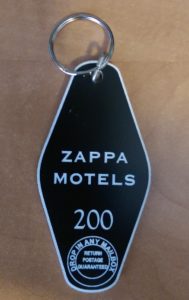
If you’ll indulge me for one moment, a quick note from outside the world of webcomics: the Kickstarter to save the treasures of Frank Zappa’s vault (of recordings, significant artifacts, and literally who knows what else) — run by actor, director, and Bill half of Bill & Ted Alex Winter — is one of the few non-webcomics crowdfundings that I’ve backed. If you think about it, though, ol’ Frank was an indie creator of great energy and constant production, and if there’s a better analogue for the modern webcomicker in the period of the late ’60s to the early ’90s, I don’t know who it might be.

The campaign closed more than a year ago, and with so many backers (nearly 9000) due so many different items¹, they’re only just now getting around to fulfillment. I ain’t mad at the delay, I’m impressed as hell at all I got²; and if you think that an ambitious Kickstart can turn into a fulfillment task of nightmare proportions … well, that’s where you’re probably right. Only go complex on rewards if you have the might of the obsessive fans of a revered genius to help you.

Or just keep the Kickstart simple, that works too. Case in point: Retrofit Comics (aka Box Brown and Jared Smith) gather together comics they want to print, pre-sell them via Kickstarter, then print them and ship them. Pretty simple. It’s worked a couple times before, and the campaign for Spring 2017’s six new books looks to add to that streak. It started up on Friday, it’s running until the 11th of May, and per the Fleen Funding Formula, Mark II it looks to finish in the range of US$17.5K to 26K, on a goal of US$18.7K³. In other words (and considering the quality of past Retrofit offerings and the loyalty of its audience), this is virtually assured.

The rewards are simple: between six and eight bucks gets you a PDF of a comic of your choice (varying prices for varying page lengths); US$20 gets you PDFs of all six. US$25 gets you a hardcover of one particular book; US$45 gets you print copies of all six (with a US$46 tier if you’re in the DC area and want to pick your books up at a Big Planet comic shop and save shipping). Assuming you get all six (and why wouldn’t you), it’s going to act a little like a subscription: two books printed & shipped per month, in May, June, and July.

There’s higher tiers for those that really like the creators, with bonuses ranging from prints to original pages from the comics in question. It’s a smart approach, since Kickstarter books are really driven by interest in the particular creators; I’ve seen the books sell at non-cape comics shows if people stop and flip through them, or if they recognize the name on the cover. They don’t appeal to everybody, but those that they do appeal to, they really appeal to.

Creators this time around are Zach Hazard Vaupen, Laura Ķeniņš (mentioned on Friday for her Doug Wright Award nomination), Tara Booth, Yuichi Yokoyama, Will Cardini, and Warren Craghead III. Comics range from a series of Trump grotesqueries to gouache paintings to surrealist neo-manga. Click on through and give ’em a good look.


Spam of the day:

Turn your TV into a Smart TV today!

Dudes, I teach systems administration and security for a living. Ain’t never gonna be a smart anything in my house (yes, yes, we know where you’re going with the joke … just let it go) until the IOT chip manufacturers stop hardcoding in admin credentials and passwords. Hard pass.

________________
¹ I was nowhere near a top-tier backer, and I received at least sixteen different types of items (including music on DVD, CD, and cassette), ranging from a poncho (not a Sears poncho) to unused backstage passes from some long-ago concert.

² I was promised a MYSTERY BAG and if had contained a quarter of what was actually inside, I’d have been impressed.

³ The McDonald Ratio predicts US$19.4K, so there’s a pretty close agreement.

Gonna Be Weird For Ten Days Or So

See I’m about to go camping in the woods with bears weirdos a whole bunch of creative people (and totally bears), which is going to make things here at Fleen a little irregular for a bit starting middle of next week. In the past when away, I’ve scheduled Best of Fleen posts, but you know what? Y’all approximate grownups, and you can manage without me for a bit. So here’s what’s going to happen from next week:

Wednesday will likely be brief, due to last-minute around-running. Thursday will largely be taken up with travel from New Jersey to Juneau. Friday will be helping with school & library visits, Saturday will be the actual one-day con, followed immediately by woods, s’mores, and no electronic signals of any kind until sometime the following Tuesday. Wednesday and Thursday will be travel and recovery. But expect a mountain of posts after that about what wildly creative people (both in and out of comic) are up to. Kindly try not to have any huge news in or around webcomics while I’m gone and try not to let the world end. Deal? Deal.

In the meantime, I’ll note that Alaska is similar to Canada in many ways, and Canada (the whole damn country) has announced the latest nominees for Canada’s most prestigious comics recognition, the Doug Wright Awards (well, probably tied with the Joe Shuster Awards). Winners will be announced (as is custom) at TCAF in four weeks, and will be blessedly limited to three well-curated categories plus one hall of fame.

The Best Book Award, presented for the best book published in Canada (in English), will go to one or more of Mary Wept Over the Feet of Jesus by Chester Brown, Big Kids by Michael DeForge, Burt’s Way Home by John Martz, The Envelope Manufacturer by Chris Oliveros, and Bird in a Cage by Rebecca Roher. The Doug Wright Spotlight Award, presented to a Canadian cartoonist deserving of wider recognition, will go to one or more of Jessica Campbell, GG, Nathan Jurevicius, Laura Ķeniņš, Brie Moreno, and Steve Wolfhard.

The Pigskin Peters Award, presented for the best experimental, unconventional or avant-garde comic, will go to one or more of Carpet Sweeper Tales by Julie Doucet, Draw Blood by Ron Hotz, Garbage by Matthew Reichertz, After Land by Chris Taylor, and The Palace of Champions by Henriette Valium. The inductee into the Giants of the North Canadian cartoonist hall of fame, is cartoonist and comics journalist Katherine Collins. Seemingly every other nominee¹ was published by Conundrum Press, Drawn & Quarterly or Koyama Press, highlighting the importance of small, editorial vision-driven presses.

Fleen wishes the best to all the nominees, and we’ll be back in a month to reveal the winners.


Spam of the day:

Save on your interstate move – free quote

After the last move I made — which was a year and a half before I started this blog — I swore to never move again, and that was less than 30 km distance. If I ever have to move interstate, kill me.

_______________
¹ It was actually 10 out of 16, which is even more impressive. The remaining work was self-published, or run via Floating World Comics or via the Latvian comics anthology kuš!

Big Ol’ Hardcovers Day

The mail has been good to me lately — it’s brought me long-awaited, very hefty, very handsome hardcovers of two of my favorite webcomics. I get to enjoy ’em, and that means you get to enjoy ’em, too.

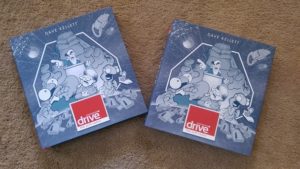
  • Okay, it was actually last week, but Los Angeles resident Dave Kellett’s Drive is one of the very best sci-fi stories you’re ever gonna read, and hundreds of pages in he’s still setting up the pieces for his story’s conflict. I’ve spoken of Drive plenty here, so I’ll just mention that what we get in the first volume is roughly the first act of a story (from here to here, interrupted from time to time by things like childbirth and movie production) that will run for years yet, plus a series of his guest-contributed Tales From The Drive shorts.

    But what a book! The slipcover pulls back to reveal a design that carries the logo of the story’s imperial family, and the endpapers present an in-continuity map chock full o’ context (not to mention references to key story points¹ as almost afterthoughts, there’s so many of them). The guest stories are by (respectively) Dylan Meconis, Christopher Hastings & Anthony Clark, Ryan North & Tony Cliff, Zach Weinersmith, and Evan Dahm.² They are (respectively) uplifting hilarious, hilarious, hilarious and melancholy/insightful.

    In the interests of full disclosure, the book features a blurb on the back cover by a hack webcomics pseudojournalist, who is also mentioned on the thanks page. Apparently the many questions I have pestered him with over the past six or seven years have been more than simple fanboying and convinced LArDK that I would be a good alpha reader for the book³, and he sent me a copy several weeks in advance of the Kickstarter fulfillment. This means that I have a second copy of Drive: Act One, which fact will be relevant a bit further down the page.

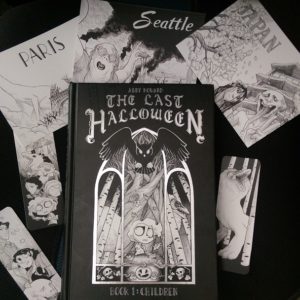
  • Today’s mail brought the similarly long-awaited and just as impressive first print collection of Abby Howard’s The Last Halloween. The story, which I’ve loved from the beginning, reads even better on the page; the original strips are more than can fit on one page, and Howard has cleverly designed her book to make reveals even better. The best example is this strip, which features one of her best gags; in the book the setup ends at the bottom of a right-hand page and final punchline panel is at the top of the following left-hand page, hiding the payoff and increasing its effectiveness.

    To give you an idea how hefty the book is, that gag with Ringley and his dad is the 39th strip in the archives, but the punchline doesn’t appear until page 144; this translates into more than 400 pages of story, with dozens of extras, sketches, and bonus material at the back. If you missed backing the Kickstarter, look for copies in Howard’s TopatoCo store (NB: Said store is currently undergoing a redesign and may be sporadically available for the next few hours as I write this We’re good!) once backer fulfillment is done.

  • Back to Drive for a moment; I’d also expect to see the book added to LArDK’s Drive Store shortly, but what if you don’t want to wait? And haven’t I got a spare copy hanging around? Why yes, yes I do. So I’m gonna give that mutha away. Email me at gary who has an account at the name of this here website, which is a dot-com by 30 April, with the subject line GIMME BOOK.

    I’ll draw one at random and send it your way (but if you live overseas and it’s gonna cost me like thirty bucks, I’ll ask you chip in on shipping), then you will read it and become as addicted as I am. Oh, and I should mention that the book has one minor print error (two pages stuck together, leading to a very minor tear on separation) which may reduce your reading enjoyment by as much as 0.00378%; if this disturbs you, then don’t try to win a free book. Good luck, and get to emailing.


Spam of the day:

3 Secrets The Mattress Store Don’t Want Out

Mattress store mattresses are made from orphans? That’s one, what are the other two?

_________________
¹ Here I’m referring to the disclaimer on the map about the Captain’s Dictate (which was revealed in the strip relatively recently, well after the events in this book). For that matter, there’s back matter including a timeline that likewise features a major spoiler in the form a critical character’s name that was revealed less than a year ago.

So, uh, maybe don’t read the timeline until you’ve binged through the archive?

² Dahm’s story being the absolute best 12 page single story I read in 2016, bee-tee-dubs.

³ Probably because my obsessive tendencies meant I asked him years ago if he realized in two strips that ran five years apart that he’d referred to the same character as “Stephen” and “Steven”. Pedantry! It can be used for good!