The webcomics blog about webcomics

So This Is New York

New York, the city where … no, wait, let’s start over.

NEW YORK! The city where anything is possible. Where your co-workers are an Orthodox rabbi, a secular Muslim, a half-Columbian half-Dominican future supermodel, and a Liverpudlian former electrician who managed to marry into an old-money New England dynasty. Your neighbors come from every ethnic group and subdivision you can think of, your block is defined by the local bodega and homeless guy, and the transplant from upstate that lives below you hates the bridge-and-tunnel dicks more than any native-born Manhattanite ever could. The city has nurtured generations of industrialists, writers, geniuses, and crooks. Now it’s a seething powderkeg of differences, class frictions, and resentments, overrun by rats with wings, hipsters, high-glamour drag queens, Paris Hiltons in training, token Republicans, society matrons, and performance artists who, in a reasonable world, would be hunted for their pelts. Here, their shtick is met with acclaim, or at least small-c celebrity in the form of a local-access cable show.

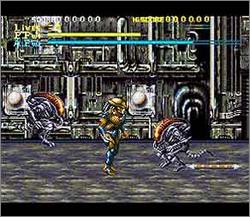
So where else would an Alien and a Predator share a walk-up? Every week, Bernie Hou brings us a slice of New York in the form of Alien Loves Predator, as Abe (the Alien) and Preston (the Predator) try to get by. They should hate each other. A decade of comic books and movies and video games has taught us that they should be trying to kill each other and everyone around them. Sure, they don’t like each other much, but eh. You know how hard it is to find a roomie you can tolerate? Besides, the apartment’s probably rent-controlled and they have other things on their minds: is a mutual acquaintance doing Abe’s Ma? Is that really hot girl you hit it off with a psycho just because she’s a Mets fan? And like all New Yorkers, Abe and Preston understand it’s not really that other person over there that’s pissing you off, it’s just New York.

And that’s the great secret of ALP: not Abe, not Preston, not the supporting cast … New York. It’s lovingly photographed in detail, and our actors (in the form of action figures) are composited onto the backdrops. Sure, the little visual gags (like Preston being the only near-sighted Predator, and having to wear glasses) are funny even without the context of the city. And the interior scenes can set up some great gags, but they lack that little extra something. Check out Abe and Preston wondering what to get sometimes-roommate Jesus for His birthday; it’s the sort of bizarre philosophical discussion — it’s bad enough if your birthday falls on Christmas because you get cheated out of a present, but when your birthday is by definition Christmas? That’s gotta suck — that works perfectly on a stroll through Bryant Park.

Whether it’s Central Park, the subways and stations, Times Square, or Washington Square Park the location is critical to the gag. It also lets Hou get topical on occasion. And even when the action takes place elsewhere, New York is still the lens that Abe and Preston see life through. With almost zero exceptions, the fact that our heroes are an Alien and Predator is completely irrelevant; the title could be Bridget Loves Bernie or Joanie Loves Chachi (okay, maybe not), and the edge would still be there. Because it’s New York, and that grim cheerfulness that New Yorkers exhibit in the face of the city trying to grind them down? That’s goddamn hilarious.
Thinking About Print

There are basically two things I find I don’t like about comics printed on paper. And both of them have “being printed” as the big cause.

The first is just ink. The facts are that ink on paper is a complicated problem (much much more complicated than it seems at first glance), and ink in general is produced through propriatary black arts by massive secret consortiums of chemical companies. This means that when you go to draw a comic that you want to print on paper, you have to spend some time thinking about what it’s going to look like after it’s printed. And so you think twice about that shade of orange, and you reconsider whether you’ve made those lines too thin, and you need to broaden them a bit. And as you spend more time doing this, you end up squeezing yourself into this kind of strangely distorted artistic sensibility, where you are shutting down avenues of expression before you’ve even read the street sign.

The second thing is really the same kind of thing. Because you’re thinking about getting this comic printed, you’re usually doing it for money. And so you’re thinking about the mass market point of view – or having to deal with distributors and agents that are doing that thinking for you. And so rather than throwing in a gratuitous piece (that happens to be really funny) about a guy laughing at a girl who’s just admitted to a deep trauma and then forcing her to give him a blowjob… you censor yourself. You say “Just because I think it’s funny, maybe it won’t sell well in Salt Lake City…”. And the more you focus on this, the more you lose track of making the best comic you can make.

The freedom from both of these weird mental distortions that working entirely for the web gives to artists is why I like web comics a lot better than paper comics. Sure, tentacle porn has it’s place too, but it’s not what really does it for me, you know?

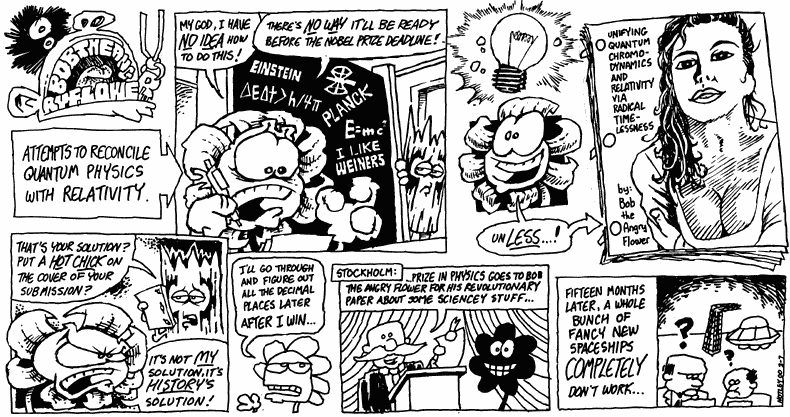
Stephen Notley manages to draw Bob the Angry Flower – which gets most of it’s distribution through print (certainly I first saw it in the City Paper… I think?) – without being trapped like this. Like Bob, he really doesn’t seem to consider what other people think before he writes. And he doesn’t seem to worry much about ink on paper, either, or generally the quality of his artwork.

So is it a web comic?

Who cares. It’s funny.

Year End Thoughts, Part Two

This was the year that merchandise blew up in webcomics. No, not that argument about whether or not a creator sucks for selling shirts (no link, because you’re as tired of it as I am); the actual mechanics of giving you goods in exchange for money reached a crisis.

In some cases, it was troubles with storefronts and software; in others, it was taking the time to produce products to sell. But the dominant issue was delivery. Few creators want to take the time to handle shipping and fulfillment themselves (a notable exception being R Stevens, who reports he enjoys the process; we’ll come back to him in a moment). So the solution is to outsource the task of maintaining inventory, processing payments, and fulfilling orders. If you’re PA or PVP, this might be through a large company like ThinkGeek, but many other comics went with a boutique outfit that set positioned itself to serve the community: Vault.

Let’s be blunt. Vault screwed a lot of strips. Tales of lost orders, unshipped merch, and upset customers abound. And just when that started to get under control, issues further back in the supply chain reared their ugly heads. The Dumbrella comics have banded together to do their own distribution now; in practice this means that R has more fun packing and shipping and Jeff Rowland gets some good material, but would definitely prefer more time to get everything done.

Backlogs are being cleared by other creators, and an opportunity is being created for somebody. Maybe Dumbrella expands their empire into fulfillment for those outside the conspiracy. Maybe somebody conscientious can start a new distributor business and do it right. Maybe ThinkGeek finds their customer base reads a wider variety of stuff than was previously thought. But this is a tipping point, and in the new year something approaching a robust solution is going to have to occur. Because orders not going out due to the distributor dropping off the face of the earth (or the shirt manufacturer being an utter whackjob) means no money for the webcomickers. And we at Fleen support the right of webcomickers to eat.

On Webcomics Creators as Animators: Jeff Rowland

There’s a moment when watching Bad Luck Blackie by the inimitable Tex Avery that the logic becomes clear: if a black cat crosses your path, something bad will happen to you. More specifically, something large-ish and painful will fall and hit you on the head. That’s it. That is the entirety of the Laws of Physics for the next 7 minutes. Everything else is unconstrained, with time and space deforming around inhabitants of the cartoon world. Literally anything can happen as long as that one fundamental rule is obeyed.

This was Tex’s usual mode of creating cartoons: a wide-open, anarchic approach to story, character, and reality, but with a limitation that must be respected. Pushing up against that limitation (like a game of “I’m not touching you!”) is when things get funny. Jeff Rowland’s Wigu is in the finest tradition of Averian work.

Wigu Tinkle lives in a world where anything can happen. The only rule is that reality conforms to the perceptions of an eight year old boy, and when you’re eight, your big sister is a serious weirdo that you know deep down sorta really loves you, parental fights are the scariest thing in the world, and your dad can beat up anything. Everything else is possible: Cartoon characters come to life? Check. Magic fridge? Check. Coolest car ever invented (complete with eleven TVs)? Check.

Tex’s inner eight year old always thought there must be something to that superstition about black cats. Jeff’s inner eight year old remembers what most of us have forgotten: We NEED adventure. Forever. That, and there’s something deeply wrong with internet people.

Three Fingered Salute

Tim Buckley is one of the growing number of webcomic artists who have achieved enough success to be doing what they love full time, without need or want for another job.

Ctl-Alt-Del has achieved this success through the usual means – good art, consistent effort, interesting characters and well-written story arcs full of twists and surprises. He’s also willing to start a few fires.

Despite being a gamer comic, about two guys who sit on a couch and play video games, Tim finds new and strange stories to tell and characters to introduce, and then kill.

Ctl-Alt-Del is one of the better comics out there, and Tim deserves all the credit and all the blame he gets. You could do a lot worse than to read this on a regular basis. Although rumor has it you don’t want to play Worlds of Warcraft with him.

But the big news these days at Ctl-Alt-Del is that it’s going animated!

This is practicaly unprecedented in the webcomic world, and should be very interesting to follow.

Year End Thoughts, Part One

You probably have webcomics in your bookmarks from a half-dozen countries on a couple different continents. You can write and draw these things from anywhere. So what’s up with Northampton, MA? R Stevens is there, as are Jeff Rowland and Jeph Jacques, along with a number of print comickers.

It’s always been an artist’s colony, and now it’s approaching a sort of critical webcomics mass. This is good because proximity means frequent contact. It means cross-pollination of ideas. It means that the next spontaneous Bald Lemur meet-n-greet pulls not just fanboys/girls, but some kid that really wants to make webcomics and figures this is the place to see how it’s done. It means that maybe the meet-n-greet after that isn’t in a coffeehouse, but in a gallery space. Good places to sell books, galleries.

And if we’re lucky and we’ve been good boys and girls, it means that creators get more creative. Want to see an explosion of fresh ideas in webcomics? Forget the fights about art vs. commerce, t-shirts vs. subscriptions, and the rest of the public wankery. Kick a buck into the Northampton Moving Fund for Deserving Webcomics Creators. Or, barring that, the Booze Fund for Weekend Webcomics Jam Sessions. That works, too.

Finnegan And Singh, Sitting In A Tree..

Alexander Danner and Bill Duncan have been collaborating for a while now on Picture Story Theater (Warning, all links from here out are Modern Tales links, and may require a login). They have managed an amazing job of making the art and the writing combine to produce something much better. The stories that have been told vary from the whimsical exploration of “Fantastic Zoology: The Coastal Giraffe” to a cautionary tale of “The Little Bear Who Knew Fear”, but most of their stories revolve around the interacting lives of a set of middle school students, and their supernatural or not-so-supernatural experiences.

Danner’s writing is a wonderful act of minimalism (in fact, the first PST doesn’t have any dialog at all). He also does an excellent job of conveying the idealized and romanticized vision of life as a tweener that anyone who’s grown up still clutches to (if only to try and banish the memories of the peer-induced trauma we actually lived through). His dialog is convincing, and his stories are fresh and interesting.

The artwork of Bill Duncan perfectly compliments Danner’s writing. He explores different compositional and linework styles to match the general tone of the piece – Amy Plays A Game of Chance is composed using only four hues to emphasize that it has no dialog. Duncan reaches a bit into the grotesque side of comics for the opening scenes of Together Again, to illustrate a bit the malaise of Humpty Dumpty, and then softens his focus as the story changes tone as well.

Despite the consistantly high grade art and writing, and the pure professionalism shown by both players, they still manage to maintain the willingness to experiment and change everything that is the hallmark of great web comics.

In short, Bill Duncan and Alexander Danner are a webcomic powerhouse team-up, and it’s worth three bucks for a one month subscription to Modern Tales just to check them out.

EDIT:
A brief follow-up. The interconnected stories about school children is being re-released in a free offering as Portraits of Nervous Children.

It just started, so there isn’t much there yet. But keep an eye out – this is good reading.

Where’s Your Messiah Now?

T Campbell is a busy guy. He writes or has written every webcomic that Shaennon Garrity doesn’t, he’s an Official Person in Webcomics, his lengthy series of articles on the history of webcomics is going to be a book, he’s generally a go-to guy whenever somebody needs a quote, and with Ryan North, he’s introduced searchability to a bunch of comics that didn’t have it before. It’s this last one that’s giving me pause.

ONR is a neat idea; Ryan put together some nice code, the interface is clean, and it appears to work pretty well with the workload it’s presently got. But T’s take on the Importance of their brainchild is a bit biblical. In a recent blogpost, T reveals the reason for ONR: it’s not because it’s neat, it’s not because it helps the readers, it’s because it will (quoting now) counter what I see as the single biggest threat to webcomics. Uh-huh.

The core of his argument is that Google can’t read webcomics (but search for “Jesus is a slacker” for a counterargument), and that without the searchability of ONR, nobody will ever find your webcomic. There’s two problems with this thesis:

1. It assumes that creators, people who (quoting again) want that comic to be read, will suddenly decide to do nothing in seeking an audience. Actually, some of them won’t. They do things as a lark, and if anybody happens to read it, yay. Some will be trying to build an audience, and will seek to swap links, get pimped by another creator with more traffic, or take out a banner ad somewhere. To assume that a creator that wants an audience will do nothing to find one is to assume that the creator is an idiot.

2. The second assumption is that ONR is the only means of publicizing a webcomic. He spends some time producing examples of searches that don’t produce desired results, and then says (in the same blogpost) if searching for a comic about zombies:

You might find Eric Maziade’s Zombies or Robert Kirkman and Tony Moore’s print Walking Dead, but unless you see this post or the interview I did with Joey Manley, you likely won’t know about the touching zombie plot in Scary-Go-Round, or “28 Geeks Later,” the snarky escape story from Sluggy Freelance.

By implication, only ONR can possibly fill this void. But to assume that ONR will be the solution, that it will something you pretty much have to get on board with or be left in the dust of history is … well, pick a word. But that may be too harsh, since ONR will inevitably meet its promise:

OhNoRobot will be a business. The site will become self-sufficient. But first and foremost, our focus is your comic and your search results. This is more than a business. It’s a CAUSE. And how we conduct ourselves will reflect that.

Our mission is to provide information about the world’s webcomics in order to make them easier to read and discover.

I am a zealot about this. By now, that should be clear.

Couldn’t have said it better myself.

Muskrat Love

Anyone who has actually met John Kovalic knows that in person he is articulate, funny, well mannered and also tall.

It makes a very strange contrast to his comic, Dork Tower, though. All of the jokes seem very predictable.

To illustrate, his December story arc is a retelling of “It’s a Wonderful Life”. But with some politics thrown in.

It’s kind of like Garfield, with dice.

For That Kind Of Money, I Hope The Strip Is Airbrushed On A Jetta

Seems that Gabe and Tycho had a good night with their annual Child’s Play charity dinner (scroll down to the second item). They raised over $82,000 for the night, putting them on track to raise on the order of $400,000 this year, and a three-year total of $800,000.

Now you can argue over whether this is primarily a gamer thing, but one fact puts it squarely in the “webcomics” realm: the centerpiece of last night’s auction was an appearance in Penny Arcade, which went for Twenty. Thousand. Goddamn. American. Dollars. Somebody spent the equivalent of a new car, or a year’s tuition at an Ivy League college, on one appearance in a 750×390 pixel, 24 bits of color webcomic. That is utterly batshit insane, and if I ever find the guy who dropped twenty large in such a fashion, I am going to buy him booze until he can’t stand up.

There’s been a fair amount of hand-wringing this year about how little webcomics have accomplished, about how they’re artistically bankrupt, existing only to sell t-shirts, and how gamer comics and their readers suck (wade through the text, if you dare). You know what? Screw that. If this is how webcomics fail to get their shit together, appeal to base commercial concerns, and inspire their readers to a state of “frothing-at-the-mouth-crazy” (thanks, William G.!), then sign me up for more.

Update: According to Gabe, Child’s Play 2005 is now over $420,000 and may well crack half a million dollars this year.

Update: From Tycho:

We’re at over $420,000 already. I suppose I could exhort you to take us to $430,000, and don’t let me dissuade you, but money is still coming in from companies and sites that pitched in which will take us very near to a “cool half-mil.” My private objective was for Child’s Play to reach a million dollars in donations over three years, and it’s already done that. Of course, I say it has already done that, but it doesn’t have the power to do anything. You have done it.

If you’re part of the collective you that he’s talking about, you’re my friend.